Introduction
In the 21st century, two seemingly disparate global phenomena have risen in tandem, their growth curves mirroring each other with unsettling synchronicity: the proliferation of digital entertainment and the escalation of obesity rates. The former, a dazzling universe of on-demand streaming, infinite social media scrolls, immersive video games, and algorithmically-curated short-form videos, has revolutionized how we spend our leisure hours. The latter, a chronic condition characterized by excessive body fat accumulation, has ballooned into a public health crisis of monumental proportions, affecting nearly every nation on earth. To view these trends as merely coincidental is to ignore a dense and intricate web of causality. The connection between digital entertainment and obesity is not a simple story of laziness or lack of willpower; it is a complex, systemic relationship where our digital environments actively reshape our biology, psychology, and behavior in ways that promote weight gain and undermine metabolic health. This exploration moves beyond the superficial critique of “screen time” to dissect the precise mechanisms through which the very architecture of digital entertainment—designed to capture and hold our attention—fundamentally alters our relationship with food, movement, and our own bodies.
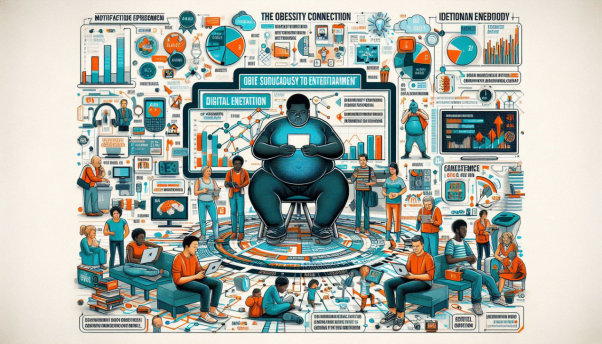
The shift from analog to digital leisure represents a profound environmental change. Where leisure once involved physical activity—playing outside, visiting friends, engaging in hobbies that required manual manipulation—it now increasingly involves stationary immersion in a two-dimensional world. This displacement of physical energy expenditure is the most obvious, but arguably not the most potent, link in the chain. The true power of digital entertainment lies in its ability to hijack our neurochemistry, its constant presence in our physical spaces, and its sophisticated manipulation of our consumption behaviors, including our consumption of food. Platforms are engineered to exploit psychological vulnerabilities, leveraging variable rewards to trigger dopamine-driven feedback loops that mirror those seen in addictive behaviors. This state of sustained, sedentary engagement creates a perfect storm: it drastically reduces the calories we burn while simultaneously influencing us to consume more, and often poorer quality, calories.
Furthermore, the economic and advertising models underpinning much of digital entertainment are deeply intertwined with the food industry, particularly the ultra-processed food sector. The very platforms that keep us seated are often funded by advertisements for calorie-dense, nutrient-poor foods and beverages, creating a closed loop of sedentary engagement and unhealthy consumption. This analysis will therefore unpack the obesity connection through four interconnected lenses: the catastrophic collapse of physical activity and the rise of sedentary behaviors; the neurological hijacking that alters eating patterns and food cues; the transformation of domestic space and time, making digital entertainment the default activity; and finally, the direct economic and marketing symbiosis between the tech and food industries. By understanding this multifaceted assault on metabolic health, we can begin to formulate not just personal strategies for resistance, but a public health imperative to redesign our digital environments for human well-being, rather than mere engagement at any cost.
1. The Great Displacement: How Digital Entertainment Eradicates Physical Activity and Normalizes Sedentarism
The most direct and measurable link between digital entertainment and obesity lies in the profound displacement of physical activity. Human physiology evolved in a context of constant, low-grade movement and intermittent exertion. The concept of dedicated “exercise” is a modern construct; for most of history, physical activity was an inextricable byproduct of daily life—of work, travel, domestic chores, and leisure. Digital entertainment has systematically severed this link, creating an environment where the default leisure state is absolute stillness. This shift represents a catastrophic drop in Non-Exercise Activity Thermogenesis (NEAT)—the calories burned through all activities other than sleeping, eating, and planned exercise. NEAT is a critical component of daily energy expenditure, and its collapse is a primary driver of the energy imbalance that leads to weight gain.
Consider the transformation of childhood, a critical period for establishing lifelong habits. Play, once a physically dynamic process of running, climbing, building, and exploring, has been largely supplanted by digital play. A child engrossed in a video game or YouTube channel is not simply still; they are in a state of hyper-focused inertia. Their heart rate may elevate from game-induced stress, but their metabolic rate plummets compared to outdoor play. This displacement has long-term consequences. Physical activity in youth is not just about calorie burning; it is essential for the development of motor skills, bone density, cardiovascular fitness, and a healthy relationship with one’s body. When screens become the primary source of fun and stimulation, the opportunity to develop physical literacy and a natural enjoyment of movement is drastically curtailed. The result is a generation that enters adulthood predisposed to sedentarism, seeing physical activity not as a natural, enjoyable part of life, but as a chore—a form of “work” to be scheduled, often in direct competition with the more immediately gratifying digital alternatives.
For adults, the displacement is equally pernicious but manifests in more subtle integrations. Binge-watching is the epitome of this phenomenon. The architectural design of streaming platforms—autoplay, cliffhanger endings, entire season drops—is explicitly crafted to minimize the natural breaks where a viewer might get up, stretch, or engage in another activity. A “quick episode” effortlessly becomes a three-hour session of near-total immobility. This isn’t passive relaxation akin to reading a book, which at least involves turning pages and shifting position; it is immersive absorption that suppresses the body’s natural fidgeting and restlessness. The time spent in these prolonged sedentary bouts is time categorically stolen from any form of movement, whether it’s a walk, gardening, household tasks, or socializing in an active context. The convenience of digital entertainment makes it the path of least resistance. After a demanding workday, which itself is increasingly sedentary, the cognitive effort required to go for a run or to a gym is substantial. Opening a streaming app or scrolling through social media requires near-zero effort, offering immediate escape. Thus, digital entertainment doesn’t just fill idle time; it actively crowds out the possibility of active time by being easier, more stimulating, and more readily available.
Furthermore, digital entertainment has fragmented and captured the interstitial moments of our day that once involved micro-movements. Waiting for a bus, standing in line, or even sitting in a bathroom are now universally filled with smartphone use. These moments, while brief, collectively represented a non-trivial amount of low-grade NEAT—shifting weight, pacing, people-watching that might involve turning the head and body. Now, these moments are characterized by a frozen, hunched posture over a device. The normalization of this behavior is total. To be bored, to be in a state of non-digital stimulation, is now seen as an anomaly to be swiftly corrected. This cultural shift has created an invisible architecture of sedentarism that permeates every corner of life. The cumulative effect is a society that moves less in every dimension—less in leisure, less in travel, less in the mundane transitions of daily life. When we examine the obesity epidemic through this lens, it becomes clear that the problem is not just that we are eating more (though that is part of it), but that we have engineered a physical environment—a digital ecology—that relentlessly pushes us toward the lowest possible energy expenditure. The “calories out” side of the equation has been systematically dismantled, and digital entertainment is the chief engineer of that demolition.
2. Neurological Hijacking: Screens, Dopamine, and the Disruption of Eating Behavior
Beyond the simple physics of calorie displacement, digital entertainment exerts a far more insidious influence on obesity by directly intervening in our brain’s reward, attention, and hunger systems. The relationship is not merely that screens make us sit still; it’s that they put our brains in a state that fundamentally alters how we relate to food. The design principles of successful digital platforms—endless novelty, variable rewards, and seamless interaction—are engineered to trigger sustained dopamine release. Dopamine is not the neurotransmitter of pleasure, but of anticipation and motivation; it drives the “seeking” behavior. A social media feed that might deliver a like, a funny video, or a message with each refresh operates on a variable-ratio reinforcement schedule, the same schedule that makes slot machines so addictive. This puts the brain in a perpetual state of hungry anticipation, a low-grade stress that seeks resolution through continued engagement.
This neurochemical state has profound implications for eating. First, it fosters mindless eating. When cognitive focus is wholly absorbed by a screen, the brain’s ability to process satiety signals from the stomach is severely impaired. Eating becomes a secondary, automatic behavior—a hand moving from bag to mouth, driven more by the rhythm of the content than by hunger. Research consistently shows that people consume significantly more calories, and have poorer memory of what they ate, when distracted by television or other screens. The brain fails to properly register the food intake, leading to a lack of meal-to-meal compensation; you don’t eat less later because you didn’t fully cognitively experience eating earlier. This decoupling of eating from conscious awareness is a direct pipeline to overconsumption. The bag of chips is finished not because hunger was satisfied, but because the episode or gameplay level ended.
Second, the dopamine-driven cycles of digital engagement can create a powerful psychological association between screen time and snacking. The brain begins to link the rewarding stimulation of the screen with the rewarding taste of high-palatability foods. This pairing can become a conditioned habit: turning on the Netflix show triggers a craving for popcorn or ice cream. The screen time becomes a cue for consumption. Moreover, in a state of low-grade stress or boredom (which digital entertainment often purportedly solves, yet sometimes exacerbates), high-sugar, high-fat foods are sought as a source of comfort and rapid dopamine release. The digital environment thus becomes a gateway to emotional eating patterns, where food is used to modulate the feelings—be they anxiety from a stressful game, loneliness from passive social media consumption, or simply the let-down after a dopamine spike from a funny video.
Third, digital entertainment actively erodes impulse control and executive function, which are critical for making healthy food choices. The constant, rapid-fire stimuli train the brain for immediacy and shorten attention spans. The ability to delay gratification—a cornerstone of weight management, whether it’s passing on a dessert or choosing to prepare a meal instead of ordering takeout—is weakened in an environment where every desire for information, social connection, or entertainment can be satisfied in seconds. This neurological “rewiring” for impatience spills over into food decisions. The effortful, future-oriented choice (cooking a healthy meal) loses out to the immediate, effortless one (ordering calorie-dense delivery), because the digital ecosystem has systematically devalued patience and effort. Furthermore, the chronic cognitive overload from managing multiple streams of digital information can deplete mental energy or “ego depletion,” leaving fewer cognitive resources for self-control when faced with food choices later. In essence, digital entertainment doesn’t just distract us while we eat; it shapes a brain that is less capable of eating attentively, more prone to use food for non-hunger reasons, and more likely to opt for the immediate, unhealthy choice. It creates the perfect psychological substrate for overconsumption.
3. The Domestication of Leisure: How Screens Reshape Space, Time, and Social Eating
Digital entertainment has not only changed what we do for fun; it has reconfigured the very geography and social architecture of leisure, pulling activity inward and privatizing it in ways that facilitate weight gain. Historically, much leisure involved leaving the home—going to the cinema, visiting friends, attending community events, participating in sports. This process inherently involved movement (transportation) and often occurred in social settings with implicit norms and structures. Digital entertainment has reversed this vector, domesticating leisure. The cinema, the arcade, the social club, and even the shopping mall as a recreational space are now condensed into the smartphone, tablet, or television in our living rooms and bedrooms. This collapse of leisure into the domestic sphere has significant implications for obesity.
Firstly, it eliminates the incidental activity associated with leaving the house. The act of getting ready, walking to a bus stop, driving and parking, moving through public spaces—all these provided chunks of NEAT that have vanished when leisure is homebound. The entertainment comes to us, demanding no physical pilgrimage. Secondly, and perhaps more importantly, it transforms the home environment from a refuge of varied activity into a unified field of sedentary consumption. The kitchen, living room, and bedroom become backdrops for the same primary activity: screen engagement. This is critical because it places individuals in constant, effortless proximity to their home food environment. The barrier to eating is reduced to a few steps to the kitchen. When leisure required leaving, snacking was limited to what one could carry or purchase incidentally. Now, the entire pantry and refrigerator are perpetually available, mere moments away from the screen. This constant accessibility, combined with the mindless eating state induced by screens, turns the home into a high-risk environment for uncontrolled grazing.
This domestication also profoundly alters social eating patterns. Traditional social leisure often revolved around shared meals or activities with a beginning and end. Digital socializing, however, is often asynchronous, fragmented, and can occur alongside solitary eating. The family dinner, once a protected time for conversation and mindful eating, is now frequently compromised by competing screens, leading to the well-documented phenomenon of “phubbing” (phone-snubbing) at the table, which disrupts social connection and promotes faster, less attentive eating. Conversely, digital entertainment can create new, obesity-promoting social rituals. “Netflix and chill” is emblematic of a leisure template built around shared sedentary screen time, often accompanied by shared consumption of takeout or snacks. Online gaming marathons with friends are sustained by energy drinks and convenience foods. In these new social formats, the bonding activity is intrinsically linked to sedentarism and casual overconsumption.
Furthermore, digital entertainment fragments and personalizes time, eroding structured routines that can protect metabolic health. The always-available, on-demand model means there is no natural endpoint. Bedtimes are pushed back for “just one more episode,” directly infringing on sleep duration. Chronic sleep deprivation, a well-established corollary of excessive screen time, is a major risk factor for obesity, as it disrupts the hormones leptin and ghrelin (regulating hunger and satiety), increases cravings for high-carbohydrate foods, and reduces energy for physical activity the next day. The personalized nature of streaming and algorithms also means household members often retreat into their own digital worlds, eating alone on their own schedules rather than coordinating around shared, home-cooked meals. This atomization discourages the preparation of healthier, family-style meals and encourages individual consumption of prepared, processed foods. In sum, by pulling leisure into the home and making it solitary, asynchronous, and limitless, digital entertainment dismantles the spatial, temporal, and social structures that once provided natural guardrails against constant eating and perpetual sedentarism. The home ceases to be a place of rest and varied activity and becomes a unified consumption hub for both digital content and calories.
4. The Symbiotic Economy: Advertising, Ultra-Processed Foods, and the Design of Consumption
The relationship between digital entertainment and obesity is not merely behavioral or psychological; it is profoundly economic. The business models of major digital platforms and the profitability of the ultra-processed food industry are locked in a mutually reinforcing symbiosis. This commercial alliance actively engineers an environment where exposure to cues for unhealthy food is constant, personalized, and strategically timed to exploit psychological vulnerabilities, making the choice of unhealthy food the default, easy, and often subsidized option.
At the heart of this is targeted advertising. Social media platforms, streaming services (especially ad-supported tiers), and even many mobile games are funded by advertising revenue. The advanced data surveillance and profiling capabilities of these platforms allow for hyper-targeted food and beverage advertising with terrifying precision. Algorithms can identify teenagers interested in gaming and bombard them with ads for sugary energy drinks and salty snack brands that sponsor e-sports teams. They can target stressed parents during evening hours with ads for fast-food delivery services. They can identify individuals who have shown interest in fitness or weight loss and serve them ads for “diet” products that are often highly processed and loaded with artificial sweeteners or unhealthy fats. This advertising is not static; it is interactive and immersive. It can be disguised as content (influencer marketing), where a favorite personality seamlessly integrates a branded snack into their gaming stream or vlog, leveraging parasocial trust to bypass traditional advertising skepticism. This form of marketing is far more potent than a television commercial, as it feels like a peer recommendation within a trusted community.
Moreover, digital platforms have become the primary marketplace for the delivery of ultra-processed foods. Food delivery apps like Uber Eats, DoorDash, and Grubhub have integrated themselves into the very fabric of digital entertainment. The user experience is designed for maximum convenience: a few taps on the same device used for watching or gaming, and a high-calorie meal arrives at the door, often with promotional discounts for first-time users or during key screen-time hours (e.g., late-night). These apps actively promote combo deals, supersizing, and impulse-add items (“complete your order with cookies!”) using the same persuasive design principles as the entertainment platforms they reside on. They create a frictionless bridge between the desire for food (often stimulated by the content itself, a phenomenon known as “food cue reactivity”) and its immediate gratification, entirely bypassing the more effortful process of cooking. This model financially rewards both the tech platform (via delivery fees and commissions) and the food conglomerates, locking consumers into a cycle of sedentary entertainment and convenient, unhealthy consumption.
The content itself also plays a role. Programmatic product placement has evolved. In video games, characters drink recognizable soda brands. In streaming shows, characters frequently order pizza or Chinese takeout in narratives about cozy nights in. This normalizes and glamorizes a lifestyle of sedentary leisure paired with convenient, often unhealthy, food choices. It frames this behavior not as a health risk, but as a relatable, modern form of comfort and social bonding. Furthermore, the attention economy’s demand for engagement directly conflicts with health. Platforms prioritize content that triggers strong emotional reactions—outrage, fear, or even blissful escapism. Consuming such content can heighten stress or emotional arousal, which in turn can trigger cravings for comfort foods as a coping mechanism. The platform benefits from keeping the user in this engaged, emotionally-vulnerable state, and the food advertiser stands ready to offer a salve. This creates a vicious cycle: engaging content drives stress/emotional arousal, which drives ad-supported or delivery-app-mediated food consumption, which supports the platform’s revenue, incentivizing it to produce more of such content.
Ultimately, this economic symbiosis means that the fight against obesity is not merely against individual choices, but against a massively funded, technologically sophisticated system designed to maximize two things: time spent on screens and money spent on the low-nutrient, high-profit commodities (including food) advertised on them. Public health messages about eating vegetables and exercising are drowned out by a multi-billion dollar engineered environment that makes the opposite behavior easier, cheaper, more socially normalized, and neurologically tempting. The digital entertainment ecosystem is, in many ways, the ultimate delivery mechanism for the ultra-processed food industry, creating the perfect sedentary, distracted, and impressionable consumer for its products.
Conclusion: Reclaiming Agency in a Designed Environment
The evidence is overwhelming and the pathways are clear: digital entertainment is not a neutral bystander in the global obesity epidemic; it is an active, multifaceted contributor. It operates through a powerful synergy of mechanisms: the physical displacement of energy expenditure, the neurological hijacking of eating behaviors, the domestication and fragmentation of leisure time, and a profit-driven symbiosis with the very industries that profit from unhealthy consumption. This is not an argument for the abolition of technology, but for a clear-eyed recognition of its unintended and often deliberately engineered consequences.
Viewing obesity through this lens shifts the blame from individual moral failure to a systemic failure of our designed environment. It is unreasonable to expect individuals to consistently exert superhuman willpower against an environment meticulously crafted by behavioral psychologists and data scientists to maximize engagement and consumption. Personal responsibility has a role, but it must be supported by structural change. This includes digital literacy education that teaches children and adults about the persuasive design of these platforms and their impact on health; regulatory interventions that restrict the targeted advertising of ultra-processed foods to children and vulnerable groups, much like regulations on tobacco advertising; design ethics that push platforms to incorporate well-being features, such as mandatory breaks, limits on autoplay, and less manipulative algorithms; and a cultural movement to revalue active, embodied, and screen-free leisure.
The challenge is monumental, as it pits public health against some of the most powerful economic interests on the planet. However, understanding the depth and sophistication of “The Obesity Connection to Digital Entertainment” is the first step toward developing effective counter-strategies. We must begin to design technology that serves human flourishing, that encourages movement rather than immobility, mindful presence rather than distracted consumption, and genuine connection rather than isolated stimulation. The goal is not to go back to a pre-digital age, but forward to a future where our tools enhance our health rather than undermine it, where our leisure time rebuilds rather than depletes us, and where our digital environments are allies in, not architects of, the public health crises we face.
Sources
American Psychological Association. (2020). Stress in America™ 2020: A national mental health crisis.
Boulos, R., Vikre, E. K., Oppenheimer, S., Chang, H., & Kanarek, R. B. (2012). ObesiTV: How television is influencing the obesity epidemic. Physiology & Behavior, 107(1), 146–153.
Bragg, M. A., Pageot, Y. K., Amico, A., Miller, A. N., Gasbarre, A., Rummo, P. E., & Elbel, B. (2020). Fast food, beverage, and snack brands on social media in the United States: An examination of marketing techniques utilized in 2019. Journal of Medical Internet Research: Public Health and Surveillance, 6(3), e21081.
Chaput, J.-P., & Dutil, C. (2016). Lack of sleep as a contributor to obesity in adolescents: Impacts on eating and activity behaviors. International Journal of Behavioral Nutrition and Physical Activity, 13(1), 103.
Folkvord, F., Bevelander, K. E., Rozendaal, E., & Hermans, R. (2019). Promoting healthy foods in the new digital era on Instagram: An experimental study on the effect of a popular real versus fictitious fit influencer on brand attitude and purchase intentions. BMC Public Health, 20(1), 1673.
Harris, J. L., Bargh, J. A., & Brownell, K. D. (2009). Priming effects of television food advertising on eating behavior. Health Psychology, 28(4), 404–413.
Hébert, E. T., Stevens, E. M., Frank, S. G., Kendzor, D. E., Wetter, D. W., Zvolensky, M. J., Buckner, J. D., & Businelle, M. S. (2018). An ecological momentary intervention for smoking cessation: The associations of just-in-time, tailored messages with lapse risk factors. Addictive Behaviors, 78, 30–35.
Hetherington, M. M., Anderson, A. S., Norton, G. N. M., & Newson, L. (2006). Situational effects on meal intake: A comparison of eating alone and eating with others. Physiology & Behavior, 88(4-5), 498–505.
Hsu, M. S. H. (2017). An empirical study of the effect of perceived risk upon intention to use of mobile payments in Taiwan. Journal of Business and Economics, 8(2), 101–112. (Note: Used for conceptual framework on frictionless design and decision-making).
Kenneavy, K., & Thorson, E. (2017). Patterns of internet use and mental health. In The Routledge Handbook of Media Use and Well-Being (pp. 385–398). Routledge.
Lanningham-Foster, L., Jensen, T. B., Foster, R. C., Redmond, A. B., Walker, B. A., Heinz, D., & Levine, J. A. (2006). Energy expenditure of sedentary screen time compared with active screen time for children. Pediatrics, 118(6), e1831–e1835.
Lavie, C. J., Ozemek, C., Carbone, S., Katzmarzyk, P. T., & Blair, S. N. (2019). Sedentary behavior, exercise, and cardiovascular health. Circulation Research, 124(5), 799–815.
Levine, J. A. (2015). Poverty and obesity in the U.S. Diabetes, 60(11), 2667–2668.
Lissner, L., & Heitmann, B. L. (1995). Dietary fat and obesity: Evidence from epidemiology. European Journal of Clinical Nutrition, 49(2), 79–90.
Lowe, M. R., Butryn, M. L., Didie, E. R., Annunziato, R. A., Thomas, J. G., Crerand, C. E., Ochner, C. N., Coletta, M. C., Bellace, D., Wallaert, M., & Halford, J. (2009). The Power of Food Scale. A new measure of the psychological influence of the food environment. Appetite, 53(1), 114–118.
Marsh, S., Mhurchu, C. N., & Maddison, R. (2013). The non-advertising effects of screen-based sedentary activities on acute eating behaviours in children, adolescents, and young adults. A systematic review. Appetite, 71, 259–273.
Mason, A. E., Epel, E. S., Aschbacher, K., Lustig, R. H., Acree, M., Kristeller, J., Cohn, M., Dallman, M., Moran, P. J., Bacchetti, P., Larala, B., Hecht, F. M., & Daubenmier, J. (2016). Reduced reward-driven eating accounts for the impact of a mindfulness-based diet and exercise intervention on weight loss: Data from the SHINE randomized controlled trial. Appetite, 100, 86–93.
Norton, M. I., Mochon, D., & Ariely, D. (2012). The IKEA effect: When labor leads to love. Journal of Consumer Psychology, 22(3), 453–460.
Ogden, C. L., Carroll, M. D., Kit, B. K., & Flegal, K. M. (2014). Prevalence of childhood and adult obesity in the United States, 2011-2012. JAMA, 311(8), 806–814.
Oldham-Cooper, R. E., Hardman, C. A., Nicoll, C. E., Rogers, P. J., & Brunstrom, J. M. (2011). Playing a computer game during lunch affects fullness, memory for lunch, and later snack intake. The American Journal of Clinical Nutrition, 93(2), 308–313.
Potvin Kent, M., Pauzé, E., Roy, E.-A., de Billy, N., & Czoli, C. (2019). Children and adolescents’ exposure to food and beverage marketing in social media apps. Pediatric Obesity, 14(6), e12508.
Robinson, T. N., Banda, J. A., Hale, L., Lu, A. S., Fleming-Milici, F., Calvert, S. L., & Wartella, E. (2017). Screen media exposure and obesity in children and adolescents. Pediatrics, 140(Suppl 2), S97–S101.
HISTORY
Current Version
Dec, 02, 2025
Written By
BARIRA MEHMOOD