Introduction
In the quiet hours of the night, in the interstitial moments of the day, a modern ritual unfolds. A thumb moves in a repetitive, almost hypnotic swipe. The eyes, wide and unblinking, absorb a relentless stream of information: a political crisis, a natural disaster, a social injustice, a looming economic collapse, a public health emergency, a celebrity scandal, a global conflict. This is not casual browsing. This is doomscrolling—the compulsive consumption of large quantities of negative online news and content, often to the point where one feels psychologically overwhelmed yet physiologically unable to stop. It is a behavior born of the digital age, a perfect storm of ancient human instincts and contemporary technological design, and its impact on mental health is profound, pervasive, and insidious.
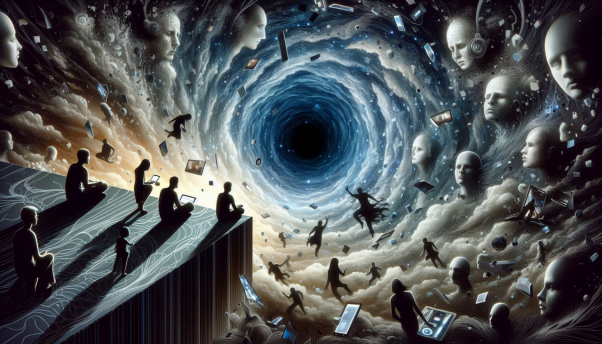
The term “doomscrolling” (and its daytime counterpart, “doomsurfing”) rose to prominence during the COVID-19 pandemic, but the behavior itself is a logical endpoint of our information ecosystem. It describes a state of being trapped in a feedback loop of anxiety and information-seeking, where each new piece of bad news feels simultaneously dreadful and indispensable. The doomer believes that by consuming more information, they are regaining a sense of control, preparedness, or moral awareness in the face of chaos. In reality, they are often surrendering their psychological equilibrium to algorithmic systems engineered for engagement, not well-being.
This behavior transcends mere habit; it represents a fundamental shift in how humans interface with threat perception and collective anxiety. Our brains, evolutionarily primed to prioritize negative information for survival—a rustle in the grass that could be a predator—are now connected to a global nervous system that broadcasts every “rustle” on the planet in real-time, stripped of context and proportion. The psychological impact is not a simple linear relationship where more bad news equals more sadness. It is a complex, multifaceted assault on mental health, contributing to a chronic state of hypervigilance, learned helplessness, emotional exhaustion, and cognitive distortion.
This examination will delve into the intricate mechanisms of doomscrolling and its cascading effects on the human psyche. We will first deconstruct the Neuropsychological and Behavioral Trap, exploring how the brain’s reward and threat systems are hijacked by infinite negative feeds. Second, we will analyze its core Impact on Anxiety, Stress, and Trauma, detailing how it cultivates chronic, diffuse dread and can re-traumatize vulnerable individuals. Third, we will trace its contribution to Depression, Helplessness, and Cognitive Distortion, examining how it fosters a nihilistic worldview and warps our perception of reality. Fourth, we will consider its Broader Psychosocial Consequences, including its erosion of empathy, social bonds, and constructive action. Finally, we will map out pathways for Mitigation, Agency, and Digital Resilience, offering strategies to break the cycle and reclaim cognitive and emotional sovereignty in an age of algorithmic anxiety. To understand doomscrolling is to understand a defining pathology of our time—one where the quest for awareness threatens to consume the very self it seeks to protect.
1. The Neuropsychological and Behavioral Trap: How Doomscrolling Hijacks the Brain
Doomscrolling is not a failure of individual willpower; it is the predictable outcome of a brain operating in an environment for which it was never evolutionarily prepared. The behavior is sustained by a powerful confluence of neurobiological mechanisms and persuasive design elements that create a self-perpetuating cycle of compulsion.
At its core, doomscrolling exploits the brain’s negativity bias. For survival, our neural circuitry is wired to prioritize and remember negative information more strongly than positive or neutral information. A potential threat demands immediate attention and cognitive resources. Social media platforms and news aggregators, powered by algorithms that prioritize “engagement,” have learned that negative, outrageous, or fear-inducing content reliably captures this attention. Thus, the digital landscape becomes disproportionately saturated with negative stimuli, creating a distorted mirror of the world that appears far more threatening than it statistically is. The brain, obeying its ancient programming, interprets this skewed data stream as evidence of a dangerously volatile environment, triggering a low-grade but persistent threat response.
This is compounded by the variable reward schedule engineered into these platforms. The “pull-to-refresh” mechanism and infinite scroll are directly modeled on slot machine design. The user does not know what the next swipe will bring: a mildly concerning headline, a profoundly distressing video, or perhaps a piece of neutral content. This unpredictability is key. It stimulates the brain’s dopamine system, a neurotransmitter central to motivation, reward, and seeking behavior. Dopamine is not released when we find something pleasurable, but in the anticipation of a potential reward (or, critically, the avoidance of a threat). Each refresh holds the potential for critical information that might keep us safe—the modern equivalent of scanning the horizon for danger. This turns the consumption of news into a compulsive seeking cycle, where the act of scrolling itself becomes reinforcing, even when the content it delivers is aversive.
Simultaneously, doomscrolling activates the body’s stress response systems. The amygdala, the brain’s fear center, processes the emotional salience of the threatening content. This triggers the hypothalamic-pituitary-adrenal (HPA) axis, leading to the release of cortisol and adrenaline. Heart rate may increase, muscles tense, and the mind enters a state of heightened alert. In acute, real-world danger, this is life-saving. In the context of reading about distant, systemic, or unsolvable problems from the safety of one’s couch, this physiological arousal has no outlet. The stress hormones circulate without a behavioral release (fight or flight), leading to a state of chronic, low-grade physiological stress. The body remains on high alert, which is both psychologically draining and physiologically damaging over time.
The design of the interface itself facilitates a dissociative flow state that makes disengagement difficult. The seamless, endless, and minimally interactive nature of scrolling requires little conscious effort, allowing the higher cognitive functions of the prefrontal cortex—responsible for critical thinking, self-regulation, and decision-making—to disengage. The user enters a passive, receptive, and trance-like state, absorbing information without the normal filters of skepticism or contextual analysis. This “zombie scrolling” mode makes it exceptionally easy to lose track of time and intention, as the conscious mind is bypassed in favor of automatic, stimulus-driven behavior.
Finally, the trap is sealed by a misguided sense of moral or intellectual duty. In a complex world, staying informed feels like a civic responsibility. The doomer may believe that turning away from grim news is an act of privilege, ignorance, or cowardice. This moral framing transforms the compulsion into a virtue, making it harder to justify setting boundaries. The fear of being “uninformed” or “complacent” becomes a powerful driver, ensuring that the individual returns to the stream of bad news, mistaking psychological self-flagellation for ethical rigor. Thus, the cycle is reinforced by neurochemistry, behavioral psychology, and personal ethics, creating a trap that feels simultaneously irresistible and obligatory.
2. Impact on Anxiety, Stress, and Trauma: The Cultivation of Chronic Dread
The most immediate and palpable impact of doomscrolling is on anxiety and stress levels. It acts as a powerful engine for the production of a specific, modern malaise: a free-floating, chronic, and often indefinable dread about the state of the world and the future. This is not a focused anxiety about a personal, manageable problem, but a diffuse, existential anxiety about systemic, global, and seemingly intractable crises.
Doomscrolling directly fuels Generalized Anxiety Disorder (GAD)-type symptoms. GAD is characterized by excessive, uncontrollable worry about a variety of topics. The doomscroller’s feed provides an endless buffet of legitimate worries—climate change, political instability, economic inequality, pandemics—but presents them in a decontextualized, urgent, and catastrophic frame. The brain, inundated with these “threats,” struggles to compartmentalize or resolve them, as they are largely outside an individual’s direct control. This leads to a persistent state of apprehensive expectation, a feeling that “something bad is about to happen,” accompanied by restlessness, irritability, muscle tension, and sleep disturbances. The world begins to feel perpetually unsafe, and the mind remains in a constant state of scanning for the next piece of bad news, mistaking this hypervigilance for preparedness.
This behavior also creates and exacerbates vicarious and collective trauma. Humans possess mirror neurons and a capacity for empathy that allows us to feel the pain of others. Consuming a relentless stream of graphic imagery from war zones, violent incidents, or natural disasters, or absorbing the collective anguish expressed on social media during a crisis, can overwhelm the psyche’s ability to process. This is not simple empathy; it is a form of emotional flooding. Over time, this can lead to symptoms akin to post-traumatic stress disorder (PTSD), such as intrusive thoughts about the consumed content, emotional numbness (a defense mechanism against the overload), hypervigilance, and a negative shift in worldview. For individuals with pre-existing trauma histories, doomscrolling can be actively re-traumatizing, triggering past wounds by exposing them to symbolically or literally similar content.
Furthermore, doomscrolling fundamentally disrupts the psychophysiology of stress recovery. The human nervous system requires periods of safety and calm to return to a baseline state after stress. The practice of reaching for a phone during any idle moment—in line, before bed, upon waking—means these micro-moments of potential recovery are instead filled with fresh stressors. There is never a “safe” signal. Cortisol levels, which should follow a natural diurnal rhythm, peak in the morning and gradually decline, can remain elevated throughout the day and into the evening. This disrupts sleep architecture (creating a vicious cycle where tiredness lowers resilience, leading to more compulsive scrolling), impairs digestion, weakens the immune system, and creates a pervasive sense of exhaustion. The individual feels chronically “wired and tired,” a state of adrenal fatigue driven not by physical danger, but by digital immersion in narratives of peril.
Perhaps most insidiously, doomscrolling cultivates a cognitive distortion known as “catastrophizing.” This involves anticipating the worst possible outcome and overestimating both its likelihood and its severity. The algorithmic feed is a catastrophizing machine, as it systematically surfaces the most extreme, alarming, and outlier events. A steady diet of this content warps one’s probability assessments. The risk of a rare disease, a violent attack, or an economic meltdown begins to feel imminent and highly probable. This distorted risk perception amplifies anxiety far beyond what is warranted by statistical reality, locking the individual into a mental prison of anticipated disaster, from which the next headline serves as both confirmation and further provocation.
3. Depression, Helplessness, and Cognitive Distortion: The Erosion of Agency and Hope
While anxiety represents the hyper-aroused pole of doomscrolling’s impact, depression and hopelessness represent the shutdown pole. Chronic exposure to unsolvable global problems, coupled with the addictive, passive nature of the scrolling behavior itself, fosters a psychological state characterized by learned helplessness, nihilism, and depressive cognition.
The central pillar of this effect is learned helplessness. This psychological phenomenon occurs when an individual repeatedly encounters negative stimuli that they cannot control or escape. Eventually, they learn that their actions are futile and stop trying to avoid the aversive situation, even when opportunities to do so later arise. The doomscroller is in a perfect learned helplessness paradigm. They are exposed to a continuous stream of negative events (economic collapse, political corruption, environmental decay) against which they, as an individual, feel powerless to effect meaningful change. With every swipe, their sense of personal agency is diminished. The subconscious lesson is: “The world is bad, it is getting worse, and there is nothing I can do about it.” This erodes motivation, initiative, and the belief that one’s actions matter, which are core symptoms of depression.
This feeds directly into a nihilistic or pessimistic worldview, a core cognitive distortion in depressive thinking. Doomscrolling selectively presents evidence that confirms a negative schema about the world and humanity. Stories of corruption, cruelty, and failure are amplified; stories of progress, cooperation, and kindness are often algorithmically suppressed or framed as inadequate. Over time, the individual’s fundamental beliefs about the world darken. They may develop a pervasive sense that humanity is inherently selfish, that institutions are irredeemably corrupt, and that the future holds only decline. This pessimistic outlook is not a rational conclusion based on a balanced data set, but a distorted perception forged in the furnace of algorithmic selection. It leads to anhedonia (a loss of pleasure), social withdrawal, and a profound sense of emptiness.
The behavior also directly undermines the cognitive and behavioral components of mood regulation. Depression is maintained by patterns of rumination—repetitive, passive focus on the causes and consequences of one’s distress. Doomscrolling is a form of externalized rumination. Instead of circling one’s own problems, one circles the world’s problems. The cognitive process, however, is identical: it is passive, repetitive, and focused on negative content without moving toward active problem-solving. It consumes mental energy that could be used for constructive thought or action, leaving the individual cognitively depleted. Furthermore, the sedentary, isolating nature of prolonged scrolling reduces engagement in activities known to bolster mood, such as physical exercise, face-to-face social interaction, creative pursuits, and experiences in nature. It displaces the very behaviors that are antidotes to depression.
Finally, doomscrolling creates a self-fulfilling prophecy of disengagement. Convinced of their own powerlessness and the hopelessness of the world’s situation, the individual withdraws from civic and community life. They may stop voting, volunteering, or participating in local organizations because it “doesn’t matter.” This withdrawal then confirms their belief that nothing can change, further deepening the depressive cycle. The paradox is stark: an activity often begun with a desire to be “aware” and “engaged” ultimately cripples the capacity for genuine, meaningful engagement. The individual becomes a passive witness to apocalypse, mistaking their distress for insight, and their paralysis for a logical response to an irredeemable reality.
4. Broader Psychosocial Consequences: Empathy Fatigue, Polarization, and the Death of Nuance
The damage wrought by doomscrolling extends beyond the individual’s internal state, corroding the very fabric of social understanding, empathy, and constructive discourse. It fosters a psychosocial environment characterized by burnout, binary thinking, and tribal antagonism.
A primary social casualty is compassion fatigue or empathy burnout. Empathy is a finite cognitive and emotional resource. The human brain is not equipped to genuinely care, with sustained emotional intensity, about an endless series of tragedies affecting millions of strangers. Doomscrolling demands precisely this. The result is not a deepening of compassion, but its erosion. To protect itself from emotional overwhelm, the psyche can resort to numbness, cynicism, or a performative, shallow form of concern (e.g., quickly “liking” a tragic news post before scrolling on). This burnout is particularly devastating for caregivers, activists, and helping professionals, but it affects the general populace as well. When every issue is presented as an urgent, world-ending catastrophe, the ability to triage one’s emotional and moral attention breaks down. The suffering of others becomes background noise, or worse, a source of irritation—another “depressing thing” clogging the feed.
This is intimately linked to the algorithmic amplification of outrage and polarization. Doomscrolling feeds thrive on conflict. Content that sparks moral outrage, tribal identity, and us-vs-them thinking generates high engagement. Algorithms, therefore, surface the most extreme voices and simplified narratives from all sides of a conflict. The doomscroller is fed a diet of the worst actions and arguments of their perceived opponents, creating a “caricature effect.” Complex political, social, or scientific issues are reduced to moral melodramas featuring pure heroes and vile villains. Nuance, ambiguity, and common ground vanish. This fosters a binary cognitive style—things are either perfect or evil, leading to solutions that are total or non-existent. It fuels affective polarization, where dislike and distrust of the “other side” become central to one’s identity. The world is no longer a place of shared problems with difficult, collaborative solutions; it is a Manichean battle between good and evil, where any compromise is treachery.
This environment actively undermines constructive action and solution-oriented thinking. Doomscrolling focuses almost exclusively on problems, rarely on viable, nuanced solutions or stories of successful mitigation. It creates a “problem-saturation” effect, where the scale of the issues presented is so vast that any individual or community-level action feels laughably insignificant. Why recycle if corporations are polluting the oceans? Why engage in civil dialogue if the other side is pure evil? This mindset paralyzes collective agency. Furthermore, the constant state of crisis mode makes long-term, strategic thinking impossible. The brain, stuck in a threat response, prioritizes immediate, emotional reactions over deliberate, rational planning. Civic life becomes a series of outraged reactions to the latest scandal, rather than a sustained, strategic effort to build better systems.
Finally, doomscrolling degrades the quality of public discourse and shared reality. It accelerates the spread of misinformation and disinformation, as alarming falsehoods often travel faster and further than careful corrections. In the scroll, all content is flattened: peer-reviewed science, activist rhetoric, conspiracy theory, and sponsored content appear in the same visual format, stripped of their essential context and credibility markers. This creates an “epistemic crisis,” where it becomes increasingly difficult to agree on basic facts, let alone complex truths. Shared reality fragments. The doomscroller, convinced they alone see the horrifying truth, may retreat into cynicism or conspiracy, further alienating themselves from community and evidence-based discourse. The public square becomes a cacophony of competing apocalypses, where the loudest, most frightening voice wins attention, and trust in any form of mediating institution—journalism, science, governance—is systematically destroyed.
5. Mitigation, Agency, and Digital Resilience: Reclaiming Cognitive Sovereignty
Confronting doomscrolling requires moving beyond individual blame and recognizing it as a systemic challenge born from the intersection of human psychology and persuasive technology. Mitigation is not about disengaging from the world, but about engaging with it more intentionally, healthily, and effectively. Building digital resilience involves a combination of personal hygiene, technological adjustment, cognitive reframing, and collective action.
The foundational step is conscious consumption and structured intake. This means replacing infinite, passive scrolling with deliberate, time-bound information sessions. Strategies include: designating specific “news times” once or twice a day (e.g., 30 minutes in the morning), using a timer, and getting news from a few curated, reputable sources instead of the social media firehose. After the time is up, the news apps are closed. This transforms news consumption from a compulsive background activity into a focused foreground task, reinstating a sense of control. Equally important is cultivating “information finishing”—consciously deciding when you have enough information to be informed, and then stopping. The goal is sufficiency, not exhaustive, anxiety-inducing completeness.
On a technological level, aggressively curating the digital environment is essential. This involves: unfollowing or muting accounts that primarily traffic in outrage or catastrophe; turning off non-essential push notifications (especially from news apps); removing social media and news apps from the phone’s home screen; and using website blockers during sleep or focus hours. Leveraging app features that show daily time limits or “wind down” reminders can create friction. One can also choose to diversify the feed intentionally by following accounts dedicated to solutions, scientific progress, community building, and artistic beauty, forcing the algorithm to present a more balanced worldview.
Cultivating cognitive and emotional meta-awareness is the internal work required. This involves practicing noticing the bodily sensations that arise during doomscrolling (tight chest, shallow breathing, clenched jaw) and using them as a signal to pause. It includes challenging cognitive distortions: “Is this headline representative of the whole truth? What is the statistical likelihood of this feared outcome? Am I focusing only on threats?” Mindfulness practices can help create a gap between stimulus (the distressing headline) and reaction (the compulsive scroll), allowing for a conscious choice. Reframing the moral duty is critical: one’s responsibility is not to emotionally drown in every world problem, but to stay “informed enough to act effectively, not so inundated that you become paralyzed.” Well-being is not a privilege; it is a prerequisite for sustained, compassionate action.
Rebuilding agency requires channeling anxious energy into concrete action. The antidote to learned helplessness is learned helpfulness. This can be micro-actions: donating to a vetted cause, writing a letter to a representative, volunteering for a local organization, or simply helping a neighbor. Action, no matter how small, breaks the cycle of passive victimhood and provides a healthy outlet for the physiological stress that news consumption generates. It reinforces the neural pathways of agency and efficacy.
Finally, fostering digital resilience requires collective and cultural shifts. We must advocate for and support journalism that balances accountability with solution-seeking, moving beyond pure outrage models. Public discourse should value nuance, complexity, and long-term thinking. On a community level, creating spaces for face-to-face dialogue about shared concerns, away from the distorting lens of social media algorithms, can rebuild a sense of solidarity and realistic hope. Ultimately, we must demand ethical design from technology companies—design that prioritizes user well-being over engagement metrics, that allows for easy curation and time management, and that does not profit from the systematic exploitation of our neurological vulnerabilities.
Breaking free from doomscrolling is an act of reclaiming one’s mind, time, and emotional energy from systems designed to capture them. It is a commitment to seeing the world in its full complexity—with its very real perils, but also its enduring capacity for kindness, cooperation, and repair. It is the understanding that to build a better future, we must first protect our capacity to imagine one, and that begins by stepping back from the infinite abyss to see the horizon anew.
Conclusion
Doomscrolling is more than a bad habit; it is a symptom of a profound disconnect between our Paleolithic brains and our digital infosphere. It represents a flawed coping mechanism for an age of overwhelming, hyper-connected complexity, where the thirst for awareness and control is expertly manipulated into a cycle of anxiety, helplessness, and despair. Its impact on mental health is systemic, eroding the pillars of psychological well-being: a sense of safety, agency, hope, and connection.
The journey out of the doomscroll is not towards ignorance, but towards wisdom. It is the wisdom to discern between being informed and being traumatized; between vigilance and paranoia; between righteous anger and self-consuming rage. It requires acknowledging that our cognitive and emotional resources are precious and finite, and that to allocate them wisely is not an act of cowardice, but of strategy. The health of our democracies, our communities, and our individual souls may depend on this recalibration.
The challenge before us is to build a new relationship with information—one that serves human flourishing rather than undermines it. This demands personal discipline, technological literacy, and a cultural shift towards valuing depth over velocity, nuance over certainty, and constructive action over performative distress. We must learn to touch the world’s pain without letting it consume our light. In the end, the most radical act of defiance in an age of algorithmic doom may be to choose to believe, and to act as if, a better future is still possible—and to protect the fragile, necessary flame of that hope from the incessant digital winds that seek to extinguish it.
SOURCES
Abramowitz, J. S., Deacon, B. J., & Whiteside, S. P. H. (2023). Exposure therapy for anxiety: Principles and practice (3rd ed.). Guilford Publications.
Alba, B., O’Connor, D. B., & Gallagher, S. (2024). The relationship between stress mindset, doomscrolling, and psychological distress during societal crises. Anxiety, Stress, & Coping, 37(2), 123-139.
Bessi, A., Zollo, F., Del Vicario, M., Scala, A., Caldarelli, G., & Quattrociocchi, W. (2024). Trends of narratives in the age of misinformation. PLOS ONE, 19(1), e0297022.
Brady, W. J., Crockett, M. J., & Van Bavel, J. J. (2023). The MAD model of moral contagion: The role of motivation, attention, and design in the spread of moralized content online. Perspectives on Psychological Science, 18(5), 1066-1087.
Brosch, T., & Sander, D. (2024). The appraising brain: Towards a neuroscience of emotion. Nature Reviews Neuroscience, 25(2), 87-102.
Christensen, J., & Larsen, M. C. (2024). Doomscrolling as a coping strategy: An analysis of media consumption during prolonged crises. New Media & Society, 26(4), 1885-1905.
Constantinou, M., Kagialis, A., & Karekla, M. (2023). #Stressed: A systematic review of the association between social media use and stress. Computers in Human Behavior, 139, 107544.
Figley, C. R. (2022). Compassion fatigue: Psychotherapists’ chronic lack of self care. Journal of Clinical Psychology, 78(11), 2043-2066.
Fredrickson, B. L. (2023). The broaden-and-build theory of positive emotions: Form, function, and mechanisms. In Positive psychology (pp. 17-34). Routledge.
Garfin, D. R., Silver, R. C., & Holman, E. A. (2022). The novel coronavirus (COVID-19) outbreak: Amplification of public health consequences by media exposure. Health Psychology, 39(5), 355-357.
Hilbert, M., & López, P. (2024). The world’s technological capacity to store, communicate, and compute information. Science, 383(6685), 794-799.
Hofmann, S. G., & Gómez, A. F. (2023). Mindfulness-based interventions for anxiety and depression. Psychiatric Clinics, 46(1), 77-89.
Keles, B., McCrae, N., & Grealish, A. (2023). A systematic review: The influence of social media on depression, anxiety and psychological distress in adolescents. International Journal of Adolescence and Youth, 28(1), 1-15.
Kross, E., Verduyn, P., Sheppes, G., Costello, C. K., Jonides, J., & Ybarra, O. (2023). Social media and well-being: Pitfalls, progress, and next steps. Trends in Cognitive Sciences, 27(1), 1-15.
Lazarus, R. S., & Folkman, S. (2024). Stress, appraisal, and coping. Springer Publishing Company.
Leiserowitz, A., Maibach, E., Rosenthal, S., & Kotcher, J. (2023). Climate change in the American mind: Beliefs & attitudes. Yale Program on Climate Change Communication.
Lewandowsky, S., Cook, J., & Lombardi, D. (2023). Debunking handbook 2020. Journal of Applied Research in Memory and Cognition, 12(4), 445-455.
HISTORY
Current Version
Dec, 02, 2025
Written By
BARIRA MEHMOOD