Introduction
The digital landscape has fundamentally reshaped the terrain of adolescence, with social media platforms becoming the central plaza for modern teen life. These networks promise connection, creativity, and community, offering unprecedented ways for young people to explore identity and maintain relationships. However, woven into the fabric of likes, shares, and endless scrolls is a potent risk: addiction. Social media addiction, characterized by compulsive use, preoccupation, and continued engagement despite negative consequences, has emerged as a critical public health concern.
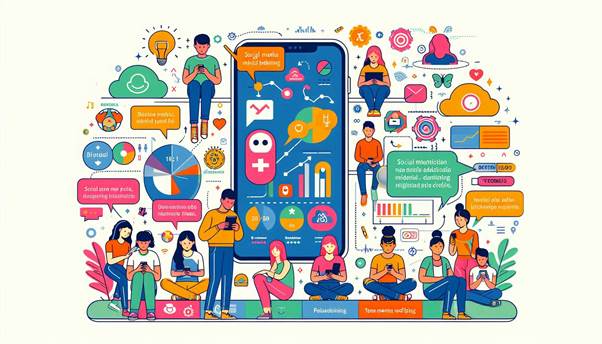
For teenagers, whose brains are still undergoing significant development in regions responsible for impulse control, reward processing, and social cognition, this addictive pull is particularly potent. The impact on their mental well-being is profound and multifaceted, creating a silent epidemic that operates from the palm of their hand. This essay will explore the intricate ways in which social media addiction corrodes teen mental health, examining its role in fueling anxiety and depression, fragmenting attention and eroding self-esteem, disrupting fundamental sleep patterns, and perverting the very nature of social connection it purports to provide. Understanding this impact is not a call to dismantle digital technology, but a crucial step in mitigating its harms and fostering a generation that can navigate the online world with resilience and health.
1. The Anxiety and Depression Spiral
Perhaps the most documented and severe impact of social media addiction on teen mental well-being is its role as a catalyst for anxiety and depression. This relationship is not merely correlational but is underpinned by powerful psychological mechanisms inherent in the design of these platforms. The addictive cycle begins with the brain’s reward system. Each notification, like, or positive comment triggers a release of dopamine, the neurotransmitter associated with pleasure and reward. For the addicted teen, social media use becomes a relentless pursuit of this neurological “hit,” conditioning them to seek validation almost exclusively through digital metrics. However, this reward system is inherently unstable and comparative. Platforms are engineered around feeds that showcase the highlight reels of peers, influencers, and celebrities—curated narratives of perfection, success, and happiness. For a teenager addicted to these feeds, constant exposure creates a distorted perception of reality, where everyone else appears to be living a more fulfilling, attractive, and successful life. This fosters social comparison, a core driver of depressive symptoms. The addicted user doesn’t just compare; they engage in “upward comparison,” measuring their own mundane, complex, or difficult reality against the polished ideals online, leading to feelings of inadequacy, envy, and profound dissatisfaction with their own lives.
Simultaneously, the architecture of social media fuels intense Fear of Missing Out (FoMO). The addictive need to stay perpetually connected means the teen is haunted by the anxiety that rewarding experiences, social gatherings, or crucial conversations are happening without them. The endless stream of updates acts as a live feed of everything they are not part of, exacerbating feelings of social isolation and anxiety. This FoMO compels ever-more frequent checking, deepening the addictive cycle. Furthermore, the performance-based nature of these platforms turns everyday life into a stage. The addicted teen is not just living an experience but is often preoccupied with how to document and curate it for maximum approval. This performative pressure to appear happy, popular, and interesting is a significant source of chronic stress and identity anxiety. The feedback loop is vicious: posts that do not receive expected engagement can feel like public rejections, crushing self-worth, while the pursuit of the next validating post maintains the addictive behavior. Research consistently links heavy, compulsive social media use to heightened levels of cortisol, the body’s primary stress hormone, creating a physiological state of sustained anxiety. In this environment, social media addiction does not simply coexist with anxiety and depression; it systematically cultivates the conditions for them to thrive, trapping teens in a spiral where the very tool they use to feel connected becomes the source of their deepest distress.
2. Cognitive Fragmentation and the Erosion of Self-Esteem
Beyond mood disorders, social media addiction exacts a heavy toll on cognitive functioning and the foundational development of self-esteem. The very design of platforms like TikTok, Instagram Reels, and YouTube Shorts, which dominate teen usage, is predicated on attenuated attention spans. Addicted use involves rapid, relentless context-switching—from a friend’s story, to a celebrity post, to a news clip, to a meme—all within seconds. This trains the brain to expect and crave novel stimuli in brief, fragmented bursts, severely undermining the capacity for sustained, deep focus. The cognitive consequence is a phenomenon often described as “popcorn brain,” where thoughts become scattered, disjointed, and unable to settle. For teenagers, whose prefrontal cortex—responsible for executive functions like concentration, planning, and impulse control—is still under construction, this addiction can potentially rewire neural pathways, making sustained attention in academic, professional, or even personal contexts increasingly difficult. The ability to engage with a complex book, persist through a challenging homework assignment, or maintain a lengthy, nuanced conversation is eroded, replaced by a restless need for the next digital hit.
This cognitive fragmentation works in tandem with a systematic erosion of self-esteem. Social media addiction shifts the locus of self-worth from internal qualities and real-world achievements to external, quantifiable, and fickle metrics: follower counts, like ratios, and comment sentiment. For the addicted teen, their value becomes a number on a screen, subject to the volatile algorithms and whims of an online audience. This commodification of the self is psychologically damaging. The quest for validation becomes a relentless, high-stakes game where self-esteem fluctuates dramatically with each post’s performance. A highly-liked photo can provide a temporary high, but the baseline inevitably resets, demanding the next post for another fix, in a cycle akin to substance tolerance. Moreover, the platforms are hotbeds for cyberbullying and toxic commentary. For an addicted user, disengaging is not an option, so exposure to negative comparisons, body-shaming remarks, hateful speech, or even passive aggression becomes a constant, inescapable barrage. The curated physical perfection often showcased online also fuels body image issues, driving disordered eating and dysmorphia, as teens, particularly girls, feel compelled to meet unrealistic and often digitally altered beauty standards. The internal narrative shifts from “I am” to “I am perceived as,” fragmenting a cohesive sense of identity. The addicted teen’s self-concept becomes a mosaic of others’ perceptions, likes, and comments, preventing the development of a stable, intrinsic self-esteem rooted in authentic qualities and accomplishments.
3. Sleep Disruption and Neurological Consequences
The impact of social media addiction extends deeply into the biological realm, with sleep disruption standing as one of its most direct and harmful physical consequences. For addicted teenagers, the compulsion to remain online directly intrudes upon the crucial, restorative hours of the night. Phantom vibration syndrome and notification anxiety keep the brain in a state of hyper-vigilance, making it difficult to wind down. The prevalent behavior of sleeping with smartphones within reach, or even in bed, ensures that the digital world is the last thing engaged with before sleep and the first thing checked upon any nighttime awakening. This practice severely fragments sleep architecture, reducing both sleep duration and quality. However, the harm is not merely behavioral; it is also physiological. The blue light emitted by smartphone and tablet screens is particularly disruptive. It suppresses the production of melatonin, the hormone responsible for regulating sleep-wake cycles. For an addicted teen scrolling late into the night, their biological clock receives a potent signal that it is still daytime, delaying sleep onset and compromising the depth of sleep achieved.
The ramifications of this chronic sleep deprivation are catastrophic for mental well-being and cognitive development. Sleep is not a passive state but an active period of neural housekeeping and consolidation—essential for memory formation, emotional regulation, and clearing metabolic waste from the brain. When addiction steals sleep, it directly impairs emotional regulation, lowering the threshold for stress, irritability, and emotional outbursts while diminishing the capacity for positive emotion. The tired brain leans more heavily on the amygdala, the fear center, and less on the prefrontal cortex, the rational regulator, making teens more reactive, anxious, and prone to misinterpret social cues. Academically, the effects are severe, with impaired concentration, memory, and executive function leading to declining performance, which in turn becomes its own source of stress and lowered self-esteem. Furthermore, research indicates a strong bidirectional relationship between sleep deprivation and mental health disorders; lack of sleep is both a symptom and a precipitating factor for anxiety and depression. Thus, social media addiction initiates a vicious cycle: compulsive use causes poor sleep, which worsens mental health, which then drives further compensatory use of social media as a (futile) coping mechanism, further degrading sleep. This cycle entrenches the addiction while systematically degrading the neurological and psychological resilience of the developing adolescent brain.
4. The Paradox of Social Connection: Isolation and Relationship Depletion
Ironically, an addiction rooted in platforms designed for connection often culminates in profound feelings of loneliness and a depletion of meaningful relationships. This represents the central paradox of social media addiction: it promises community but frequently delivers commodified interaction, weakening the very social fabric it claims to weave. For the addicted teen, digital communication supplants face-to-face interaction. The nuances of in-person conversation—tone of voice, body language, spontaneous reciprocity, and shared physical presence—are stripped away, replaced by text, images, and performative posts. This erosion of deep, embodied connection leads to social isolation, even amidst hundreds of online “friends.” Relationships become maintenance tasks measured by likes and comments rather than sustained by shared vulnerability, mutual support, and real-world experiences. The addicted individual may be constantly “in touch” yet feel profoundly unknown and lonely, a state described as “connected solitude.”
Furthermore, the addictive use of social media actively degrades the quality of existing real-world relationships. The phenomenon of phubbing—snubbing someone in a social setting by focusing on one’s phone—has become commonplace. During meals, family time, or outings with friends, the addicted teen’s attention is fractured, signaling to those present that the digital world holds greater priority. This behavior damages trust, impedes the development of empathy, and stifles the growth of intimacy that comes from undistracted engagement. Real conversations are interrupted, moments of shared joy are fragmented, and the emotional bandwidth for deep listening is consumed by the online feed. The addiction also fosters a transactional view of friendship, where social capital is accrued through follows and likes, and interactions are often superficial and curated. This leaves teens ill-equipped to navigate the inevitable complexities, conflicts, and compromises of authentic relationships, which require skills largely unpracticed in the binary world of “block” or “like.” Consequently, while the teen may have a vast network of acquaintances online, they often lack a core support system of deep, trusting friendships they can rely on during times of crisis. The social media addiction, therefore, creates a cruel illusion: it satiates the immediate craving for connection while systematically starving the individual of the nutritious, sustained, and meaningful human bonds that are fundamental to long-term mental well-being and resilience. The teen is left in a crowded digital room, shouting for attention, yet feeling utterly alone.
Conclusion
In conclusion, the pervasive and addictive nature of social media represents a significant, multi-front assault on the mental well-being of teenagers. As explored, the compulsive, reward-seeking cycle of use fuels a spiral of anxiety and depression by amplifying social comparison, Fear of Missing Out, and performative pressure. It fragments cognitive capacity, eroding attention spans and, more insidiously, dismantling self-esteem by tethering a young person’s worth to volatile external validation. The addiction directly invades biological processes, most notably through severe sleep disruption, which in turn impairs emotional regulation and cognitive function, creating a vicious, self-perpetuating cycle of decline. Perhaps most paradoxically, an addiction to connection tools ultimately manufactures deep isolation and depletes the quality of real-world relationships, leaving teens in a state of connected solitude. These impacts are not isolated symptoms but interconnected dysfunctions that compound one another, affecting a generation during a critical period of neurological and psychological development. Addressing this crisis requires a move beyond simplistic notions of “digital detox” to a more nuanced understanding of design ethics, parental and educator guidance, and the cultivation of digital literacy that emphasizes intentional use over mindless consumption. The goal must be to empower teenagers to harness the benefits of connectivity without falling prey to the mechanisms of addiction, thereby safeguarding their mental well-being in an increasingly digital world.
Sources
Abi-Jaoude, E., Naylor, K. T., & Pignatiello, A. (2020). Smartphones, social media use and youth mental health. CMAJ, 192(6), E136–E141.
American Psychological Association. (2023). Health advisory on social media use in adolescence.
Beyens, I., Pouwels, J. L., van Driel, I. I., Keijsers, L., & Valkenburg, P. M. (2020). The effect of social media on the well-being of adolescents: A systematic review. Current Opinion in Psychology, 39, 91–98.
Firth, J., Torous, J., Stubbs, B., Firth, J. A., Steiner, G. Z., Smith, L., Alvarez-Jimenez, M., Gleeson, J., Vancampfort, D., Armitage, C. J., & Sarris, J. (2019). The “online brain”: How the Internet may be changing our cognition. World Psychiatry, 18(2), 119–129.
Huang, C. (2022). A meta-analysis of the problematic social media use and mental health. International Journal of Social Psychiatry, 68(1), 12–33.
Keles, B., McCrae, N., & Grealish, A. (2020). A systematic review: The influence of social media on depression, anxiety and psychological distress in adolescents. International Journal of Adolescence and Youth, 25(1), 79–93.
Odgers, C. L., & Jensen, M. R. (2020). Annual research review: Adolescent mental health in the digital age: Facts, fears, and future directions. Journal of Child Psychology and Psychiatry, 61(3), 336–348.
Primack, B. A., Shensa, A., Escobar-Viera, C. G., Barrett, E. L., Sidani, J. E., Colditz, J. B., & James, A. E. (2017). Use of multiple social media platforms and symptoms of depression and anxiety: A nationally-representative study among U.S. young adults. Computers in Human Behavior, 69, 1–9.
Scott, H., & Woods, H. C. (2019). Understanding links between social media use, sleep and mental health: Recent progress and current challenges. Current Sleep Medicine Reports, 5(3), 141–149.
Twenge, J. M. (2020). Increases in depression, self-harm, and suicide among U.S. adolescents after 2012 and links to technology use: Possible mechanisms. Psychiatric Research and Clinical Practice, 2(1), 19–25.
Valkenburg, P. M., Meier, A., & Beyens, I. (2022). Social media use and its impact on adolescent mental health: An umbrella review of the evidence. Current Opinion in Psychology, 44, 58–68.
Zhao, N., & Zhou, G. (2020). Social media use and mental health during the COVID-19 pandemic: Moderator role of disaster stressor and mediator role of negative affect. *Applied Psychology: Health and Well-Being, 12*(4), 1019–1038.
HISTORY
Current Version
Dec, 06, 2025
Written By
BARIRA MEHMOOD