Introduction
Video gaming has evolved from a niche hobby into a dominant global cultural and economic force, with billions of participants across all age groups. From casual mobile gaming to competitive esports, the time individuals spend immersed in digital worlds has increased dramatically. While the cognitive, social, and psychological impacts of gaming are widely debated, a more physically immediate consequence often remains overlooked: its profound effect on posture and musculoskeletal health. The sedentary, repetitive, and often prolonged nature of gaming poses significant risks to the structural integrity of the body, leading to a cascade of potential disorders.
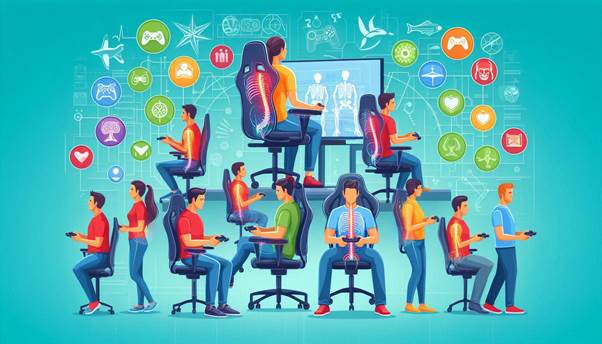
Gaming is fundamentally a static activity that demands sustained attention and repetitive motor inputs. Players often remain in fixed positions for hours, with their spines flexed, shoulders rounded, necks craned forward, and wrists in constant, precise motion. This environment creates a perfect storm for musculoskeletal distress. Unlike traditional computer work, which may involve natural breaks, gaming sessions are characterized by intense focus and engagement, leading players to ignore their body’s signals of discomfort, fatigue, and pain until an injury manifests. The rise of professional esports has further highlighted this issue, where players, akin to elite athletes, push their bodies to the limit for performance, suffering from career-threatening conditions like repetitive strain injuries and chronic pain syndromes.
This examination delves into the complex relationship between gaming and the musculoskeletal system. It will explore the biomechanics of the typical gaming posture, identify the specific health disorders that arise from prolonged play, analyze the unique risks faced by both casual and professional gamers, and propose a multifaceted framework for prevention and management. Understanding these effects is crucial not only for individual gamers seeking to protect their long-term health but also for parents, educators, game developers, and healthcare providers in fostering a sustainable and healthy gaming culture. As gaming continues to embed itself into daily life, proactive measures to mitigate its physical toll become an essential component of responsible participation in the digital age.
1. The Biomechanics of the Typical Gaming Posture: A Recipe for Strain
The human body is designed for movement, not for sustained static postures. The typical posture adopted during gaming—whether on a console, PC, or mobile device—systematically deviates from the body’s neutral alignment, placing excessive and prolonged stress on muscles, tendons, ligaments, and joints. This posture is not merely “slouching”; it is a specific biomechanical configuration that leads to predictable patterns of strain.
The most significant deviation is the forward head posture (FHP) and rounded shoulders. As a gamer focuses on the screen, the head naturally drifts forward. For every inch the head moves forward from its neutral alignment over the shoulders, the effective weight on the cervical spine increases by approximately 10 pounds. This “text neck” or “gamer’s neck” phenomenon forces the posterior neck muscles, such as the trapezius, levator scapulae, and cervical extensors, to work overtime in an isometric contraction to prevent the head from falling further forward. This leads to muscle fatigue, trigger points (knots), and eventual weakness. Simultaneously, the anterior neck muscles become shortened and tight. The shoulder girdle follows suit, internally rotating and protracting as the arms reach for a controller, keyboard, or mouse. This position stretches and weakens the important lower trapezius and rhomboid muscles between the shoulder blades, while tightening the chest muscles (pectoralis minor and major), creating a self-reinforcing cycle of rounded shoulders.
At the core, the seated posture during gaming is often deeply flawed. Many gamers sit in slumped positions, with the pelvis tilted posteriorly (slouching), which flattens or reverses the natural lumbar curve. This places disproportionate pressure on the intervertebral discs in the lower back, particularly the posterior annulus fibrosus, increasing the risk of disc bulges or herniation over time. The hip flexors, especially the psoas major, remain in a shortened position for extended periods, which can pull on the lumbar spine and contribute to lower back pain. Gluteal muscles, crucial for stabilization, become underactive—a phenomenon known as “gluteal amnesia.”
The upper limbs are sites of intense, repetitive strain. The wrist and hand are in constant use. Using a mouse or a controller requires fine motor control and repetitive clicking, dragging, and button pressing. This often involves maintaining the wrist in extension (angled upward) or ulnar/radial deviation (bent sideways), positions that compress the tendons and the median nerve within the carpal tunnel. The constant micro-trauma from repetitive motions can lead to inflammation of the tendons (tendonitis) or the tendon sheaths (tenosynovitis). The thumbs are particularly vulnerable in console gaming, susceptible to overuse conditions like De Quervain’s tenosynovitis. Similarly, the elbow may rest on a hard surface, compressing the ulnar nerve (“funny bone”), leading to cubital tunnel syndrome, characterized by numbness in the ring and little fingers.
Finally, the visual engagement with the screen plays a subtle but critical role. To see clearly without correct eyewear or with screen glare, gamers may unconsciously crane their necks further forward or tilt their heads, exacerbating cervical strain. The lack of whole-body movement reduces blood circulation, slowing the delivery of nutrients to stressed tissues and the removal of metabolic waste products, thereby delaying recovery and promoting inflammation. This biomechanical analysis reveals that the gaming posture is not a single problem but a linked chain of misalignments, each exacerbating the other, creating a systemic vulnerability to injury.
2. Common Musculoskeletal Disorders Associated with Gaming
The sustained adoption of poor biomechanics during gaming directly contributes to a spectrum of musculoskeletal disorders. These conditions range from acute, transient discomfort to chronic, debilitating pain syndromes that can significantly impact quality of life and functional ability.
Neck and Shoulder Pain: This is arguably the most prevalent complaint among gamers. The combination of Forward Head Posture and rounded shoulders leads to cervicalgia (non-specific neck pain) and tension neck syndrome. The overworked upper trapezius and levator scapulae muscles become hypertonic and painful, often developing myofascial trigger points—hyperirritable spots that cause local and referred pain. Over time, this can contribute to cervical spondylosis, a degenerative condition of the cervical discs and facet joints, potentially leading to nerve root impingement (cervical radiculopathy) with symptoms radiating into the arms and hands.
Upper and Lower Back Pain: Prolonged sitting with poor lumbar support is a primary driver of non-specific lower back pain. The sustained load on the lumbar discs and the strain on the passive ligaments can lead to discomfort and stiffness. More seriously, the increased intradiscal pressure can contribute to disc degeneration and posterior disc herniation. In the upper back, the constant stretch on the rhomboids and mid-trapezius from rounded shoulders creates a persistent ache between the shoulder blades, often described as a “burning” or “knot-like” sensation.
Repetitive Strain Injuries (RSIs) of the Upper Limb: This category encompasses several specific, often debilitating, conditions. Carpal Tunnel Syndrome (CTS) is caused by compression of the median nerve as it passes through the carpal tunnel in the wrist. Symptoms include pain, numbness, tingling, and weakness in the thumb, index, and middle fingers. While the exact link to keyboard/mouse use is complex, the repetitive flexion and extension of the wrist during gaming is a recognized risk factor. Gamer’s Thumb (De Quervain’s Tenosynovitis) is an inflammation of the tendons controlling thumb movement, where the tendon sheath becomes swollen, causing pain at the base of the thumb and along the wrist, especially during gripping or twisting motions common in controller use. Epicondylitis is another common issue: Lateral Epicondylitis (Tennis Elbow) involves pain on the outside of the elbow from overuse of the forearm extensors used in clicking, while Medial Epicondylitis (Golfer’s Elbow) affects the inside of the elbow from overuse of the forearm flexors. Cubital Tunnel Syndrome, involving compression of the ulnar nerve at the elbow, leads to numbness and tingling in the ring and little fingers, often exacerbated by resting the elbow on a hard armrest.
Postural Dysfunctions: Beyond pain, chronic gaming can lead to established postural syndromes. Upper Crossed Syndrome is a predictable pattern of muscle imbalance involving tightness in the upper trapezius and pectoral muscles paired with weakness in the deep neck flexors and lower trapezius/rhomboids. This creates the characteristic “gamer’s hunch.” Similarly, Lower Crossed Syndrome involves tight hip flexors and lumbar extensors paired with weak gluteal and abdominal muscles, contributing to an anterior pelvic tilt and exaggerated lumbar lordosis, which destabilizes the pelvis and spine.
Headaches and Visual Strain: While not strictly musculoskeletal, tension-type headaches are a frequent sequelae. The sustained contraction of pericranial and cervical muscles (especially the suboccipital muscles at the base of the skull) can refer pain to the head, causing a band-like pressure around the forehead or the back of the skull. Furthermore, eye strain from prolonged screen focus can contribute to these headaches and may cause gamers to adopt even more awkward neck postures to relieve blurred vision.
These disorders often exist on a continuum. What begins as occasional stiffness or fatigue (a warning signal) can, with repeated exposure and lack of intervention, progress to chronic pain, inflammation, and even permanent tissue changes. The risk is particularly high for adolescents, whose musculoskeletal systems are still developing and may be more susceptible to the molding influence of prolonged poor posture.
3. The Spectrum of Risk: From Casual to Professional (Esports) Gamers
The risk of musculoskeletal disorders is not uniform across all gamers; it exists on a spectrum heavily influenced by volume, intensity, and context of play. Understanding the distinct challenges faced by different segments of the gaming population is key to targeted intervention.
The Casual Gamer: This largest group plays for recreation, typically for fewer than 10-15 hours per week. Their primary risk stems from poor ergonomic setups and lack of awareness. Playing on a laptop on a bed or couch, using a dining chair, or gaming on a smartphone with the neck fully flexed are common scenarios. While their cumulative exposure may be lower, the absence of any ergonomic consideration means that even short sessions can be conducted in highly stressful postures. For casual gamers, disorders often manifest as intermittent neck stiffness, shoulder tension, or occasional wrist soreness—symptoms that are frequently dismissed as minor but can become chronic if habits persist. The main challenge here is education; most casual gamers are simply unaware that their setup or habits could cause physical harm.
The Enthusiast/Amateur Competitive Gamer: This group invests significant time, often 20-40 hours per week, in gaming, sometimes with aspirations of climbing competitive ladders. Their risk profile escalates due to high volume and repetitive practice patterns. Sessions can last several hours with minimal breaks, following specific training regimens. They are more likely to invest in gaming-specific equipment (chairs, keyboards, mice), but may not have access to professional ergonomic advice, leading to potential misconfiguration. The constant repetition of specific in-game actions (e.g., rapid clicking, precise mouse movements in FPS games, complex key combinations in MOBAs) creates a high risk for overuse injuries like tendonitis and early-stage RSIs. Pain may become a more regular feature, seen as an inconvenient cost of improvement rather than a warning sign.
The Professional Esports Athlete: This group represents the apex of gaming-related musculoskeletal risk. Professionals often treat gaming as a full-time job, with practice schedules exceeding 8-12 hours per day, 6-7 days a week. The extreme volume and intensity are compounded by immense psychological pressure and performance demands. Injuries are not mere inconveniences; they are career-threatening. The prevalence of pain and injury in this population is alarmingly high, with studies suggesting that over 40% of esports athletes experience physical pain related to their training.
Professional gamers face unique, sport-specific injury patterns. A League of Legends player may suffer from right wrist and forearm overuse from mouse control, while a Counter-Strike player might have left-sided neck pain from a habitual head-tilt posture. A fighting game specialist is at extreme risk for thumb and hand injuries due to the intense, rapid inputs on arcade sticks or controllers. Beyond overuse, they suffer from the consequences of extreme sedentary behavior: cardiovascular deconditioning, significant muscle imbalances, and chronic pain syndromes. The esports ecosystem has only recently begun to integrate performance health teams—including physiotherapists, occupational therapists, and strength coaches—mirroring traditional sports. These professionals work on proactive injury prevention, ergonomic optimization, and tailored exercise regimens, highlighting that at the highest level, gaming’s physical demands are recognized as athletic.
The Mobile Gamer: This subgroup, spanning casual to heavy users, presents a distinct ergonomic challenge. Gaming on smartphones and tablets almost universally encourages the worst form of Forward Head Posture, as users look down at a device held in their laps. This places maximum strain on the cervical spine. The use of thumbs for control on a small screen also concentrates repetitive stress on small joint complexes. The portability of mobile gaming means it often happens in unsupported postures—on public transport, lying in bed, or slouched on a sofa—lacking any structural support for the back or arms.
Across this spectrum, other risk modifiers include age (younger individuals may be more resilient but are also shaping lifelong habits), pre-existing conditions (e.g., hypermobility), and lifestyle factors like general physical activity levels. A sedentary gamer who does no complementary exercise is at far greater risk than one who engages in regular strength training and stretching.
4. Prevention, Management, and the Future of Healthy Gaming
Mitigating the negative musculoskeletal effects of gaming requires a holistic, multi-layered approach that spans individual habit change, ergonomic science, industry responsibility, and healthcare integration. The goal is not to eliminate gaming but to promote sustainable practices that allow for enjoyment without pain or long-term damage.
Ergonomics: The First Line of Defense: Proper setup is non-negotiable. The core principle is to support the body in a neutral posture.
- Chair & Desk: An adjustable chair with good lumbar support is essential. Feet should be flat on the floor (or on a footrest), with hips and knees at roughly 90 degrees. The desk height should allow forearms to be parallel to the floor with shoulders relaxed.
- Screen: The top of the monitor should be at or just below eye level, about an arm’s length away. This minimizes neck flexion and extension.
- Input Devices: Keyboard and mouse should allow wrists to remain straight. A wrist rest can be used for palm support during pauses, not during active use. Ergonomic mice (vertical mice) or controllers with different form factors can help reduce ulnar deviation and thumb strain.
- Consoles & Mobile: For TV gaming, avoid slouching on a distant sofa. Use a supportive chair. For mobile gaming, hold the device higher to reduce neck flexion, and take frequent breaks.
The Role of Movement and Exercise: Gaming is sedentary; therefore, counter-movement is the antidote.
- Microbreaks (The 20-20-20 Rule): Every 20 minutes, look at something 20 feet away for 20 seconds. Every hour, take a 5-minute break to stand, walk, and stretch.
- Targeted Stretching: Daily stretching of tight areas is crucial: chest stretches in a doorway, neck side bends and chin tucks, and forearm/wrist stretches.
- Strengthening Exercises: Building strength in weakened postural muscles is key. Exercises like rows, scapular retractions, YTW exercises for the upper back, and planks and glute bridges for the core are foundational. For professional gamers, this should be as structured as an athlete’s strength and conditioning program.
- General Physical Activity: Incorporating regular cardiovascular exercise and full-body resistance training is vital to combat the systemic effects of sedentarism and support overall musculoskeletal resilience.
Management of Existing Issues: When pain arises, early intervention is critical.
- Self-Management: Initial steps include relative rest (modifying activity, not complete cessation), ice/heat application, and over-the-counter anti-inflammatories for acute flare-ups.
- Professional Healthcare: Persistent pain warrants assessment by a physiotherapist, chiropractor, or occupational therapist. They can provide accurate diagnosis, manual therapy, advanced ergonomic advice, and a personalized rehabilitation program of stretching and strengthening. In severe cases of RSI, a sports medicine physician may offer corticosteroid injections or, rarely, surgical consultation.
The Role of Industry and Education:
- Game Design: Developers can integrate “health-conscious” design, such as mandatory break reminders, natural pause points in gameplay, and in-game prompts for stretching. Rhythm games like Ring Fit Adventure demonstrate the potential for active gaming.
- Peripheral Design: Continued innovation in ergonomic controller, mouse, and keyboard design can help reduce biomechanical strain.
- Education & Awareness: Gaming platforms, communities, and esports organizations should disseminate clear, accessible information on ergonomics and health. Streamers and pro players have significant influence to model good practices.
- Esports Infrastructure: The professionalization of esports must include mandatory health standards, access to sports medicine professionals, and regulated training schedules to protect competitors.
The Future: The intersection of gaming and health is ripe for technological innovation. Wearable sensors could monitor posture and provide haptic feedback. AI-driven coaching apps could analyze a player’s webcam feed to suggest posture corrections. Virtual Reality (VR) gaming, while presenting its own ergonomic challenges (e.g., “VR neck”), inherently promotes more whole-body movement. The future of healthy gaming lies in a cultural shift—from viewing gaming as a purely mental activity to recognizing it as an activity with significant physical demands and risks, requiring the same respect for the body as any other demanding pursuit.
In conclusion, gaming’s effect on posture and musculoskeletal health is a significant and growing public health consideration. The biomechanical insults of prolonged, static, and repetitive gameplay lead to a predictable array of painful and potentially disabling conditions. However, this outcome is not inevitable. Through a combination of individual empowerment via ergonomics and exercise, professional management when needed, and systemic support from industry and community, a healthier relationship with gaming can be forged. The ultimate aim is to ensure that the virtual worlds we enjoy do not come at the cost of our very real, physical well-being.
conclusion & sources in apa without links and headings, author name and date in bold
Conclusion
The pervasive influence of gaming on modern life brings with it a significant and often underestimated physical cost. As this analysis has detailed, the fundamental mechanics of prolonged gaming—characterized by sustained static postures, repetitive micro-movements, and intense cognitive engagement—create a biomechanical environment inherently hostile to musculoskeletal health. The typical gaming posture, with its forward head position, rounded shoulders, and slumped lumbar spine, systematically places excessive strain on the cervical spine, shoulder girdle, and wrists, while promoting systemic muscle imbalances and joint dysfunction. This leads directly to a spectrum of disorders, from common neck and back pain to debilitating repetitive strain injuries like carpal tunnel syndrome and gamer’s thumb. The risk exists on a continuum, scaling with exposure from the casual player contending with poor ergonomics to the professional esports athlete facing career-threatening overuse injuries due to extreme training volumes.
However, the narrative need not be one of inevitable decline. The negative consequences of gaming on posture and musculoskeletal structures are largely preventable and manageable. The cornerstone of mitigation is a holistic approach that recognizes gaming as an activity with serious physical demands. This requires individual responsibility in the form of ergonomic optimization, disciplined micro-breaks, and a commitment to countervailing exercise that strengthens weakened postural muscles and stretches shortened ones. Simultaneously, it demands systemic support: from healthcare professionals developing specialized knowledge in gamer health, to game designers integrating wellness prompts, to the esports industry formalizing player health protocols akin to traditional sports. The future of sustainable gaming lies in this cultural and practical shift—from viewing gaming as a passive, sedentary hobby to acknowledging it as a demanding pursuit that requires proactive physical stewardship. By integrating ergonomic science, targeted fitness, and informed practice, the immense enjoyment and community of gaming can be preserved and protected, ensuring that engagement in digital worlds does not compromise the integrity of the physical self.
Sources
American Psychological Association. (2020). Stress in America™ 2020: A national mental health crisis.
Baroni, B. M., & Leal, J. C. (2020). The incidence of musculoskeletal pain in esports athletes: A systematic review. Physical Therapy in Sport, 46, 1-8.
Brumels, K., & Beach, T. (2022). Esports medicine: A review of the current landscape and considerations for player health. Current Sports Medicine Reports, 21(5), 165-170.
DiFrancisco-Donoghue, J., Balentine, J., Schmidt, G., & Zwibel, H. (2021). Managing the health of the esports athlete: An integrated health management model. BMJ Open Sport & Exercise Medicine, 7(1), e000919.
Guan, L., & Li, Y. (2019). The impact of smartphone use on upper extremity pain and dysfunction: A systematic review. Journal of Hand Therapy, 32(2), 153-160.
Hansraj, K. K. (2014). Assessment of stresses in the cervical spine caused by posture and position of the head. Surgical Technology International, 25, 277-279.
International Society for Esports Medicine. (2023). Consensus statement on the health of esports athletes.
Jalink, M. B., Heineman, E., Pierie, J. P. E., & ten Cate Hoedemaker, H. O. (2014). Nintendo related injuries and other problems: A review. BMJ, 349, g7267.
Kietrys, D. M., Gerg, M. J., & Dropkin, J. (2015). Mobile input device type, texting style, and screen size influence upper extremity and trapezius muscle activity, and cervical posture while texting. Applied Ergonomics, 50, 98-104.
Khan, A., & Khalid, S. (2018). Prevalence of musculoskeletal disorders in computer users: A systematic review. Journal of Pakistan Medical Association, 68(8), 1254-1257.
Page, P. (2012). Current concepts in muscle stretching for exercise and rehabilitation. International Journal of Sports Physical Therapy, 7(1), 109-119.
Ranasinghe, P., Wathurapatha, W. S., Perera, Y. S., Lamabadusuriya, D. A., Kulatunga, S., Jayawardana, N., & Katulanda, P. (2016). Computer use and carpal tunnel syndrome: A meta-analysis. Journal of Neurological Sciences, 362, 199-206.
Szeto, G. P., Straker, L. M., & O’Sullivan, P. B. (2005). A comparison of symptomatic and asymptomatic office workers performing monotonous keyboard work—1: Neck and shoulder muscle recruitment patterns. Manual Therapy, 10(4), 270-280.
Tran, S., Smith, L., & El-Den, S. (2022). The prevalence of musculoskeletal disorders among esports players: A scoping review. Journal of Clinical Medicine, 11(10), 2875.
Vasconcelos, G. S., & Lombardi Jr., I. (2021). Musculoskeletal disorders in professional and amateur gamers: An integrative review. Revista Brasileira de Medicina do Esporte, 27(6), 604-608.
World Health Organization. (2021). WHO guidelines on physical activity and sedentary behaviour.
Zirek, E., Mustafaoglu, R., Yasaci, Z., & Griffiths, M. D. (2020). A systematic review of musculoskeletal disorders, pain, and health-related quality of life in esports players. Medical Problems of Performing Artists, 35(4), 229-238.
HISTORY
Current Version
Dec, 05, 2025
Written By
BARIRA MEHMOOD