Introduction: The Curated Self and the Quantified Soul
We live in an age of unprecedented visibility, where the private theatre of the self has been given a global stage. Social media platforms, from Instagram and Facebook to TikTok and LinkedIn, have transformed from simple communication tools into vast, interactive galleries of human life. Yet, these galleries display not reality in its raw, unfiltered form, but a meticulously curated exhibition of highlights—a performed perfection where life’s messiness, failures, and mundane moments are systematically edited out. At the heart of the psychological maelstrom stirred by this environment lies a fundamental, ancient human drive: social comparison. First formally articulated by psychologist Leon Festinger in 1954, social comparison theory posits that individuals determine their own social and personal worth based on how they stack up against others. It is an innate mechanism for self-evaluation in the absence of objective standards. Historically, this process was bounded by geography and time; we compared ourselves to our immediate peers, family, and local community. Today, social media has shattered these boundaries, offering a limitless, 24/7 stream of comparison targets that are not only more numerous but also more idealized, distant, and unattainable than ever before.
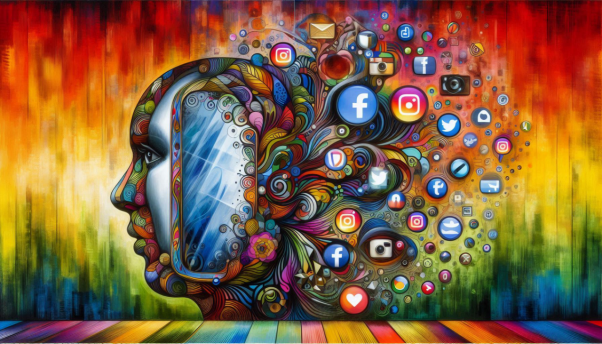
This essay will argue that social media comparison is not a benign extension of natural human behavior but a psychologically toxic force that exploits and amplifies our innate comparison drives, leading to a pervasive and often silent epidemic of emotional distress, identity fragmentation, and behavioral dysfunction. It functions as a distorted mirror, reflecting back a version of reality that is engineered to make the viewer feel inadequate. We will explore this phenomenon across four interconnected psychological domains. First, we will dissect The Architecture of Upward Comparison: Envy, Inadequacy, and the Erosion of Self-Esteem, examining how constant exposure to curated superiority breeds a chronic sense of personal deficiency. Second, we will delve into The Specter of the Quantified Self: Metrics, Validation Seeking, and Externalized Worth, analyzing how the public metrics of likes, followers, and comments become a dangerous proxy for self-esteem, trapping users in a cycle of performance and validation. Third, we will investigate The Fracturing of Identity: Curated Perfection, Authenticity Suppression, and the Rise of the Imposter Self, exploring how the pressure to present an idealized persona leads to a schism between the authentic self and the projected digital avatar, fueling anxiety and self-alienation. Finally, we will consider pathways toward Psychological Resistance and Digital Reclamation: Mitigating Harm and Fostering Critical Literacy, outlining strategies for individuals, educators, and platform designers to counteract the corrosive effects of comparison and foster healthier digital ecosystems. In an era where our sense of self is increasingly mediated by the screen, understanding the psychological mechanics of social media comparison is not merely academic—it is essential for preserving mental health, nurturing authentic connection, and reclaiming agency in the digital age.
1. The Architecture of Upward Comparison: Envy, Inadequacy, and the Erosion of Self-Esteem
Social comparison is not inherently pathological; it can be motivating and informative. Festinger distinguished between upward comparison (comparing oneself to those perceived as better off) and downward comparison (comparing oneself to those perceived as worse off). Downward comparison can boost self-esteem in the short term, while upward comparison can inspire self-improvement. However, the architecture of social media is meticulously engineered to promote a specific, corrosive form of perpetual upward comparison, transforming it from a sporadic event into a continuous state of being. This engineered environment systematically cultivates feelings of envy, chronic inadequacy, and a profound erosion of core self-esteem.
The primary mechanism is the curated highlight reel. Social media feeds are compilations of peak life moments: exotic vacations, professional achievements, physical fitness milestones, romantic gestures, and social gatherings brimming with laughter. What is conspicuously absent is the contextual reality: the debt for the vacation, the stress behind the promotion, the injuries and monotonous workouts required for the physique, the arguments preceding the romantic post, and the loneliness felt within the crowd. The algorithm, optimized for engagement, prioritizes this aspirational content because it captures attention—often through the hook of envy. For the user scrolling through this stream, the comparison is not between their whole life and another’s whole life; it is between their unedited, behind-the-scenes reality and everyone else’s polished, premiered final cut. This creates a powerful reality distortion field. Neurologically, the brain, particularly the adolescent brain still developing its prefrontal cortex for critical thinking, struggles to consistently discount this artificiality. The repeated cognitive message becomes: “Their life is like this; mine is not. Therefore, my life is deficient.”
This triggers the emotional cascade of malicious envy. Unlike benign envy, which might inspire admiration and motivation, malicious envy is characterized by feelings of resentment, inferiority, and a hostile wish for the other person’s advantage to be diminished. Social media is a petri dish for malicious envy because the comparisons are often with distant peers or even strangers (influencers), where personal connection is weak but visibility is high. We envy the vacation of an acquaintance we barely know, the body of a fitness influencer, the career of a LinkedIn connection. This envy is directionless and corrosive; it provides no clear path for self-improvement (how does one simply “become” an influencer with a perfect life?) but instead festers as a generalized sense of lack. The constant exposure to superior attributes—real or perceived—in aesthetics, success, happiness, and social popularity leads to chronic social comparison stress. This stress is characterized by rumination, repeated intrusive thoughts about one’s own perceived shortcomings, and a hyper-vigilance for further evidence of one’s inferiority on the feed. It is a state of psychological siege.
The most damaging long-term outcome is the systematic erosion of self-esteem. Self-esteem is built on a foundation of stable, internal self-appraisals and a sense of mastery and competence. Social media comparison actively dismantles this foundation by shifting the locus of evaluation entirely outward. Self-worth becomes contingent on how one measures up against an ever-shifting, impossible standard presented online. Each “failure” to match the curated lives of others—not having as many friends in a photo, not traveling as lavishly, not achieving as much career success by a certain age—chips away at the individual’s self-concept. This is particularly potent during developmental stages like adolescence and young adulthood, when identity is being formed. Research consistently shows a strong negative correlation between time spent on social media platforms, especially image-heavy ones like Instagram, and self-esteem levels. Users report feeling that they are “not enough”: not attractive enough, successful enough, popular enough, or happy enough. This can manifest as symptoms of depression and anxiety, as the internal narrative becomes one of pervasive defectiveness. The architecture of upward comparison thus functions as a psychological pump, siphoning off internal self-regard and replacing it with a hollow, externally dependent metric of worth that is perpetually out of reach.
2. The Specter of the Quantified Self: Metrics, Validation Seeking, and Externalized Worth
If the curated content provides the fuel for comparison, the platform’s metric system provides the terrifyingly precise scoreboard. Social media has operationalized social approval into public, quantifiable data: likes, reactions, shares, comments, retweets, and follower counts. These metrics transform abstract social concepts like popularity, acceptance, and influence into cold, hard numbers. This quantification creates what scholars call the “quantified self,” where one’s identity and value become entangled with, and often reduced to, these digital statistics. The psychological effects of this are profound, driving compulsive validation-seeking behavior and cementing the externalization of self-worth.
The act of posting becomes a high-stakes performance for public evaluation. Unlike sharing a moment with a close friend in person, where feedback is nuanced and private, posting on social media is a broadcast to a composite audience. The immediate aftermath is a period of intense anticipation and anxiety, often called “notification anxiety.” The user waits, often refreshing the page, for the quantitative verdict of their social worth to roll in. A post that receives a high volume of likes and positive comments delivers a potent dopaminergic reward, a neurological “hit” of social validation that feels good and reinforces the behavior. Conversely, a post that “flops”—receiving scant engagement—can feel like a public humiliation, a data-driven rejection that triggers shame, embarrassment, and self-doubt. The metric is not seen as a fickle variable subject to algorithm whims, timing, and audience mood; it is internalized as a direct reflection of the post’s quality and, by extension, the poster’s worthiness.
This system trains users to become external validation junkies. The need for “likes” shifts from a nice bonus to a psychological necessity for mood regulation. Individuals may begin to curate their authenticity, choosing to post only what they believe will perform well rather than what is true to their experience. A sunset photo is taken not to savor the moment, but to craft the perfect caption and filter for maximum engagement. Meals are photographed before they are eaten, experiences are viewed through the lens of their post-ability, and personal milestones feel incomplete until they have been publicly announced and validated. This creates a feedback loop of inauthenticity: users compare themselves to others’ perfect posts, feel inadequate, then post their own idealized version to seek validation, which in turn contributes to the distorted environment that makes others feel inadequate. The self becomes a personal branding project, constantly managed and optimized for external consumption rather than lived for internal satisfaction.
The tyranny of metrics extends beyond individual posts to the overarching count of followers. Follower count is treated as a capital-S Social Score, a public ranking of one’s social capital and influence. The pressure to grow this number can lead to anxious and manipulative behaviors: following/unfollowing schemes, purchasing fake followers, or engaging in provocative content solely for attention. The psychological divide between “having” a few hundred versus a few thousand followers can feel immense, translating to a perceived chasm in social validity. This quantification fractures social reality into hierarchies that feel brutally objective, exacerbating social anxiety and status insecurity. For young people, this public ranking system can intensify cliquish behavior and bullying, as social standing is rendered visible and numerically comparable for the first time in history.
Ultimately, the specter of the quantified self leads to a profound external locus of control. Happiness and self-esteem become contingent on variables outside one’s control—the algorithms of platforms, the whims of a networked audience, the perpetual performance of others. This fosters a sense of powerlessness and chronic anxiety. The individual is trapped in a panopticon of their own making, both the prisoner and the guard, constantly performing for and measuring themselves against an invisible jury. The internal compass of self-worth is shattered, replaced by the flickering, unreliable dashboard of social media metrics. The quest for “enough” likes, followers, or approval becomes a Sisyphean task, as each achieved milestone simply resets the goal higher, ensuring that true contentment and stable self-regard remain perpetually over the next digital horizon.
3. The Fracturing of Identity: Curated Perfection, Authenticity Suppression, and the Rise of the Imposter Self
The relentless pressure of upward comparison and the demand for metric-based validation culminate in a deep and often painful psychological conflict: the fracturing of identity. To survive and potentially thrive in the social media ecosystem, users feel compelled to craft and maintain a curated persona—a digital avatar that is optimized for comparison and validation. This persona, however, exists in tension with the authentic self, which encompasses the full, unedited spectrum of human experience: vulnerabilities, failures, doubts, boredom, and ordinary struggles. The psychological effort to manage this duality—to suppress one in favor of the other—leads to identity diffusion, chronic anxiety, and the pervasive feeling of being an imposter.
The creation of the curated persona is an act of impression management on a massive scale. It involves selective self-presentation: showcasing strengths, editing out flaws, applying filters (both literal and metaphorical), and narrating one’s life as a coherent, upward trajectory of success and happiness. This persona is a performative self, designed for an audience. The problem arises when the gap between the performed self and the experienced self becomes too wide. This self-discrepancy is a well-established source of psychological distress. When individuals perceive a large gap between their “actual self” (who they believe they are) and their “ideal self” (who they feel they should be, often modeled by social media figures), it leads to feelings of disappointment, shame, and anxiety. The curated feed becomes a gallery of these idealized selves, making the gap feel insurmountable and the actual self feel increasingly defective.
To maintain the persona, users engage in authenticity suppression. They consciously hide aspects of their lives that are deemed unattractive, unsuccessful, or messy. They avoid posting about bad days, professional setbacks, relationship troubles, or feelings of loneliness. This creates a state of cognitive dissonance: the psychological discomfort of holding two contradictory beliefs (“My life is difficult and I am struggling” and “I am presenting my life as perfect and effortless”). The energy required to maintain this façade is draining and creates a background hum of anxiety—the fear of being “found out.” This is the essence of imposter syndrome, amplified by social media. Users feel like frauds, fearing that their audience will discover the reality behind the curated posts. Every positive comment on a “perfect life” post can feel like an affirmation of the fraud, intensifying the internal pressure to keep up the act.
Furthermore, the constant performance can lead to self-alienation. When one spends significant time and emotional energy crafting a persona, the line between the performance and the performer can blur. Individuals may lose touch with their own genuine feelings, preferences, and desires, as they become secondary to what will play well online. The question shifts from “What do I enjoy?” to “What will get a good reaction?” This external orientation can stifle personal growth and authentic self-discovery, as life choices become subservient to their potential for generating social media content and validation. The self becomes a marketable product, and personal experience becomes raw material for the brand.
This fractured identity has severe relational consequences. It breeds connection corruption. Relationships can become instrumentalized, valued for their utility in generating content (e.g., a “photo-op friendship”) or for enhancing one’s social metrics (e.g., associating with more popular individuals). Authentic, vulnerable connection—which requires the sharing of imperfection—becomes risky, as it threatens the integrity of the curated persona. This can lead to profound loneliness, even amidst a vast network of digital “friends.” One is surrounded by curated avatars but feels fundamentally unknown and disconnected. The very platforms designed for connection thus become engines of isolation, as the fear of exposing the authentic, uncurated self prevents the deep, reciprocal vulnerability that true intimacy requires. The individual is left with a fragmented sense of self: a polished, anxious avatar navigating a world of other avatars, while the authentic human being remains hidden, lonely, and increasingly unsure of who they are when the camera is off.
4. Psychological Resistance and Digital Reclamation: Mitigating Harm and Fostering Critical Literacy
Confronting the psychological toll of social media comparison requires moving beyond individual blame toward a multi-layered strategy of resistance and reclamation. The goal is not necessarily digital abstinence, which is unrealistic for many, but the cultivation of critical digital literacy, intentional platform engagement, and the reinforcement of an internal locus of self-worth. This involves actions at the individual, educational, and systemic levels to dismantle the toxic comparison machine and foster healthier digital habitats.
At the individual level, the most powerful tool is conscious consumption and curation. This begins with a ruthless, periodic audit of one’s digital environment. Users must ask: “Who do I follow and how do they make me feel?” Unfollowing or muting accounts that consistently trigger envy, inadequacy, or anxiety—even if they are from friends, celebrities, or influencers—is not an act of rudeness but of psychological self-defense. Actively curating a feed to include diverse, body-positive, mentally honest, and non-comparison-focused content (e.g., educational pages, artists, hobby communities) can dramatically shift the emotional experience of scrolling. Secondly, practicing mindful engagement is crucial. This means setting intentional goals for platform use (e.g., “I am logging on to wish my friend a happy birthday” or “to check updates from my hobby group”) rather than engaging in aimless, compulsive scrolling, which is a state of maximum vulnerability to comparison. Using app timers, turning off non-essential notifications, and scheduling “digital sunsets” can break the cycle of passive consumption.
Developing critical media literacy is the cognitive backbone of resistance. This means actively deconstructing the artifice of social media. Individuals, and especially young people, must be taught to recognize the curation gap. Educational initiatives should include exercises like analyzing the work behind a single “perfect” Instagram post: the staging, the dozens of discarded photos, the editing tools (Facetune, filters), the strategic captioning, and the timing for algorithm favor. Understanding social media as a constructed performance, not a documentary, helps rebuild the critical distance that the platform’s immediacy destroys. This literacy should also extend to understanding the business model: that platforms are designed to maximize engagement, and comparison-driven envy is a powerful engagement driver. Seeing oneself not just as a user but as a product in an attention economy can be a sobering but empowering perspective shift.
Rebuilding an internal locus of evaluation is the essential psychological counterweight. This involves deliberately shifting the source of self-worth from external metrics to internal states and personal values. Practices like keeping a private journal (the antithesis of a public feed), engaging in activities that produce intrinsic reward (enjoyment for its own sake, with no intention to post about it), and practicing self-compassion are vital. Therapeutic approaches like Acceptance and Commitment Therapy (ACT) can be particularly useful, as they focus on valuing oneself according to personal principles and committed action, rather than comparative achievement or social approval. The goal is to answer the question “Am I good enough?” from within, based on one’s own standards of growth, kindness, and integrity, rather than from the fluctuating numbers on a screen.
Finally, systemic and design-based changes are necessary for large-scale harm reduction. This places responsibility on platform creators. Ethical design interventions could include: 1. Hiding Public Like Counts: An experiment already tried by some platforms, this removes the most glaring public metric of comparison, reducing performance anxiety. 2. Algorithmic Transparency and User Control: Allowing users to understand and adjust how their feed is sorted, potentially opting out of engagement-optimized, comparison-heavy algorithms in favor of chronological or interest-based feeds. 3. Promoting Authenticity: Platforms could design features that encourage genuine sharing, such as “behind-the-scenes” prompts or normalized templates for sharing struggles, not just successes. 4. Integrated Digital Literacy Tools: Building prompts and educational modules directly into platforms that help users understand the effects of comparison and curation.
Reclaiming psychological sovereignty in the age of social media comparison is an active, ongoing practice. It requires us to be not just consumers of digital content, but critical architects of our own digital experience. By combining personal behavioral changes, widespread education in critical thinking, and advocacy for more humane technology design, we can begin to repair the fractured mirror. We can learn to use these powerful tools for genuine connection, inspiration, and information, while insulating our most vulnerable asset—our sense of self—from their most corrosive designs. The ultimate act of resistance is to look at the curated highlight reel of others, understand it for the performance it is, and then turn our attention back to the rich, complex, unfiltered, and uniquely valuable reality of our own unfolding lives.
Conclusion: Reassembling the Self Beyond the Feed
The psychological effects of social media comparison are a testament to the power of our digital environments to shape our innermost selves. As we have traced, this is not a superficial issue of “feeling bad” after scrolling; it is a deep, structural assault on the pillars of mental health: stable self-esteem, an authentic and integrated identity, and a sense of worth derived from internal rather than external sources. The architecture of upward comparison, the tyranny of quantified validation, and the resulting fracture between our curated and authentic selves create a perfect storm for anxiety, depression, envy, and profound loneliness.
This epidemic thrives in the gap between the ancient, hardwired human need for social belonging and evaluation, and the new, supercharged digital arena where those needs are exploited for profit. The platform is not a mirror but a funhouse mirror, and we have been staring into it for so long that its distortions have begun to feel like truth. The feeling of never being “enough” is not a personal failing; it is the intended, default output of a system designed to keep us striving, performing, and—most importantly—engaged.
Yet, as the analysis of mitigation strategies shows, fatalism is not warranted. The path forward lies in a collective awakening to these mechanisms. It requires us to become digital citizens, not digital subjects. This means exercising our agency to curate our feeds with ruthless self-compassion, to educate ourselves and our youth about the constructed nature of online life, to demand better and more transparent design from technology companies, and, most fundamentally, to nurture the offline, unquantifiable, and messy realities that constitute a meaningful human life.
The final and most important comparison we must make is not with the curated avatars in our feeds, but between the life we are living and the values we hold dear. By shifting our gaze from the distorted digital mirror to the tangible world of experience, connection, and personal growth, we can begin to reassemble a self that is coherent, authentic, and resilient. We can learn to log off not with a sense of lack, but with a sense of wholeness, recognizing that the richest parts of life are often those that are too immediate, too vulnerable, and too real to ever be captured in a post.
SOURCES
Appel, H., Gerlach, A. L., & Crusius, J. (2016). The interplay between Facebook use, social comparison, envy, and depression. Current Opinion in Psychology, 9, 44–49.
Bessière, K., Kiesler, S., Kraut, R., & Boneva, B. S. (2008). Effects of internet use and social resources on changes in depression. Information, Communication & Society, 11(1), 47–70.
Chou, H. T. G., & Edge, N. (2012). “They are happier and having better lives than I am”: The impact of using Facebook on perceptions of others’ lives. Cyberpsychology, Behavior, and Social Networking, 15(2), 117–121.
Festinger, L. (1954). A theory of social comparison processes. Human Relations, 7(2), 117–140.
Fioravanti, G., Bocci Benucci, S., Ceragioli, G., & Casale, S. (2022). How the exposure to beauty ideals on social networking sites influences body image: A systematic review of experimental studies. Adolescent Research Review, 7(3), 419–458.
Fox, J., & Moreland, J. J. (2015). The dark side of social networking sites: An exploration of the relational and psychological stressors associated with Facebook use and affordances. Computers in Human Behavior, 45, 168–176.
Frison, E., & Eggermont, S. (2020). Toward an integrated and differential approach to the relationships between loneliness, different types of Facebook use, and adolescents’ depressed mood. Communication Research, 47(5), 701–728.
Haidt, J., & Twenge, J. (2023). Adolescent mood disorders since 2010: A collaborative review. Unpublished manuscript.
Higgins, E. T. (1987). Self-discrepancy: A theory relating self and affect. Psychological Review, 94(3), 319–340.
Krasnova, H., Wenninger, H., Widjaja, T., & Buxmann, P. (2013). Envy on Facebook: A hidden threat to users’ life satisfaction? In Proceedings of the 11th International Conference on Wirtschaftsinformatik (pp. 1–16).
Lee, S. Y. (2014). How do people compare themselves with others on social network sites?: The case of Facebook. Computers in Human Behavior, 32, 253–260.
Liu, D., & Baumeister, R. F. (2016). Social networking online and personality of self-worth: A meta-analysis. Journal of Research in Personality, 64, 79–89.
Lockwood, P., & Kunda, Z. (1997). Superstars and me: Predicting the impact of role models on the self. Journal of Personality and Social Psychology, 73(1), 91–103.
Mabe, A. G., Forney, K. J., & Keel, P. K. (2014). Do you “like” my photo? Facebook use maintains eating disorder risk. International Journal of Eating Disorders, 47(5), 516–523.
Meier, A., & Johnson, B. K. (2022). Social comparison and envy on social media: A critical review. Current Opinion in Psychology, 45, 101302.
Nesi, J., & Prinstein, M. J. (2015). Using social media for social comparison and feedback-seeking: Gender and popularity moderate associations with depressive symptoms. Journal of Abnormal Child Psychology, 43(8), 1427–1438.
O’Keeffe, G. S., & Clarke-Pearson, K. (2011). The impact of social media on children, adolescents, and families. Pediatrics, 127(4), 800–804.
Reinecke, L., & Trepte, S. (2014). Authenticity and well-being on social network sites: A two-wave longitudinal study on the effects of online authenticity and the positivity bias in SNS communication. Computers in Human Behavior, 30, 95–102.
Rousseau, A., Eggermont, S., & Frison, E. (2017). The reciprocal and indirect relationships between passive Facebook use, comparison on Facebook, and adolescents’ body dissatisfaction. Computers in Human Behavior, 73, 336–344.
Schmuck, D., Karsay, K., Matthes, J., & Stevic, A. (2019). “Looking up and feeling down”. The influence of mobile social networking site use on upward social comparison, self-esteem, and well-being of adult smartphone users. Telematics and Informatics, 42, 101240.
Shakya, H. B., & Christakis, N. A. (2017). Association of Facebook use with compromised well-being: A longitudinal study. American Journal of Epidemiology, 185(3), 203–211.
Steers, M. L. N., Wickham, R. E., & Acitelli, L. K. (2014). Seeing everyone else’s highlight reels: How Facebook usage is linked to depressive symptoms. Journal of Social and Clinical Psychology, 33(8), 701–731.
Turkle, S. (2011). Alone together: Why we expect more from technology and less from each other. Basic Books.
HISTORY
Current Version
Dec, 04, 2025
Written By
BARIRA MEHMOOD