Introduction
Hair, far more than a mere biological appendage, holds profound psychological, cultural, and social significance, particularly for women. It is intricately tied to identity, femininity, self-esteem, and perceived health. Consequently, hair loss represents not just a dermatological condition but a deeply distressing experience that can significantly impact emotional well-being and quality of life. Among the various forms of alopecia, telogen effluvium (TE) stands out as one of the most common causes of diffuse hair shedding in women, and its connection to psychological and physiological stress is both direct and potent. TE is a reactive, non-scarring form of hair loss characterized by the premature, synchronized entry of a large percentage of anagen (growth phase) hair follicles into the telogen (resting and shedding) phase. This results in a dramatic increase in daily hair loss, typically manifesting as a generalized thinning—most noticeable as a reduction in hair volume, a widening part, or a visible scalp—rather than discrete bald patches.
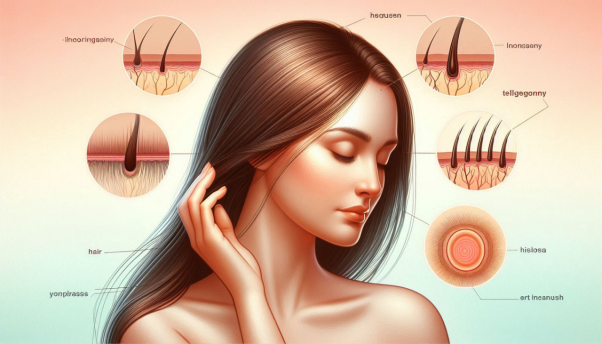
The condition underscores the remarkable sensitivity of the hair follicle, a complex, highly regenerative mini-organ, to internal systemic disturbances. While TE can be triggered by a variety of acute physiological stressors such as severe illness, major surgery, childbirth (postpartum TE), rapid weight loss, or nutrient deficiencies, a significant and often under-recognized subset is driven by psychological stress. In an era marked by unprecedented levels of chronic stress—from workplace pressures and caregiving burdens to societal anxieties and traumatic events—understanding stress-related TE is of paramount importance. The pathway from a perceived psychological threat to the mass shedding of hair is a fascinating example of psychodermatology, involving intricate neuroendocrine and immune signaling that disrupts the precisely choreographed hair cycle. For women, who are already disproportionately affected by chronic stress and its somatic manifestations, TE can become a visible, daily reminder of internal turmoil, thus creating a vicious cycle where hair loss itself becomes a source of further stress, potentially exacerbating and prolonging the condition.
This paper will provide a comprehensive exploration of stress-related telogen effluvium in women, delving into its mechanisms, presentations, and management. It will proceed through four detailed analyses: first, by examining the physiology of the hair cycle and the precise mechanisms through which stress hormones and signaling molecules derail it; second, by distinguishing the clinical features, diagnosis, and differential diagnosis of TE from other common forms of female hair loss; third, by investigating the specific psychological impact of hair loss on women and the bidirectional stress-hair loss cycle; and fourth, by evaluating a holistic management approach that addresses both the physiological trigger and the profound psychological distress. Through this lens, we can appreciate TE not as a trivial cosmetic concern, but as a significant biopsychosocial health issue requiring integrated, compassionate care.
1. The Physiology of the Hair Cycle and the Stress-Induced Pathway to Shedding
To comprehend telogen effluvium, one must first understand the elegant, cyclical nature of hair growth. Each hair follicle operates independently but in coordination with its neighbors, progressing through three distinct phases: anagen, catagen, and telogen. The anagen phase is the active growth period, lasting anywhere from two to seven years on the scalp, during which the hair follicle bulb proliferates rapidly to produce the hair shaft. This phase determines the ultimate length of the hair. Following anagen, the follicle enters a brief, transitional catagen phase lasting about two weeks, where growth ceases, and the lower part of the follicle regresses. Finally, the follicle enters the telogen phase, a resting period of approximately three months. During telogen, the hair follicle is dormant, and the fully formed “club hair” remains anchored in the scalp by a keratinized bulb. At the end of telogen, this hair is shed (exogen), and the follicle re-enters anagen to begin a new cycle. Normally, at any given time, about 85-90% of scalp hairs are in anagen, 1-2% in catagen, and 10-15% in telogen, with a daily shed of 50-100 hairs being physiological.
Stress, both acute severe stress and chronic unremitting stress, can violently disrupt this delicate equilibrium by prematurely terminating anagen and forcing a large cohort of follicles into telogen—a process known as anagen arrest. The primary mediators of this disruption are the molecules of the stress response system: the hypothalamic-pituitary-adrenal (HPA) axis and the sympathetic nervous system (SNS). During stress, the HPA axis releases cortisol, while the SNS releases catecholamines like norepinephrine and neuropeptides such as substance P. Research has shown that hair follicles are not passive bystanders but are, in fact, highly stress-responsive neuroendocrine organs. They express functional receptors for cortisol (glucocorticoid receptors), norepinephrine (adrenergic receptors), and substance P (NK-1 receptors). Elevated cortisol can directly inhibit the proliferation of keratinocytes in the hair bulb, slowing growth and promoting catagen entry. More significantly, stress triggers the local release of key signaling molecules from the follicle itself and surrounding nerves. One of the most critical is substance P, a neuropeptide released from sensory nerve endings in the perifollicular area. Substance P induces the release of pro-inflammatory cytokines like Tumor Necrosis Factor-alpha (TNF-α) and Interleukin-1 (IL-1) from immune cells (mast cells) near the follicle. These inflammatory signals are potent inducers of catagen, acting as “stop” signals for hair growth.
Furthermore, chronic stress can dysregulate the HPA axis, leading to altered cortisol rhythms and potentially impacting other hormone systems that influence hair growth, such as thyroid and reproductive hormones. Nutrient shunting is another pathway; under chronic stress, the body may prioritize vital functions over hair growth, diverting nutrients like iron, zinc, and B vitamins away from the follicle, indirectly contributing to dysregulation. The culmination of these events—neuroendocrine signaling, local inflammation, and potential nutrient diversion—results in the synchronized premature cessation of anagen for a large group of follicles. Because the telogen phase lasts roughly three months, the noticeable shedding (the exogen of these “club” hairs) typically begins 2-3 months after the inciting stressful event, a latent period that often makes it difficult for patients to connect the cause and effect. This mechanistic understanding is crucial, as it reveals that stress-related TE is not “all in the mind” but a tangible, physiological disruption of a complex biological process, with inflammation acting as a key final common pathway.
2. Clinical Presentation, Diagnosis, and Differential Diagnosis of Telogen Effluvium
Clinically, acute telogen effluvium presents with a sudden, alarming increase in daily hair shedding. Women often report handfuls of hair coming out during washing, brushing, or simply running fingers through their hair. The shed hairs are typically telogen hairs, identified by a small, solid, whitish bulb at the proximal end, lacking the pigmented, gelatinous sheath of an anagen hair. Unlike pattern hair loss, the shedding is diffuse, affecting the entire scalp more or less uniformly. Visually, the scalp may appear normal at first glance, but upon closer examination, especially with hair parted, a generalized thinning is evident. There may be a noticeable reduction in ponytail circumference and increased scalp visibility, particularly along the part line and temporal regions. A characteristic, though not universal, feature is that the hairline is usually preserved, unlike in frontal fibrosing alopecia or advanced female pattern hair loss. The key diagnostic clue in the history is the temporal relationship to a trigger. For stress-related TE, patients may describe a major stressful event—a bereavement, job loss, divorce, or acute illness—approximately 2-3 months prior to the onset of shedding. Chronic telogen effluvium, a more persistent form lasting over six months, is often linked to ongoing, unrelenting stressors such as chronic work pressure, caregiving fatigue, or untreated anxiety disorders.
Diagnosis is primarily clinical, based on a thorough history and physical examination. The pull test is a simple in-office procedure: gently tugging on small clumps of hair (about 40-60 hairs) from different areas of the scalp. In active TE, more than 10% of hairs (often many more) will easily extract, and most will have the tell-tale telogen bulb. A hair wash test, where the patient refrains from washing for five days and then collects all shed hairs during a standardized wash, can quantify the shed but is rarely needed in practice. Dermoscopy (trichoscopy) is an invaluable non-invasive tool. In TE, dermoscopy typically reveals a preserved follicular ostia (the opening of the hair follicle) with no scarring, and an increased proportion of empty follicles or follicles containing only one hair shaft (in contrast to the normal two or three). Crucially, there is an absence of the specific markers of other alopecias, such as the yellow dots and hair shaft variability of androgenetic alopecia or the exclamation mark hairs of alopecia areata. However, laboratory investigation is essential to rule out other common triggers that can coexist with or mimic stress-related TE. A standard work-up often includes a complete blood count (to check for anemia), ferritin (iron stores), thyroid-stimulating hormone (TSH), vitamin D, and zinc levels. In women, hormonal panels assessing androgen levels may be considered if there is a suspicion of overlapping female pattern hair loss (FPHL).
The differential diagnosis is critical. The most common condition to distinguish is female pattern hair loss (androgenetic alopecia), which is genetically determined, progressive, and characterized by a patterned thinning over the crown and mid-scalp with widening of the central part. FPHL involves miniaturization of follicles over time, leading to thinner, shorter hairs, whereas TE typically involves normal-caliber hairs being shed. It is also common for TE to “unmask” or accelerate underlying FPHL, creating a mixed picture. Alopecia areata presents with well-defined, smooth, round patches of complete hair loss, often with exclamation mark hairs at the periphery. Chronic illnesses like lupus erythematosus or systemic infections can cause a TE-like shedding, and nutritional deficiencies (especially iron, even in the absence of anemia) are frequent contributors. A meticulous diagnostic approach is therefore paramount to avoid misattributing hair loss solely to stress when a treatable physiological factor like iron deficiency is present, or to recognize when stress is acting as a major exacerbating factor for another primary hair disorder.
3. The Profound Psychological Impact and the Vicious Stress-Hair Loss Cycle
The experience of hair loss for a woman extends far beyond the physical symptom of shedding; it constitutes a profound psychological trauma that attacks a core component of self-image and social identity. Hair is universally recognized as a symbol of youth, health, vitality, and femininity. In many cultures, thick, lustrous hair is idealized and heavily associated with attractiveness. Consequently, its loss can trigger a cascade of negative emotions including shock, grief, anxiety, depression, and a devastating loss of self-confidence. Women report feeling less feminine, less attractive, and older than their years. The visibility of the condition means it cannot be easily hidden, leading to intense social anxiety and fear of judgment. Many women alter their behavior significantly: they may avoid social gatherings, decline invitations, stop exercising (due to fear of sweat making hair look thinner), and spend excessive time and money on camouflaging techniques like volumizing products, hair fibers, wigs, or specific hairstyles. This preoccupation with hair loss can become all-consuming, dominating thoughts and mirror-checking behaviors, fulfilling criteria for body dysmorphic disorder in severe cases.
This profound psychological distress does not exist in a vacuum; it actively feeds back into the physiological process, creating a self-perpetuating vicious cycle. The initial stressor (e.g., a work crisis) triggers the TE. The subsequent hair loss then becomes a new, powerful, and chronic stressor in itself. The daily sight of hair in the shower drain, on the pillow, or on clothing serves as a constant, visceral reminder of the problem, generating ongoing anxiety and worry. This secondary psychological stress maintains elevated levels of cortisol and perpetuates the pro-inflammatory, catagen-inducing environment around the hair follicles. In essence, the hair loss becomes its own sustaining cause, potentially transforming an acute TE into a chronic, intractable condition. This cycle is particularly pernicious because the very act of worrying about hair loss—the Googling of symptoms late at night, the frantic searching for solutions, the despair over perceived lack of control—activates the same stress pathways that initiated the problem. Furthermore, the stigma and silence often surrounding women’s hair loss can lead to isolation and a sense of shame, preventing women from seeking support and compounding their stress. Healthcare providers may unintentionally contribute to this by minimizing the concern (“it’s just stress, it will grow back”) without acknowledging the deep emotional wound. Therefore, addressing TE effectively is impossible without directly confronting and intervening in this powerful psychological feedback loop. Treating the emotional impact is not a secondary consideration but a primary therapeutic target necessary for breaking the cycle and facilitating physiological recovery.
4. A Holistic Management Strategy: Integrating Somatic and Psychological Interventions
The management of stress-related telogen effluvium demands a holistic, dual-pronged strategy that simultaneously addresses the physiological dysregulation of the hair follicle and the psychological distress of the patient. The cornerstone of treatment is, where possible, identifying and mitigating the source of stress. This begins with patient education, which is itself therapeutic. Explaining the 2-3 month latency period, the self-limited nature of acute TE (with regrowth typically beginning within 3-6 months after the stressor resolves), and the underlying physiology can provide immense reassurance and reduce catastrophic thinking. It validates the patient’s experience and frames the condition as a known biological response, not a mysterious, irreversible affliction.
On the physiological front, while there is no medication that can “stop” TE shedding once the follicles have entered telogen (as these hairs are destined to shed), the goal is to create an optimal environment for recovery and new anagen growth, and to prevent further anagen arrest. First, any concomitant contributing factors identified on laboratory work-up must be corrected. This includes iron supplementation (if ferritin is low, often aiming for a level >50-70 ng/mL for optimal hair growth), thyroid hormone normalization, and addressing any nutritional deficiencies. Topical treatments can be supportive. Minoxidil, a vasodilator and potassium channel opener, is FDA-approved for female pattern hair loss but is frequently used off-label for TE. It is thought to prolong anagen, increase follicular size, and may have anti-inflammatory effects. While it may cause an initial “dread shed” as it synchronizes follicles, its continued use can promote thicker regrowth. It does not treat the root cause (stress) but can be a helpful adjunct during the recovery phase. Low-level laser therapy (LLLT) devices, which use red light to potentially stimulate cellular metabolism and reduce inflammation in the follicle, have shown promise in some studies for improving hair density and may be a consideration for chronic TE. Nutraceuticals containing specific amino acids (L-lysine, L-cysteine), B vitamins (especially biotin), zinc, and silica are widely marketed, though robust evidence for their efficacy in TE specifically is limited; they are generally considered safe but should not replace a balanced diet or medical treatment.
The psychological arm of management is equally critical. Cognitive-behavioral therapy (CBT) is highly effective in helping patients challenge and reframe catastrophic thoughts about hair loss (“I’m going bald,” “Everyone is staring at my scalp”), reduce safety behaviors (excessive checking, avoidance), and develop healthier coping mechanisms for stress. Mindfulness-based stress reduction (MBSR) and relaxation techniques like diaphragmatic breathing, progressive muscle relaxation, and guided meditation can directly lower cortisol levels and sympathetic tone, creating a physiological state conducive to hair cycle normalization. Encouraging gentle scalp massage may not only improve local circulation but also serve as a form of self-soothing and body acceptance. For some patients, support groups, either in-person or online, can provide a vital sense of community and reduce feelings of isolation. Practical cosmetic camouflage is also a legitimate and important aspect of care. Recommending volumizing shampoos, concealers (hair fibers), and hairstyling techniques can provide immediate psychological relief and restore confidence while waiting for natural regrowth. In cases of severe, chronic TE with significant psychological comorbidity, collaboration with a psychiatrist may be warranted to consider pharmacotherapy for underlying anxiety or depression. Ultimately, the most successful approach is a patient-centered partnership where the clinician acknowledges the deep emotional pain, provides a clear pathophysiological explanation, and works with the patient to develop a personalized plan that addresses both body and mind, fostering patience and resilience during the often slow journey to recovery.
Conclusion
Stress-related telogen effluvium in women is a compelling and clinically significant embodiment of the profound connection between the mind and the body. It demonstrates how psychological distress can translate, through sophisticated neuroendocrine and inflammatory pathways, into a visible, tangible alteration of a fundamental aspect of physical appearance. The hair follicle, exquisitely sensitive to internal homeostasis, acts as a barometer for systemic stress, with its synchronized retreat into a resting state serving as a biological response to perceived threat. For the woman experiencing it, this is not a minor issue but a source of deep anguish that strikes at the heart of self-identity and social confidence, often triggering a vicious, self-sustaining cycle where the hair loss itself becomes a perpetuating stressor.
Effective management, therefore, necessitates moving beyond a simplistic dermatological approach. It requires a nuanced, biopsychosocial model of care that integrates meticulous diagnostic evaluation to rule out confounding factors, patient education to demystify the process and provide hope, and active intervention to mitigate both the physiological triggers and the psychological sequelae. While supporting the follicle’s recovery with nutritional optimization and possibly adjunctive treatments like minoxidil is important, the cornerstone of therapy lies in stress reduction and psychological support. Techniques such as cognitive-behavioral therapy and mindfulness are not merely supportive but are directly therapeutic, aiming to downregulate the very stress response systems that initiated the condition. By validating the patient’s distress, providing a clear biological narrative, and offering a comprehensive toolbox for recovery, clinicians can help women navigate this challenging experience. In doing so, they address not only the symptom of hair shedding but also the broader imperative of building resilience and promoting holistic well-being, recognizing that the health of the mind is inextricably linked to the health of the body, down to the very tips of the hair.
Sources
Almohanna, H. M., Ahmed, A. A., Tsatalis, J. P., & Tosti, A. (2019). The role of vitamins and minerals in hair loss: A review. Dermatology and Therapy, 9(1), 51–70.
Arck, P. C., Handjiski, B., Peters, E. M. J., Peter, A. S., Hagen, E., Fischer, A., Klapp, B. F., & Paus, R. (2003). Stress inhibits hair growth in mice by induction of premature catagen development and deleterious perifollicular inflammatory events via neuropeptide substance P-dependent pathways. The American Journal of Pathology, 162(3), 803–814.
Asghar, F., Shamim, N., Farooque, U., Sheikh, H., & Aqeel, R. (2020). Telogen effluvium: A review of the literature. Cureus, 12(5), e8320.
Gavazzoni Dias, M. F. R. (2015). Hair cosmetics: An overview. International Journal of Trichology, 7(1), 2–15.
Goluch-Koniuszy, Z. S. (2016). Nutrition of women with hair loss problem during the period of menopause. Menopause Review, 15(1), 56–61.
Guo, E. L., & Katta, R. (2017). Diet and hair loss: Effects of nutrient deficiency and supplement use. Dermatology Practical & Conceptual, 7(1), 1–10.
Harrison, S., & Sinclair, R. (2002). Telogen effluvium. Clinical and Experimental Dermatology, 27(5), 389–395.
Hunt, N., & McHale, S. (2005). The psychological impact of alopecia. BMJ, 331(7522), 951–953.
Malkud, S. (2015). Telogen effluvium: A review. Journal of Clinical and Diagnostic Research, 9(9), WE01–WE03.
Paus, R., & Cotsarelis, G. (1999). The biology of hair follicles. The New England Journal of Medicine, 341(7), 491–497.
Peters, E. M. J., Liotiri, S., Bodo, E., Hagen, E., Biro, T., Arck, P. C., & Paus, R. (2007). Probing the effects of stress mediators on the human hair follicle: Substance P holds central position. The American Journal of Pathology, 171(6), 1872–1886.
Phillips, T. G., Slomiany, W. P., & Allison, R. (2017). Hair loss: Common causes and treatment. American Family Physician, 96(6), 371–378.
Rushton, D. H. (2002). Nutritional factors and hair loss. Clinical and Experimental Dermatology, 27(5), 396–404.
Shapiro, J. (2007). Clinical practice: Hair loss in women. The New England Journal of Medicine, 357(16), 1620–1630.
Sinclair, R., Patel, M., Dawson, T. L., Jr., Yazdabadi, A., Yip, L., Perez, A., & Rufaut, N. W. (2011). Hair loss in women: Medical and cosmetic approaches to increase scalp hair fullness. British Journal of Dermatology, 165(Suppl 3), 12–18.
Thom, E. (2016). Stress and the hair growth cycle: Cortisol-induced hair growth disruption. Journal of Drugs in Dermatology, 15(8), 1001–1004.
Tosti, A. (2007). Dermoscopy of the hair and nails (2nd ed.). Informa Healthcare.
Trueb, R. M. (2009). Systematic approach to hair loss in women. JDDG: Journal der Deutschen Dermatologischen Gesellschaft, 7(2), 136–147.
Williamson, D., Gonzalez, M., & Finlay, A. Y. (2001). The effect of hair loss on quality of life. Journal of the European Academy of Dermatology and Venereology, 15(2), 137–139.
HISTORY
Current Version
JAN, 01, 2026
Written By
BARIRA MEHMOOD