Introduction: The Shattered Lens of Modern Consciousness
We carry in our pockets a device of unprecedented power, a confluence of technologies that grants us instantaneous access to the near-totality of human knowledge, the global social sphere, and the entire history of entertainment. The smartphone is a cognitive exoskeleton, an extension of our will and intellect. Yet, this marvel of engineering has ushered in a paradoxical and deeply consequential cognitive crisis: the systemic fragmentation of human attention and the erosion of sustained focus. Where the mind was once a lens capable of concentrating its beam on a single subject for extended periods, it is now increasingly a prism, fractured into a thousand disparate colors of competing stimuli. This is not merely a matter of feeling “distracted.” It is a fundamental rewiring of cognitive processes, with profound implications for our intellectual depth, emotional stability, creative capacity, and even our very sense of self.
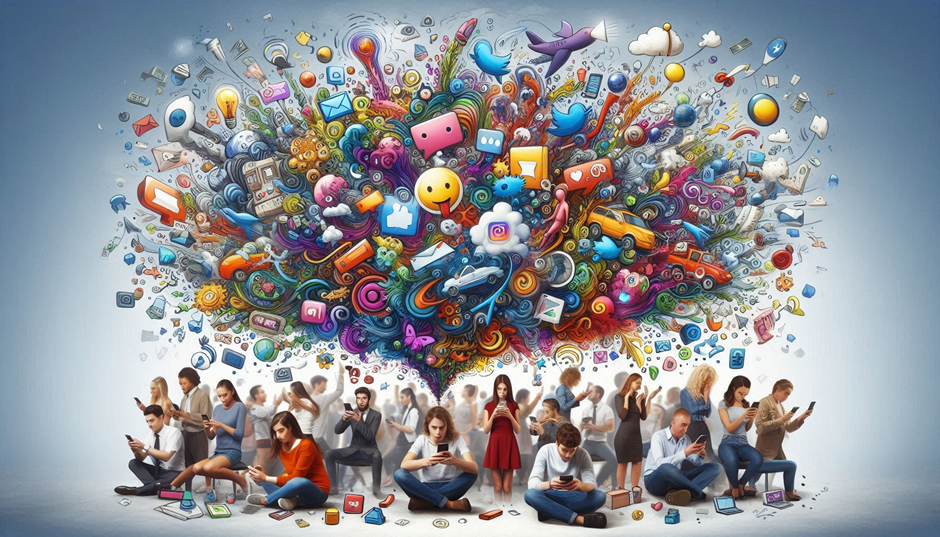
At the heart of this transformation is a basic economic and neurological mismatch. Our attentional systems evolved over millennia in an environment of “information scarcity.” Survival depended on the efficient allocation of a finite cognitive resource—attention—to signals that mattered: the rustle of a predator in the grass, the location of ripe fruit, the subtle social cue from a tribe member. In stark contrast, the digital ecosystem, particularly as delivered by the smartphone, is an environment of “attention abundance” or, more accurately, “attentional hyper-competition.” Every app, notification, and platform is engineered by armies of behavioral scientists and designers to capture and hold our gaze in a ruthless marketplace where our attention is the product being sold. The currency is clicks, scrolls, and minutes of engagement, and the smartphone is the always-open, always-vibrating trading floor.
This engineered capture exploits deep-seated neurological vulnerabilities. The brain’s reward system, powered by dopamine, is not tuned simply to pleasure, but to anticipation and novelty. The “pull-to-refresh” mechanism is a potent slot machine lever; the red notification badge is an unpredictable reward cue; the infinite scroll promises perpetual novelty just a swipe away. Each ping, buzz, or flash triggers a micro-inquiry—“What is it?”—that hijacks our orienting response, a primal reflex to attend to new stimuli in our environment. The smartphone, by design, turns this ancient survival mechanism against our modern goals of concentration and deep work.
The consequence is the normalization of a cognitive state of continuous partial attention, a term coined by researcher Linda Stone. We are everywhere and nowhere, skim-reading emails while half-listening to a podcast, glancing at texts during a conversation, tab-switching between a work document and a social feed. This state feels productive—we are processing so much—but it is cognitively bankrupt. It prevents the mind from achieving the states of flow and deep focus necessary for learning complex information, solving intricate problems, crafting nuanced narratives, or engaging in meaningful reflection. The cost is measured in degraded work quality, prolonged task completion, shallow learning, and a pervasive sense of mental fatigue, as the cognitive load of constant switching exhausts our executive functions.
Moreover, this fragmentation is altering our relationship with our own minds. The capacity for boredom, once a fertile ground for daydreaming and internal narrative, is now seen as an intolerable vacuum to be filled immediately with digital stimulus. Our internal monologue is constantly interrupted by external pings, preventing the sustained linear thought that underpins deliberation, planning, and self-understanding. We are training ourselves to be intolerant of solitude and uneasy with silence, conditioning our brains to require constant external input.
This article will dissect this cognitive shift across four critical dimensions. First, we will explore the neurological hijack, examining the precise brain mechanisms—dopamine loops, the orienting response, and the switch-cost effect—that smartphones exploit to fragment our focus. Second, we will analyze the architecture of distraction, deconstructing the specific design elements (notifications, infinite scroll, variable rewards) that make these devices so potent in their attentional capture. Third, we will detail the cognitive consequences, from the death of deep work and impaired memory consolidation to the rise of attention deficit traits and intellectual fragility. Finally, we will propose a path toward cultivating cognitive sovereignty, outlining practical strategies for reclaiming focus in an age of atomized attention, from digital hygiene and attention training to a philosophical reassessment of technology’s role in a meaningful life. The question at stake is not one of productivity alone, but of cognitive autonomy: will we master our tools, or will their logic of fragmentation become the default setting of our own minds?
1. The Neurological Hijack: How Smartphones Exploit the Brain’s Ancient Wiring
To understand why the smartphone is uniquely effective at fragmenting attention, we must journey into the human brain, an organ shaped by evolutionary pressures vastly different from those of the 21st century. Our cognitive architecture contains ancient, powerful systems for motivation, alertness, and learning. The smartphone’s interface and content delivery models have, often by deliberate design, found keys to these systems, triggering them with a frequency and intensity for which they were never adapted. This results in a state of chronic, low-grade hijacking, where our biological drives are manipulated to keep us in a loop of distracted engagement.
The Dopamine-Driven Feedback Loop: The Neuroscience of “Maybe”
Central to this hijack is the dopamine system. Dopamine is often mischaracterized as the “pleasure chemical.” A more accurate description is the “seeking” or “anticipation” chemical. It is released not when we receive a reward, but in anticipation of a potential reward, motivating us to act. It is the engine of curiosity and goal-directed behavior. Smartphone interactions are a perfect, high-frequency stimulus for this system. Every notification—a like, a message, a news alert—carries the potential for social validation, important information, or entertaining novelty. The uncertainty is key. This is the principle of variable ratio reinforcement, famously studied by B.F. Skinner: rewards delivered unpredictably (like a slot machine or a pull-to-refresh yielding new content) create the most powerful and addictive behavioral patterns. We check our phones not because we are guaranteed to find something rewarding, but because we might. Each check is a dopamine-motivated gamble. This conditions a compulsive checking habit, fragmenting attention as the mind constantly circles back to the device in search of its next micro-hit of potential reward.
The Orienting Response: The Tyranny of the Ping
Beneath the dopamine-driven seeking lies an even more primitive circuit: the orienting response. This is an involuntary, hardwired reflex that directs our attention to any sudden or novel change in our environment—a crack in the undergrowth, a flash of light, an unexpected sound. It was essential for detecting threats and opportunities. The smartphone’s auditory pings, haptic buzzes, and visual badges are synthetic orienting stimuli. They mimic the salience of an environmental change, triggering a miniature fight-or-flight lite response: a release of cortisol and adrenaline, a quickening of the pulse, and an automatic shift of attentional resources to assess the “threat” or “opportunity.” This reflex operates pre-consciously, pulling focus before our higher-order prefrontal cortex can intervene and decide to ignore it. Even if we resist the urge to check immediately, the ping has already performed its primary function: it has interrupted. It has broken the “attentional beam,” forcing the brain to disengage from its current task, even if only for a split second, to process the intrusion. The residue of this interruption—the “Who was that?” or “What’s happening?”—lingers, creating a background cognitive load that further degrades focus on the primary task.
The Cognitive Switch-Cost Effect: The Exhausting Tax of Task-Switching
When we do succumb to an interruption and shift from our work to our phone, we pay a severe cognitive penalty. The brain is not a computer that can seamlessly alt-tab between processes. Shifting attention from one task to another incurs a switch cost. This involves a series of metabolically expensive operations: 1) Goal Shifting (“I need to stop doing this and do that instead”), 2) Rule Activation (“What are the rules for engaging with this new task—social, linguistic, interface?”), and 3) Memory Retrieval (“Where was I in this conversation or article?”). Research by Gloria Mark and others has shown that after an interruption, it takes an average of over 23 minutes to fully regain deep focus on the original task. Furthermore, what we often call “multitasking” is in fact rapid task-switching, and each switch depletes a finite reservoir of executive function and mental energy, leading to quicker exhaustion, more errors, and shallower processing. The smartphone, by offering an endless menu of alternative tasks (social media, news, games, messages), encourages this debilitating form of switching, making sustained, linear thought economically inefficient from the brain’s taxed perspective.
The Atrophy of the Default Mode Network: Flight from Boredom
The brain’s hijacking has a counterpart: the neglect of crucial neural networks. When we are not focused on an external task, the brain does not simply go idle. It activates the Default Mode Network (DMN), a interconnected set of regions associated with self-referential thinking, autobiographical planning, moral reasoning, creative incubation, and consolidating memories. The DMN is active during daydreaming, mind-wandering, and moments of quiet reflection—precisely the states we now avoid by reaching for our phones at every hint of boredom. By constantly providing external stimulus, the smartphone suppresses the DMN. This has two deleterious effects. First, it starves us of the creative and integrative insights that often arise from unfocused mental downtime. Second, it potentially weakens the DMN through disuse, making us less comfortable with our own internal world, more dependent on external validation and stimulation, and less capable of the reflective thought that underpins a coherent sense of self and purpose. We are, in effect, outsourcing our inner life to the feed, and the cognitive muscle for generating it ourselves may atrophy.
In summary, the smartphone’s fragmentation of attention is not a superficial cultural trend but a deep neurological event. It exploits the dopamine system to fuel compulsive seeking, triggers the primal orienting response to force interruptions, burdens executive function with crippling switch costs, and suppresses the essential, integrative work of the Default Mode Network. The device acts as a hyper-stimulant for our motivational and alerting systems while simultaneously anesthetizing our reflective and consolidative ones. This neurological hijack forms the biological bedrock upon which the entire architecture of digital distraction is built.
2. The Architecture of Distraction: Designed to Divide and Conquer
The smartphone’s power to fragment attention is not an accidental byproduct but the result of meticulously crafted design principles. The interface is a battlefield for our focus, and every feature, from the lock screen to the app icon, is a soldier in this war. This “attention economy” has spawned a discipline of persuasive technology, where the primary goal is to maximize user engagement—time spent, clicks made, interactions logged—often at the direct expense of user well-being and cognitive integrity. By deconstructing this architecture, we can see how distraction is systematically engineered into the very fabric of our digital experience.
The Lockscreen and Notification System: The Permanent Interruption Layer
The primary vector for fragmentation is the notification system. It transforms the phone from a tool we use intentionally into a beacon that demands our attention proactively. Notifications are designed to be salient: they use bright colors (often red, a color associated with urgency and danger), compelling preview text (“You won’t believe what she said…”), and persistent badges that don’t disappear until acted upon. They create what psychologist Nir Eyal calls an external trigger, a cue that moves us from a state of relative autonomy into a compelled action cycle. Crucially, notifications are aggregated and centralized on the lockscreen, creating a “priority inbox” for our attention the moment we glance at the device. This design ensures that even a simple time-check is bombarded with micro-decisions: “Should I clear that? Should I respond? What’s that about?” This layer turns idle moments into decision-fatiguing triage sessions, preventing the device from ever being a neutral tool.
The Infinite Scroll and Autoplay: The Bottomless Well of Content
Within apps, the primary mechanism for sustained capture is the infinite scroll (or “continuous feed”). This interface design eliminated the natural stopping point of pagination. There is no “bottom of the page,” no moment of completion that signals to the user, “You are done, you can disengage now.” Instead, with a simple flick, more content is seamlessly loaded, creating a perpetual, frictionless consumption stream. This is powerfully paired with autoplay for video content (most notably on platforms like YouTube, TikTok, and Netflix), where the next video begins within seconds, exploiting the “unit bias”—our tendency to want to finish a discrete unit. Together, these features disarm our intentionality. We may open an app with a specific goal (“Check one message”), but the architecture is designed to trap us in a passive, endless consumption loop, systematically dissolving our original focus and substituting it with a passive, feed-driven attention.
The Variable Reward Schedule and Gamification: Slot Machines in Our Pockets
As outlined neurologically, the power of variable rewards is intentionally baked into the experience. Social media platforms are the clearest example. When you post, you do not receive likes at a steady, predictable rate. You receive them in an unpredictable burst—a dopamine-driven jackpot. The “pull-to-refresh” gesture is a literal and psychological slot machine lever; you pull, and the machine (the server) delivers a random assortment of new content. This operant conditioning is reinforced by gamification elements: streaks on Snapchat or Duolingo, “likes” and “hearts,” follower counts, and achievement badges. These metrics turn social interaction and learning into a score-keeping game, leveraging our drive for status, completion, and mastery to keep us engaged in micro-interactions throughout the day, constantly pulling us back to see if our “score” has changed.
The Tyranny of Ubiquity and Hyper-availability
The architecture’s power is multiplied exponentially by the smartphone’s physical omnipresence. It is the first truly ubiquitous computer, with us in bed, the bathroom, at meals, and during work. This constant proximity creates a psychological phenomenon of hyper-availability. We are always reachable, and we expect others to be the same. This norm creates a social and professional pressure for immediate responsiveness, making any delay in replying to a message a potential source of anxiety. This pressure externalizes our attention, keeping a part of our mind perpetually allocated to monitoring the device for incoming demands, even when we are ostensibly focused on other tasks. The “phantom vibration syndrome”—the sensation that your phone has vibrated when it has not—is a telling symptom of this conditioned hyper-vigilance.
The Illusion of Efficiency and the Myth of Multitasking
Finally, the architecture is sold and often perceived under a false banner: efficiency. The promise is that having everything—communication, information, entertainment—in one place allows us to do more, faster. This is the myth of multitasking, and the smartphone’s interface actively promotes it. The ability to have multiple apps open, to split screens, to rapidly switch from a work document to a personal text, creates an illusion of parallel processing. However, as neuroscience confirms, we are merely switching inefficiently. The architecture encourages us to believe we are being productive captains of our attention, when in reality, we are often being passively shuttled along pre-programmed engagement pathways designed to maximize data extraction and ad views.
In essence, the smartphone’s interface is a masterclass in attentional capture. It layers interruptions (notifications) on top of endless consumption loops (infinite scroll), powered by addictive variable rewards (likes, refreshes), all delivered via a device that is never more than an arm’s length away, creating a culture of perpetual availability. This architecture
3. The Cognitive Consequences: The High Cost of Fractured Focus
The persistent state of fragmented attention engineered by our smartphones is not without consequence. It extracts a steep tax on our cognitive capabilities, emotional well-being, and intellectual output. This tax is paid in the currency of shallow thought, impaired memory, increased stress, and a diminished capacity for the very kinds of deep, creative work that define human achievement and personal fulfillment. The fallout from our hyper-connected existence reveals a stark paradox: in a world of infinite information, we are becoming poorer thinkers.
The most significant casualty is the capacity for Deep Work, a term philosopher Cal Newport defines as professional activities performed in a state of distraction-free concentration that push cognitive capabilities to their limit. This state is the engine of value creation in the knowledge economy—writing a complex algorithm, composing a symphony of arguments in a legal brief, developing a novel scientific hypothesis, or mastering a difficult language. Deep work requires uninterrupted stretches of time, often exceeding 60 to 90 minutes, for the brain to overcome initial inertia and achieve a state of flow, where self-consciousness falls away and performance peaks. The smartphone’s architecture of interruption makes these stretches virtually impossible in a typical modern environment. The constant possibility of a notification, the learned habit of checking, and the social norm of immediate responsiveness systematically shatter the necessary conditions for depth. In its place, we are consigned to a diet of shallow work: logistical tasks, quick communications, skimming information, and triaging emails. While these tasks are necessary, a professional life dominated by them is intellectually malnourishing. It prevents the development of expertise, stifles genuine innovation, and leads to a career of frantic busyness rather than substantive contribution. The cognitive consequence is a workforce and a society increasingly adept at reacting, processing, and communicating, but increasingly incapable of the prolonged contemplation and original synthesis from which breakthroughs emerge. We are creating a culture of administrative intellect, skilled at managing the flow of information but impotent at generating the foundational ideas that direct that flow.
This erosion of depth is mirrored by a fundamental impairment of memory and learning. Human memory is not a passive recording device but an active, constructive process that depends heavily on the quality and depth of attention. When we learn something new, the degree to which we meaningfully attend to, elaborate upon, and connect it to existing knowledge determines how robustly it is encoded into long-term memory. Fragmented, distracted attention—skimming an article while simultaneously monitoring a chat window—leads to weak, fragile encodings. The information may pass transiently through working memory but fails to be transferred and integrated into the rich associative network of long-term storage in a usable, durable form. This phenomenon is exacerbated by the “Google Effect” or digital amnesia, the well-documented tendency to forget information we know is easily accessible online. Why expend the cognitive energy to store a fact, a phone number, or a historical date in biological memory when a smartphone can retrieve it in seconds? This cognitive offloading may seem efficient, but it comes at a profound cost: it impoverishes our internal knowledge web. Creativity and insight rarely spring from a vacuum; they arise from the unexpected collision of disparate ideas already resident in the mind. A rich, internal store of knowledge allows for analogical thinking and novel connections. By outsourcing memory to the cloud, we are dismantling the very substrate of creative thought. Furthermore, memory consolidation—the critical process of stabilizing a memory after its initial acquisition—is heavily dependent on the Default Mode Network and periods of restful reflection, not constant stimulation. The smartphone habit of filling every interstitial moment—waiting in line, walking between meetings, riding an elevator—with digital content robs the brain of the essential downtime it needs to solidify and integrate learning. We consume information at a staggering, unprecedented rate but retain and meaningfully understand very little of it, leaving us with a pervasive sense of being “informed” while lacking true wisdom or mastery.
Beyond specific cognitive deficits, smartphones cultivate a generalized cognitive style: Attention Deficit Traits (ADT), a term psychiatrist Edward Hallowell uses to describe environmentally induced symptoms that mirror clinical ADHD, including distractibility, inner frenzy, impatience, and a powerful need for constant stimulation. By training our brains through variable rewards to expect and seek frequent novelty and micro-dopamine hits, we severely diminish our tolerance for activities that are slow, challenging, monotonous, or boring—the very activities that characterize deep learning, complex problem-solving, and mastery of any discipline. This creates a form of intellectual fragility or cognitive impatience. The moment a task becomes difficult, tedious, or fails to provide immediate feedback, the conditioned neural pathway lights up, urging us to seek the easy relief and stimulation of the phone. This creates a vicious cycle: as capacity for sustained effort atrophies from disuse, the urge to escape discomfort grows stronger. The author Nicholas Carr poignantly described this as his mind beginning to “expect to take in information the way the Net distributes it: in a swiftly moving stream of particles.” We are conditioning an expectation that all ideas, entertainment, and social interaction should be delivered in compact, effortless, rapidly shifting packages, making us ill-suited for the linear, cumulative, and often frustrating work of building real expertise or engaging with complex narratives.
The toll is not merely intellectual; it is profoundly emotional and psychological. The constant cognitive context-switching and interruption significantly increase cognitive load, which is a direct and potent contributor to stress, anxiety, and feelings of being overwhelmed. The work of researcher Gloria Mark has empirically demonstrated that knowledge workers who experience frequent interruptions report significantly higher levels of stress, frustration, perceived time pressure, and mental effort. The smartphone is a perpetual source of this micro-interruption, keeping the brain in a near-constant state of low-grade alarm and task-switching fatigue. Moreover, the very content that fragments our attention is often itself a primary source of anxiety and negative affect: the social comparison fueled by meticulously curated social media feeds, the doomscrolling through endless cycles of alarming news, and the performative pressures of maintaining a compelling digital persona. This creates a perfect storm where the medium of delivery heightens stress through fragmentation, while the content it delivers exacerbates that stress through social and existential anxiety.
This leads to a deeper, more existential consequence: a fragmented sense of self. Our attention is not just a cognitive tool; it is the lens through which we experience and coherently construct our reality and our identity. When that lens is perpetually fractured, darting from one micro-context to another—a work email, a friend’s vacation photo, a political tweet, a viral video—our experience of life becomes kaleidoscopic and disjointed. We live in a blurred succession of competing contexts without fully inhabiting any of them. This persistent state of partial presence can erode the sense of a coherent, continuous identity, replacing it with a reactive, stimulus-driven self that is shaped more by the latest notification, trending topic, or algorithmic suggestion than by internal values, long-term goals, and reflective personal narrative. The philosopher William James noted that a sense of personal identity relies on the continuity of conscious thought; the smartphone, by design, breaks this continuity at every turn.
Ultimately, the most insidious consequence may be the gradual erosion of metacognition—the ability to think about and observe one’s own thinking processes—and attentional control, the volitional, executive ability to direct one’s focus. The smartphone environment encourages a passive, stimulus-driven model of attention. Over time, the “muscle” for actively directing and sustaining focus atrophies from disuse. We lose the habit and then the very skill of deciding what is worthy of our attention and for how long; instead, we outsource that fundamental cognitive decision to the designers of our apps and the engagement-optimizing algorithms that sequence our feeds. This represents a profound loss of cognitive sovereignty. We become less the authors of our mental lives and more the reactors to a curated, never-ending stream of demands and diversions. The capacity for introspection, for deliberately steering one’s thoughts toward a chosen, challenging goal, is dulled, leaving us more impulsive, more distractible, and less in control of the very faculty that defines conscious human experience: our focused attention.
4. Cultivating Cognitive Sovereignty: Reclaiming Focus in a Fragmented World
The diagnosis of our collective cognitive fragmentation is bleak, but it is not a life sentence. The human brain retains a remarkable degree of neuroplasticity throughout adulthood—the ability to rewire its structure and function based on repeated experience and deliberate behavior. Just as we have, through thousands of daily interactions, trained our minds to be distractible and stimulus-dependent, we can, through conscious and consistent practice, retrain them to be focused and self-directed. Cultivating cognitive sovereignty—the deliberate command over one’s own attentional resources—requires a multi-pronged, systemic strategy. It moves beyond temporary digital detoxes to a holistic restructuring of our relationship with technology, our environment, and our own cognitive habits. It is a conscious practice of resistance, a rewiring project aimed at reclaiming the mind’s capacity for depth and autonomy in an age engineered for distraction.
The first and most pragmatic line of defense is rigorous Digital Hygiene: deliberately architecting our digital environment to serve focus rather than undermine it. This begins with the aggressive, systematic pruning of distractions at their source. The single most effective intervention is the neutering of notifications. This means going into the settings of every smartphone and disabling all non-essential alerts. Social media apps, news applications, games, and even most email alerts should be silenced. Allow only truly time-sensitive, human-directed communications—such as phone calls and perhaps SMS from a select list of key contacts—to break through. This single action fundamentally redefines the phone’s role from a demand-generating interruptor to a tool you consult intentionally. A powerful, complementary visual hack is the grayscale shift. Setting the smartphone’s display to black-and-white dramatically reduces its salience. The brain is powerfully drawn to color, especially the vibrant reds of notification badges. Removing this palette makes the digital world appear more like a utility tool and less like a slot machine, significantly weakening its unconscious, emotional pull. Furthermore, we must leverage the phone’s own built-in accountability tools. Using Digital Wellbeing (Android) or Screen Time (iOS) features to impose hard daily limits on distracting apps creates a friction point. More radically, one can remove the most addictive social media and entertainment apps from the phone entirely, restricting their use to a computer browser. This introduces a significant barrier of intentionality; you must sit down at a desk to access them, breaking the compulsive, anywhere-anytime usage pattern. Finally, reorganize the phone’s home screen to contain only essential tools—maps, calendar, notes, camera—and bury distraction engines in folders on a secondary screen or within the app drawer. This simple act of visual curation makes the path to distraction less automatic and the path to utility more clear.
Parallel to redesigning the device, we must defend our time by creating Temporal Structures that prioritize depth. This involves scheduling and ruthlessly protecting sanctuaries of uninterrupted focus. The practice of time-blocking is essential: schedule 90 to 120-minute blocks of deep work in your calendar as non-negotiable appointments, treating them with the same sanctity as a meeting with your most important client—which, in fact, you are. Precede these blocks with a consistent focus ritual: clearing your physical and digital desk, closing all irrelevant browser tabs and applications, putting the phone in another room on silent (not just vibrate), and perhaps starting a physical timer. This ritual serves as a neurological cue, signaling to the brain that it is now entering a different, focused operating mode. For those whose focus muscles have severely atrophied, techniques like the Pomodoro Technique can serve as training wheels—25 minutes of undivided focus followed by a 5-minute break, with the strict rule of zero digital deviation during the focus sprint. This builds tolerance for sustained attention in manageable increments. Equally important is the strategic batching of shallow work. Instead of allowing emails and messages to atomize your day, designate two or three specific times to process your inbox and communications in dedicated batches. This contains the immense cognitive “switch cost” of constant task-shifting and prevents the tyranny of the shallow from constantly invading the psychological space reserved for deep, meaningful work.
Beyond environmental and temporal fixes, we must engage in direct Cognitive Retraining, actively exercising our attentional control like a muscle. The most powerful tool for this is mindfulness meditation. Far from mere relaxation, focused-attention meditation is a direct workout for the anterior cingulate cortex and prefrontal regions responsible for monitoring and directing attention. The core practice—noticing when the mind has wandered and gently returning it to the breath—is the fundamental act of cognitive sovereignty. It strengthens meta-awareness, allowing you to observe the rising impulse to check your phone as a passing thought, not an irresistible command, thereby creating a critical gap between stimulus and response. We must also deliberately embrace boredom and cultivate analog spaces. Schedule time for activities that are inherently slow, phone-free, and under-stimulating: taking a walk in nature without headphones, sitting in a café with only a notebook, engaging in a manual hobby like woodworking or knitting. These are not unproductive lulls; they are essential maintenance sessions for the Default Mode Network. They foster the kind of mind-wandering that leads to creative incubation, memory consolidation, and a renewed tolerance for the generative silence that our phones have conditioned us to fear and flee from. Similarly, practice deep reading. Commit to reading long-form text—physical books or dedicated e-readers—for sustained periods of 30-60 minutes without interruption. When the urge to skim or the itch of distraction arises, consciously guide your focus back to the narrative. This is resistance training against the fractured, hyperlinked reading habits the digital world inculcates.
Finally, lasting change requires a Philosophical and Social Reorientation, a shift in our underlying beliefs about technology, productivity, and attention itself. We must begin to reframe focused attention as a moral and professional choice. In an economy and culture that often equates responsiveness with competence and busyness with importance, choosing depth is a quiet act of rebellion. It is a declaration that the quality of your thought, the integrity of your work, and the richness of your lived experience are more valuable than your perpetual availability for the trivial. Embrace the counterintuitive truth that being strategically unreachable is often a prerequisite for being truly valuable. We must also model and negotiate new social norms. Combat the culture of hyper-availability by being transparent about your focus practices: set clear email autoresponders, communicate your dedicated focus hours to colleagues, and in social settings, be the one who places their phone face-down or, better yet, out of sight. By doing so, you signal that your attention is a gift to be bestowed fully, not a resource to be perpetually divided. This can encourage others to follow suit, creating pockets of focused interaction. Cultivate a “tools, not toys” mentality toward technology. Consciously audit your digital life: Is this device or application a tool that serves a deliberate purpose I control (e.g., a mapping app, a note-taking program), or is it a toy designed primarily to capture and monetize my attention (e.g., most social media platforms, viral video apps)? Strive to maximize your use of the former and systematically limit, or eliminate, your engagement with the latter.
Reclaiming cognitive sovereignty is not a destination but an ongoing, daily practice. It is a commitment to constant vigilance and recommitment in the face of a billion-dollar industry designed to break it down. There will be failures and backslides. The goal is not perfection but progressive mastery, a gradual strengthening of the mind’s ability to choose its focus. By architecting our environments, structuring our time, diligently training our mental faculties, and consciously shifting our values, we can begin to reverse the tide of fragmentation. We can reclaim the ability to immerse ourselves fully in a complex task, to follow a chain of reasoning to its conclusion, to be truly present in a conversation or a moment of quiet reflection. In doing so, we reclaim not just our focus, but a fundamental dimension of our humanity: the capacity for deep, sustained, and meaningful thought. We transition from being mere consumers in an attention marketplace to becoming the authors and architects of our own conscious experience.
Conclusion: Reintegrating the Shattered Lens
The smartphone’s fragmentation of attention represents one of the most significant, yet subtle, cognitive shifts in human history. It is a crisis not of information, but of integration; not of access, but of absorption. We have equipped ourselves with a device that grants god-like powers of connection and knowledge, yet in the process, we have jeopardized the very cognitive faculties required to wield those powers wisely—deep focus, coherent memory, creative synthesis, and reflective self-awareness. The shattered lens of our attention scatters light everywhere, illuminating nothing deeply.
The evidence presented is a clarion call, not for Luddite rejection, but for profound intentionality. The smartphone is a tool of phenomenal utility, but it is a tool with a default setting antagonistic to the conditions of human depth. To use it without being used by it requires recognizing that every ping, every infinite scroll, and every variable reward schedule is the product of a deliberate design philosophy that commodifies our consciousness. The consequences—the erosion of deep work, the impairment of memory, the cultivation of intellectual fragility, and the stress of a fragmented self—are the external costs of this internal colonization of our attention.
The path forward, as outlined, is neither simple nor easy. It demands a conscious and continuous effort across multiple fronts: the micro-design of our digital hygiene, the macro-structure of our daily schedules, the deliberate training of our cognitive muscles, and a philosophical re-evaluation of what we deem valuable. It asks us to embrace boredom, to seek solitude, to practice mono-tasking, and to find the courage to be periodically unavailable. This is the practice of cognitive sovereignty, the reassertion of the human will over the algorithmic pull.
Ultimately, the struggle to reclaim our focus is about more than productivity or even mental well-being. It is about autonomy and identity. In a world saturated with engineered stimuli, the ability to direct your attention voluntarily is the final bastion of the self. It is what allows for the formation of personal values, the pursuit of masterful skill, the experience of genuine presence with others, and the construction of a meaningful life narrative. By reintegrating our shattered attention, we do not simply become better workers or students; we become more fully human—capable of depth, mastery, connection, and a coherence of being that no amount of fragmented browsing can ever provide. The task ahead is to bend the tool back to the service of the mind, to ensure that our technological evolution enhances, rather than erodes, the profound depths of human thought and experience.
Sources
Alter, A. (2017). Irresistible: The rise of addictive technology and the business of keeping us hooked. Penguin Press.
Bavelier, D., & Green, C. S. (2019). The brain-boosting power of video games. Scientific American, *321*(1), 26-31.
Carr, N. (2010). The shallows: What the Internet is doing to our brains. W.W. Norton & Company.
Carr, N. (2014). The glass cage: Automation and us. W.W. Norton & Company.
Duckworth, A. L., & Seligman, M. E. P. (2005). Self-discipline outdoes IQ in predicting academic performance of adolescents. Psychological Science, *16*(12), 939-944.
Eyal, N. (2014). Hooked: How to build habit-forming products. Portfolio/Penguin.
Gazzaley, A., & Rosen, L. D. (2016). The distracted mind: Ancient brains in a high-tech world. The MIT Press.
Hallowell, E. M. (2005). Overloaded circuits: Why smart people underperform. Harvard Business Review, *83*(1), 54-62.
Harris, T. (2016). How technology hijacks people’s minds—from a magician and Google design ethicist. Medium.
Levitin, D. J. (2014). The organized mind: Thinking straight in the age of information overload. Dutton.
Mark, G., Gudith, D., & Klocke, U. (2008). The cost of interrupted work: More speed and stress. Proceedings of the SIGCHI Conference on Human Factors in Computing Systems, 107-110.
Mark, G., Iqbal, S. T., Czerwinski, M., & Johns, P. (2014). Capturing the mood: Facebook and face-to-face encounters in the workplace. Proceedings of the 17th ACM Conference on Computer Supported Cooperative Work & Social Computing, 1082-1094.
Newport, C. (2016). Deep work: Rules for focused success in a distracted world. Grand Central Publishing.
Ophir, E., Nass, C., & Wagner, A. D. (2009). Cognitive control in media multitaskers. Proceedings of the National Academy of Sciences, *106*(37), 15583-15587.
Sparrow, B., Liu, J., & Wegner, D. M. (2011). Google effects on memory: Cognitive consequences of having information at our fingertips. Science, *333*(6043), 776-778.
Stone, L. (2009). Continuous partial attention. Linda Stone Blog.
Turkle, S. (2011). Alone together: Why we expect more from technology and less from each other. Basic Books.
Turkle, S. (2015). Reclaiming conversation: The power of talk in a digital age. Penguin Press.
Ward, A. F., Duke, K., Gneezy, A., & Bos, M. W. (2017). Brain drain: The mere presence of one’s own smartphone reduces available cognitive capacity. Journal of the Association for Consumer Research, *2*(2), 140-154.
Williams, J. (2018). Stand out of our light: Freedom and resistance in the attention economy. Cambridge University Press.
HISTORY
Current Version
Dec, 02, 2025
Written By
BARIRA MEHMOOD