Introduction
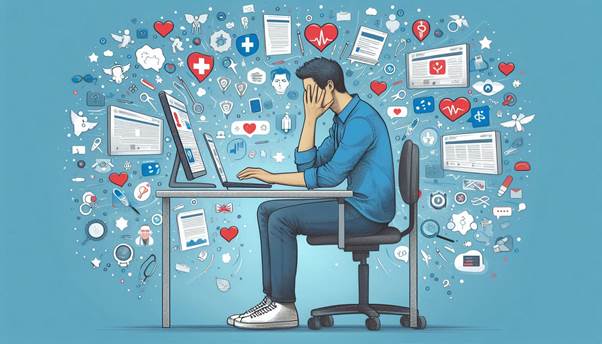
The advent of the internet has irrevocably transformed the landscape of healthcare information, democratizing access to medical knowledge that was once the exclusive domain of professionals. With a few keystrokes, individuals can research symptoms, explore potential diagnoses, and delve into the intricacies of rare diseases. While this empowerment can foster informed patient participation and reduce anxiety through reassurance, for a significant subset of the population, it has catalyzed a paradoxical and distressing phenomenon: cyberchondria. Cyberchondria, a portmanteau of “cyber” and “hypochondria,” describes the excessive, anxiety-driven, and compulsive search for health information online, leading to an escalation of health anxiety and unwarranted fears about serious illness. It is not a formal diagnostic category but a behavioral manifestation of severe health anxiety, intensified by the digital environment. Unlike the classic hypochondriac who might fixate on a doctor’s ambiguous comment, the cyberchondriac enters a labyrinth of infinite, uncurated, and often alarmist information. The journey typically begins with a benign symptom—a headache, a minor twinge, or fleeting dizziness—and escalates, via algorithmic suggestions and layperson forums, to a self-diagnosis of a catastrophic condition like a brain tumor, multiple sclerosis, or a rare cancer. This digital rabbit hole does not provide solace; instead, it fuels a cycle of anxiety, reassurance-seeking, and further anxiety, creating a profound burden on mental well-being. This essay will explore the intricate dynamics of cyberchondria, examining its defining characteristics and psychological mechanisms, the unique role of the digital ecosystem in fostering it, its profound personal and societal consequences, and finally, outlining strategies for management and mitigation for individuals, healthcare providers, and technology designers. In an age where “Dr. Google” is often the first consultation, understanding cyberchondria is critical to navigating the double-edged sword of online health information.
1. Defining Cyberchondria: Characteristics and Psychological Underpinnings
Cyberchondria is best understood as a multidimensional construct situated within the broader spectrum of health anxiety disorders. Its core is not simply the act of searching for health information online, which is a common and often neutral behavior, but the pathological pattern in which it is conducted and its distressing outcomes. Key characteristics define the cyberchondriac experience. Firstly, it is marked by excessive and compulsive behavior. Searches are not brief, fact-finding missions but prolonged, repetitive sessions that can consume hours each day. The individual feels an irresistible urge to search, often described as a “checking” compulsion similar to that seen in Obsessive-Compulsive Disorder (OCD). This compulsion is driven by intense anxiety but ultimately serves to perpetuate it. Secondly, cyberchondria involves escalation and misinterpretation. Starting with a minor symptom, the user engages in a process of “connecting the dots” between disparate pieces of information, often leaping from common explanations to the most severe ones. The online environment facilitates this through link chains—a search for “headache” leads to “migraine,” then “brain aneurysm,” then “glioblastoma.” The individual lacks the clinical framework to understand base rates (the statistical prevalence of diseases), leading to probability neglect where the gravest, but least likely, diagnosis becomes the focus of terror.
Thirdly, the search is anxiety-reinforcing rather than reassuring. While the stated goal is often to find reassurance—”maybe it’s nothing serious”—the process typically has the opposite effect. Finding information that contradicts the feared illness provides only fleeting relief, soon overridden by a new “what if” scenario or a freshly discovered, even rarer disease. This creates a vicious cycle: anxiety triggers an online search, which increases anxiety, leading to more frequent and frantic searching in a futile attempt to quell the distress. This cycle mirrors the anxiety-reassurance loop seen in health anxiety disorders, but with the internet providing an unlimited, instantly accessible source of both threat and temporary comfort. Finally, cyberchondria results in significant functional impairment. It can lead to missed work or social engagements, strain on personal relationships as loved ones grow weary of providing reassurance, and unnecessary healthcare utilization, including repeated doctor visits, demands for costly tests, or avoidance of medical care altogether due to fear of confirmation.
The psychological underpinnings of cyberchondria are complex and interwoven. It often arises in individuals with a pre-existing predisposition to anxiety, particularly health anxiety or generalized anxiety disorder. Underlying traits such as intolerance of uncertainty are central. The ambiguous nature of bodily sensations and the probabilistic nature of medicine are inherently uncomfortable. The cyberchondriac seeks absolute certainty—a definitive, guaranteed answer that they are not ill—which medicine, and especially the chaotic internet, can never provide. Each unanswered question or new sensation fuels further searches. Cognitive biases play a crucial role in distorting online research. Confirmation bias leads individuals to selectively attend to information that confirms their feared diagnosis while dismissing benign explanations. Availability heuristic makes vivid, catastrophic case studies read online seem more common and probable than they are. The illusion of control is also at play; searching provides a sense of agency and preparedness in the face of perceived threat, even if that activity is ultimately destructive.
Furthermore, cyberchondria exhibits a strong behavioral reinforcement component. The immediate access to information acts as a negative reinforcer: the temporary reduction in anxiety following a search (e.g., finding a symptom that doesn’t match) reinforces the searching behavior, making it more likely to recur when anxiety next spikes. However, this reinforcement is thin and unstable, as the next search often re-triggers fear. Finally, there is often an underlying metacognitive belief about the utility of worrying. The individual may subconsciously believe that by worrying and researching exhaustively, they are being vigilant, responsible, and potentially catching a serious illness early. This transforms a maladaptive behavior into a perceived survival strategy, making it exceptionally difficult to disengage from. In essence, cyberchondria is where ancient anxiety mechanisms collide with the modern information superhighway, creating a perfect storm of pervasive worry.
2. The Digital Ecosystem: How Online Environments Fuel Anxiety
The internet is not a passive repository of information but an active, dynamic, and often commercially driven ecosystem that is uniquely architected to exacerbate anxious impulses. Understanding the specific features of this digital landscape is key to understanding why online health searches so frequently devolve into cyberchondria, even for those without strong predispositions. One of the primary catalysts is the lack of filtering and context. Medical professionals undergo years of training to develop a framework of differential diagnosis, which prioritizes common conditions over rare ones and interprets symptoms within the context of the whole patient (age, medical history, risk factors). Search engines and health websites have no such framework. They operate on keyword matching and popularity. A search for “tingling in fingers” will yield pages on carpal tunnel syndrome but also prominently feature information on Multiple Sclerosis or ALS, diseases with dramatic narratives that attract more clicks and engagement. The algorithm presents these as equivalently plausible to the untrained eye, stripping away the crucial context of prevalence.
This is closely tied to the problem of information quality and sensationalism. The internet operates on an attention economy. Websites, particularly ad-driven content farms, often use alarming headlines (“This Common Symptom Could Be a Sign of a Deadly Cancer”) to generate traffic. Forum discussions, while providing community, are often echo chambers of worst-case scenarios where individuals share terrifying personal anecdotes that are emotionally compelling but statistically unrepresentative. The distinction between evidence-based, peer-reviewed sources (like PubMed) and anecdotal blogs or commercial sites is often blurred for the average user. This creates an environment where the most frightening information is also the most accessible and viscerally impactful.
The architecture of search engines and recommendation algorithms is particularly insidious in fueling escalation. Search engines are designed to provide comprehensive results, not clinically likely ones. Their autocomplete functions often suggest the most severe diagnostic possibilities, as these are common search pathways. Furthermore, the hyperlink structure of the web encourages a process of “diagnostic drift.” An article on fatigue will link to pages on anemia, which link to pages on leukemia. This creates a clickable pathway from mundane symptoms to catastrophic diagnoses, mirroring and accelerating the anxious thought process. Social media platforms and video-sharing sites employ recommendation algorithms that prioritize content with high engagement—which is often fear-based or sensationalist health content. Once a user watches one video on a rare disease, the algorithm will suggest increasingly extreme and speculative content, creating a personalized “filter bubble” of medical terror.
Another critical feature is the asynchronous and disembodied nature of online information. Unlike a conversation with a doctor, which is interactive, allows for immediate clarification, and includes a physical examination, online information is static and fragmented. There is no one to answer the inevitable follow-up question, “But what does this mean for me?” This ambiguity leaves vast space for anxiety to fester. The individual is alone with terrifying text and images, without the modulating influence of a professional’s calm demeanor or the ability to perform a physical test that might rule out a feared condition.
Finally, the 24/7 accessibility and anonymity of the internet remove natural barriers to compulsive behavior. When anxiety strikes at 2 a.m., the clinic is closed, but WebMD is open. This constant availability facilitates the compulsive checking cycle, preventing natural attenuation of anxiety. Anonymity, meanwhile, lowers the threshold for engaging with alarming content or sharing one’s fears in forums without social judgment, which can be both a support and a trap, reinforcing illness beliefs within a community of similarly anxious individuals. In summary, the digital ecosystem is effectively a cognitive trap for the anxious mind: it offers the illusion of mastery through unlimited information, while its very design—optimized for engagement, not care—systematically amplifies threat perception, undermines context, and rewards catastrophic thinking.
3. Consequences: The Personal and Societal Toll of Cyberchondria
The impact of cyberchondria extends far beyond temporary worry. It inflicts a significant toll on individuals, strains healthcare systems, and disrupts social dynamics, creating a cascade of negative consequences. On a personal and psychological level, the most direct cost is severe impairment in quality of life. Persistent, heightened health anxiety is mentally exhausting, leading to chronic stress, sleep disturbances, and symptoms of depression. The constant state of hypervigilance towards bodily sensations—a phenomenon known as somatosensory amplification—means normal fluctuations in heart rate, minor aches, or transient visual spots become sources of panic. This can lead to a debilitating cycle of avoidance and safety behaviors: avoiding exercise for fear of triggering a perceived heart condition, or constantly checking one’s pulse or examining one’s skin. The individual becomes a prisoner of their own perceived symptoms and the digital oracle they consult to interpret them.
The impact on the healthcare system is substantial and multifaceted. Cyberchondria drives what is termed “unnecessary” healthcare utilization. Individuals, convinced of their self-diagnosis, pressure physicians for redundant consultations, specialist referrals, and expensive diagnostic tests (MRIs, CT scans, extensive blood panels) to rule out the diseases they fear. This contributes to rising healthcare costs and allocates finite medical resources—doctor time, technician hours, imaging slots—to low-yield investigations. Conversely, it can also lead to doctor avoidance. Some individuals, fearing confirmation of a serious illness or believing doctors will dismiss their (internet-researched) concerns, may delay seeking care for actual medical problems. Furthermore, the clinician-patient relationship is often strained. Patients arriving with reams of printouts or citing specific, rare diagnoses from the internet can create an adversarial dynamic. Physicians may feel their expertise is being challenged, leading to frustration and shorter consultation times. This “contest” can prevent the collaborative partnership essential for effective care, leaving the patient feeling unheard and the doctor feeling pressured.
The social and relational consequences are profound. Friends and family, initially sympathetic, often experience “reassurance fatigue.” The constant need for validation and the refusal to accept reassuring answers can erode relationships. Partners may grow resentful of the time spent searching online or the financial burden of unnecessary medical visits. Social activities may be avoided due to symptom preoccupation or fear of triggering an imagined condition. The individual can become isolated, with their world narrowing to the confines of their health anxiety and their computer screen. This isolation further deprives them of the normalizing social interactions that could provide a reality check and emotional support.
Economically, cyberchondria results in lost productivity. Hours spent in compulsive research represent time not spent working, studying, or engaging in productive leisure. Sick days may be taken due to anxiety symptoms or for pursuing medical appointments for reassurance. For employers, this translates into absenteeism and presenteeism (being physically at work but mentally distracted and unproductive). On a broader societal level, cyberchondria contributes to the medicalization of normal life. It pathologizes ordinary, transient bodily experiences, framing them through a lens of potential disease. This fosters a culture of fear around health and undermines public understanding of the body’s normal variability and resilience. It also creates a fertile ground for medical misinformation and quackery, as desperate individuals seek out alternative “cures” for diseases they likely do not have, falling prey to exploitative commercial interests. In essence, cyberchondria represents a significant public health concern in its own right—a mental health crisis precipitated and amplified by digital technology, with ripple effects that burden individuals, families, medical institutions, and the economy.
4. Navigating the Digital Health Landscape: Strategies for Mitigation and Management
Addressing the challenge of cyberchondria requires a multi-pronged approach involving individual behavioral changes, proactive clinical strategies, responsible design from technology companies, and broader public health literacy initiatives. For the individual experiencing distressing health anxiety fueled by online searches, the first and most critical step is conscious awareness. Recognizing the pattern—that searching increases anxiety rather than solving it—is fundamental. From this point, specific cognitive-behavioral strategies can be employed. Digital hygiene is essential. This includes setting strict, time-limited boundaries for online health research (e.g., 10 minutes, once a week), using website blockers to restrict access to medical sites outside these windows, and consciously curating information sources. Sticking to reputable, gatekept institutions like the Mayo Clinic, NHS, or CDC for factual information, and entirely avoiding symptom checkers, patient forums, and sensationalist health blogs can reduce exposure to anxiety-provoking content.
Developing metacognitive skills is crucial. This involves “thinking about one’s thinking.” Individuals can learn to identify the cognitive biases at play (e.g., “I am catastrophizing” or “I am falling for the availability heuristic”). They can practice challenging the utility of their worrying: “Is this research actually making me safer, or is it just making me miserable?” Mindfulness and acceptance-based techniques can help build tolerance for the uncertainty of bodily sensations without resorting to compulsive checking. Delaying the urge to search, even for 30 minutes, can often allow an anxiety spike to pass naturally. Furthermore, redirecting the compulsive energy into positive health behaviors—such as going for a walk, practicing meditation, or engaging in a hobby—can break the cycle and improve overall well-being in a tangible way.
For healthcare providers, a shift in approach is needed. Dismissing a patient’s internet research as “just anxiety” is counterproductive. A more effective strategy is to engage collaboratively. A clinician might say, “I see you’ve done a lot of research. Let’s look together at what you found and discuss it.” This validates the patient’s concern, builds trust, and provides an opportunity to educate. The consultation should then explicitly address the process of differential diagnosis, explaining in simple terms why a common condition is far more likely than a rare one, based on the patient’s specific presentation. Providing a positive, actionable plan is more reassuring than a simple “it’s nothing.” This could include: a diagnosis of a benign condition (e.g., tension headache, benign positional vertigo), advice on specific symptom management, a timeline for what to expect (“this should resolve in 5-7 days”), and clear “red flag” symptoms that would warrant a return visit. Scheduling a brief follow-up, even by phone, can short-circuit the need for compulsive searching by providing a defined point of future professional contact. Physicians should also be prepared to screen for and address health anxiety directly, offering referrals to mental health professionals, particularly those specializing in Cognitive Behavioral Therapy (CBT) or Acceptance and Commitment Therapy (ACT), which have strong evidence for treating health anxiety and OCD-spectrum behaviors.
Technology companies and platform designers bear a significant ethical responsibility. There is an urgent need for human-centered design that prioritizes user well-being over pure engagement metrics. Search engines could develop medically vetted interfaces for symptom searches that begin with the most likely causes and prominently display prevalence statistics. They could incorporate “friction” into pathways to severe disease information, such as pop-ups stating, “The condition you are about to read about is very rare. Have you considered these more common causes?” Algorithmic recommendations on social media and video platforms must be adjusted to de-prioritize and flag sensationalist health misinformation. The development of digital tools that promote structured, evidence-based health inquiry—perhaps co-designed with medical professionals—could provide a safer alternative to open-web searches. Furthermore, platforms could integrate resources for mental health support when patterns of anxious searching are detected.
On a societal and educational level, promoting digital and health literacy from an early age is paramount. Public education campaigns should teach critical thinking skills for evaluating online health information, including understanding source credibility, recognizing bias, and interpreting risk statistics. Schools and community programs can integrate lessons on the normalcy of bodily fluctuations and the dangers of self-diagnosis. Normalizing conversations about health anxiety and reducing its stigma can encourage individuals to seek help for their worry rather than endlessly seeking answers online. By fostering a population that is both digitally savvy and psychologically resilient, we can cultivate a healthier relationship with the vast, powerful, but perilous world of online health information.
Conclusion
Cyberchondria stands as a defining mental health challenge of the digital age, a poignant example of how a tool of immense potential can be co-opted by anxiety to create a cycle of suffering. It arises from the intersection of innate human vulnerability to health fears and an online ecosystem that is, often inadvertently, engineered to exploit those fears. The journey from a curious symptom search to a paralyzing conviction of catastrophic illness is facilitated by algorithms lacking clinical wisdom, information stripped of context, and a design philosophy that values clicks over calm. The consequences reverberate through the individual’s psyche, their personal relationships, and the efficiency of our healthcare systems. Yet, the outlook is not one of helplessness. Mitigating cyberchondria requires a shared acknowledgment of its reality and a concerted effort across domains. Individuals must cultivate self-awareness and digital discipline, healthcare providers must adapt with empathy and collaborative education, and technology creators must embrace an ethics of care in design. Ultimately, managing cyberchondria is not about forsaking the internet as a health resource, but about rebuilding our relationship with it. It is about learning to harness its power for genuine education while developing the internal and external safeguards to prevent its boundless information from fueling our boundless capacity for worry. In doing so, we can strive for a future where digital health literacy and psychological resilience walk hand in hand, allowing us to be informed without being terrified, and vigilant without being consumed.
SOURCES
Abramowitz, J. S., & Braddock, A. E. (2008). Psychological treatment of health anxiety and hypochondriasis: A biopsychosocial approach. Hogrefe & Huber Publishers.
Aiken, M., & Kirwan, G. (2014). The psychology of cyberchondria and the impact of health information online. In Psychological and social implications surrounding internet and gaming addiction (pp. 76-93). IGI Global.
American Psychiatric Association. (2013). Diagnostic and statistical manual of mental disorders (5th ed.).
Barke, A., Bleichhardt, G., Rief, W., & Doering, B. K. (2016). The Cyberchondria Severity Scale (CSS): German validation and development of a short form. International Journal of Behavioral Medicine, 23(5), 595–605.
Baumgartner, S. E., & Hartmann, T. (2011). The role of health anxiety in online health information search. Cyberpsychology, Behavior, and Social Networking, 14(10), 613–618.
Fergus, T. A. (2013). Cyberchondria and intolerance of uncertainty: Examining when individuals experience health anxiety in response to Internet searches for medical information. Cyberpsychology, Behavior, and Social Networking, 16(10), 735–739.
Fergus, T. A. (2014). The Cyberchondria Severity Scale (CSS): An examination of structure and relations with health anxiety in a community sample. Journal of Anxiety Disorders, 28(6), 504–510.
Fergus, T. A., & Spada, M. M. (2017). Cyberchondria: Examining relations with problematic Internet use and metacognitive beliefs. Clinical Psychology & Psychotherapy, 24(6), 1322–1330.
Fritz, N., & Stoop, E. T. (2022). The economic burden of health anxiety and cyberchondria: A review of healthcare utilization and costs. Journal of Psychosomatic Research, 161, Article 110983.
Hart, J., & Björgvinsson, T. (2010). Health anxiety and hypochondriasis: Description and treatment issues highlighted through a case illustration. Bulletin of the Menninger Clinic, 74(2), 122–140.
Mathes, B. M., Norr, A. M., Deacon, B. J., & Schmidt, N. B. (2018). Cyberchondria: Overlap with health anxiety and unique relations with impairment, quality of life, and service utilization. Psychiatry Research, 261, 204–211.
McElroy, E., & Shevlin, M. (2014). The development and initial validation of the Cyberchondria Severity Scale (CSS). Journal of Anxiety Disorders, 28(2), 259–265.
Muse, K., McManus, F., Leung, C., Meghrebilan, B., & Williams, J. M. G. (2012). Cyberchondriasis: Fact or fiction? A preliminary examination of the relationship between health anxiety and searching for health information on the Internet. Journal of Anxiety Disorders, 26(1), 189–196.
Norr, A. M., Albanese, B. J., Oglesby, M. E., Allan, N. P., & Schmidt, N. B. (2015). Anxiety sensitivity and intolerance of uncertainty as potential risk factors for cyberchondria. Journal of Affective Disorders, 174, 64–69.
Starcevic, V. (2017). Cyberchondria: Challenges of problematic online searches for health-related information. Psychotherapy and Psychosomatics, 86(3), 129–133.
Starcevic, V., & Berle, D. (2013). Cyberchondria: Towards a better understanding of excessive health-related Internet use. Expert Review of Neurotherapeutics, 13(2), 205–213.
Starcevic, V., Billieux, J., & Schimmenti, A. (2018). Selfie and self: The dual role of self-portrait photography in the construction of identity. Psychopathology, 51(5), 308–315.
Taylor, S., & Asmundson, G. J. G. (2004). Treating health anxiety: A cognitive-behavioral approach. Guilford Press.
Vismara, M., Caricasole, V., Starcevic, V., Cinosi, E., Dell’Osso, B., Martinotti, G., & Fineberg, N. A. (2020). Is cyberchondria a new transdiagnostic digital compulsive syndrome? A systematic review of the evidence. Comprehensive Psychiatry, 99, Article 152167.
White, R. W., & Horvitz, E. (2009). Cyberchondria: Studies of the escalation of medical concerns in Web search. ACM Transactions on Information Systems, 27(4), Article 23.
World Health Organization. (2017). Management of physical health conditions in adults with severe mental disorders. World Health Organization.
HISTORY
Current Version
Dec, 05, 2025
Written By
BARIRA MEHMOOD