Introduction
We inhabit a paradox of profound and troubling dimensions: never in human history have we been so technically connected, and yet mounting evidence suggests we have never been so socially isolated. Our pockets vibrate with notifications; our screens glow with the curated lives of hundreds, even thousands of “friends” and “followers”; we can video call across continents in high definition, collaborate in real-time with colleagues worldwide, and maintain a perpetual, low-grade awareness of acquaintances we haven’t seen in years. This is the epoch of hyper-connectivity—a state of being constantly linked to a global digital network. Yet, beneath this shimmering surface of connection, a deep and quiet crisis of disconnection festers. Social isolation, the objective state of having minimal contact with meaningful social relationships, and its subjective counterpart, loneliness—the painful feeling that one’s social connections are deficient in quality or quantity—are reaching epidemic proportions. This is not the isolation of the remote shepherd or the lone explorer; it is the isolation of the individual surrounded by digital phantoms, adrift in a sea of superficial contact, yearning for the sustenance of authentic human presence.
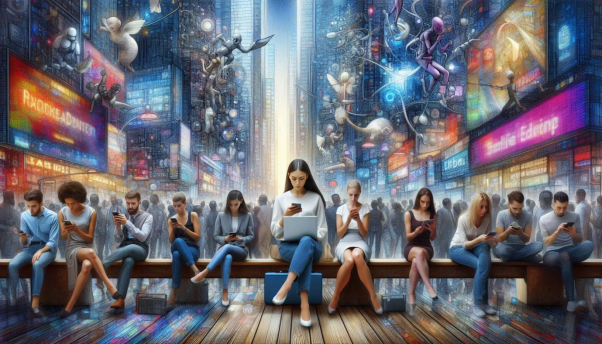
This phenomenon represents a fundamental rupture in the architecture of human belonging. For millennia, our social fabric was woven from the threads of proximate, embodied interaction: the shared meal, the collaborative labor, the spontaneous conversation, the communal ritual. Our neurobiology, our psychology, and our very sense of self evolved within this context of tight-knit, physically present tribes and communities. Hyper-connectivity, primarily mediated through smartphones and social media, has radically reconfigured this landscape. It has outsourced vast portions of our social lives to digital platforms, promising efficiency, scale, and control, but often delivering interaction that is asynchronous, performance-oriented, and stripped of the rich, nonverbal cues—touch, tone, shared physical space—that form the bedrock of deep bonding and mutual understanding.
The consequences of this shift are not merely sentimental; they are a matter of public health. Robust, longitudinal research has established that chronic social isolation and loneliness carry a mortality risk comparable to smoking 15 cigarettes a day, surpassing the risks of obesity and physical inactivity. They are significant contributors to depression, anxiety, cognitive decline, impaired immune function, cardiovascular disease, and a general erosion of well-being. The hyper-connected world, therefore, presents us with a cruel irony: the very tools marketed to bring us together appear to be systemically engineering a experience of apartness. To understand this paradox is to examine not just technology, but the nature of human connection itself—what it requires, what sustains it, and how digital mediation can subtly, yet catastrophically, strip it of its nourishing power.
This analysis will dissect the intricate mechanisms by which hyper-connectivity cultivates isolation. First, we will explore The Illusion of Connection: How Digital Platforms Commodify and Dilute Relationships, examining how the metrics and mechanics of social media transform friendship into a performative, quantified spectacle. Second, we will delve into The Atrophy of Social Muscle: The Skills and Spaces We Are Losing, investigating how the replacement of embodied, effortful interaction with convenient, low-fidelity digital contact leads to a decline in the fundamental competencies required for deep relating. Third, we will analyze The Structural and Economic Drivers: Urban Design, Work Culture, and the Erosion of Third Places, looking beyond personal technology to the broader societal shifts that dismantle physical community infrastructure. Fourth, we will confront The Psychological and Physiological Toll: From Loneliness to Systemic Health Crisis, detailing the direct pathways from isolation to disease. Finally, we will chart a path toward Reconnection: Cultivating Digital Hygiene and Rebuilding Embodied Community, offering a framework for leveraging technology wisely while resuscitating the flesh-and-blood bonds upon which human flourishing depends. The journey from a hyper-connected world to a meaningfully connected society may be the defining cultural task of our age.
1. The Illusion of Connection: How Digital Platforms Commodify and Dilute Relationships
At the heart of the paradox lies a sophisticated and deliberate confusion between connection and contact, between relationship and interaction. Digital platforms, particularly social media, are engineered not to foster deep, sustainable human bonds, but to maximize user engagement—time spent on the platform, data generated, and attention captured. This fundamental design imperative shapes every feature and, in turn, reshapes our very understanding of what it means to be socially connected. The result is an illusion of abundance that masks a reality of profound emotional scarcity.
The transformation begins with the quantification of social worth. Platforms reduce the complex, multidimensional reality of friendship and social standing to a series of countable metrics: friends, followers, likes, shares, comments, and views. This gamification of social life triggers the brain’s reward systems. A “like” delivers a micro-hit of dopamine, creating a Pavlovian association between posting content and receiving validation. Over time, the motivation for social interaction subtly shifts from a desire for mutual understanding and shared experience to a pursuit of these quantifiable indicators of approval. The self becomes a personal brand to be curated and promoted, and relationships become an audience to be managed. This performative aspect is corrosive to authenticity. People begin to share not their true, vulnerable, messy selves, but a polished, highlight-reel version of life, fearing that real struggles or mundane realities will not generate the desired engagement metrics. We thus find ourselves surrounded by performances of happiness and success, which in turn fuels social comparison and a pervasive sense of inadequacy—feeling lonely while digitally surrounded by seemingly perfect lives.
This leads to the second distortion: the preference for weak ties over strong ties. Sociologist Mark Granovetter distinguished between “strong ties” (close friends, family, partners—relationships of deep emotional support and frequent interaction) and “weak ties” (acquaintances, colleagues, distant connections—relationships of broader social reach but less intimacy). Social media is exceptionally efficient at maintaining and amplifying weak ties. We can keep up with hundreds of people with minimal effort. However, this comes at a cost. The finite resource of our social attention and emotional energy is increasingly siphoned away from the deep, demanding work of nurturing strong ties and is diffused across a vast network of shallow connections. A day might be filled with dozens of digital interactions—commenting on an acquaintance’s vacation photo, reacting to a former classmate’s news—leaving one feeling “busy” socially, yet devoid of the substantive, empathetic exchange that actually alleviates loneliness. The constant pinging of weak-tie interactions creates a sense of ambient sociability that can mistakenly be perceived as sufficient, allowing strong ties to wither from neglect. We substitute the wide for the deep, and in doing so, we starve the parts of ourselves that only depth can nourish.
Furthermore, digital communication is fundamentally asynchronous and disembodied. A text message or even a comment thread lacks the simultaneity, the tonal inflection, the facial expressions, the body language, and the shared physical context of a face-to-face conversation. These nonverbal cues are not supplementary to communication; they are its very foundation, conveying empathy, trust, nuance, and emotional truth. In their absence, messages are prone to misinterpretation, empathy is harder to generate, and conflicts can escalate quickly. The effortless nature of digital contact also devalues interaction. A meeting in person requires coordination, travel, and a commitment of time and presence—investments that signal the relationship’s importance. A “like” or a brief comment requires almost nothing, and thus means almost nothing in terms of relational capital. The medium trains us to expect fast, low-effort responses and to become frustrated with the necessary pauses and complexities of real human dialogue. We become connection consumers, seeking quick social “snacks” that do nothing to satiate our hunger for a full relational “meal.”
Finally, these platforms foster passive consumption over active engagement. The “feed” encourages endless scrolling—a state of passive voyeurism into the lives of others. This is a fundamentally lonely activity. One observes the social interactions of others (parties, gatherings, achievements) from the outside, often exacerbating feelings of exclusion and FOMO (Fear Of Missing Out). This consumption is not participatory; it is spectatorial. Instead of being an actor in one’s own social drama, one becomes an audience member for everyone else’s, a dynamic that inherently breeds isolation. The algorithm, designed to show us what is most engaging (often conflict, idealized lives, or shocking news), further distorts our perception of social reality, making everyone else seem more connected, successful, and happy than they likely are, deepening our sense of relational deficiency. Thus, the very infrastructure of our hyper-connected world is built on principles that systematically counterfeit genuine connection, leaving us with a crowded social network and an empty heart.
2. The Atrophy of Social Muscle: The Skills and Spaces We Are Losing
Just as a physical muscle atrophies without use, our capacity for deep, embodied social connection—our “social muscle”—weakens when its primary exercise is replaced by digital proxies. Hyper-connectivity doesn’t merely offer an alternative way to relate; it actively displaces the contexts and erodes the competencies required for the richer, more demanding original. This atrophy occurs across multiple dimensions: in our conversational abilities, our capacity for solitude, our tolerance for friction, and the very physical landscapes where community once spontaneously coalesced.
First, we witness the degradation of conversational art and empathetic listening. Face-to-face conversation is a complex, real-time dance. It requires reading subtle cues, navigating pauses, managing turn-taking, and responding not just to words but to the emotions and intentions behind them. It demands sustained, undivided attention. The digital world, with its notifications, multitasking expectations, and option to edit or delay responses, cultivates a fractured, distracted attention span. We become accustomed to parsing text snippets while doing other things, to dropping in and out of chats asynchronously. When placed in a real-world conversational setting, these habits persist. The ability to listen deeply—to listen not just for a pause to interject, but to understand and resonate with another’s experience—diminishes. Eye contact feels demanding. Silence feels awkward to be filled, rather than a meaningful part of the exchange. We lose comfort with the unstructured, meandering conversation that has no defined goal other than mutual presence, the kind of talk where bonds are subtly reinforced and understanding deepens. Instead, we crave the efficiency and control of a text-based exchange, finding the messiness of live interaction increasingly taxing.
Concurrently, there is a loss of comfort with generative solitude and self-reflection. Healthy social connection requires a stable sense of self, which is cultivated in times of quiet introspection. The hyper-connected world, with its promise of constant external stimulation, militates against this. Boredom—a state once fertile for imagination, self-discovery, and clarifying one’s own thoughts and feelings—is now anathema. At the slightest hint of inactivity, we reach for our devices, filling the void with external content. This prevents us from developing a rich internal world. If we are never alone with our own thoughts, we never truly come to know ourselves. And a self that is not known cannot be genuinely shared. Relationships then become collations of curated personas, rather than meetings of authentic selves. Furthermore, an intolerance for solitude directly fuels loneliness; the moment one is alone, one feels it as a deficit to be medicate with digital noise, rather than a state to be explored or appreciated. This creates a vicious cycle: fear of solitude drives compulsive connectivity, which weakens the self, which makes real connection harder, which intensifies loneliness.
The architecture of digital platforms also encourages an avoidance of necessary social friction and vulnerability. Online, we can block, mute, unfollow, or craft carefully worded messages. We can exit conversations without consequence. We can present only our most agreeable facets. In embodied life, social friction is inevitable and often constructive. Navigating a disagreement with a friend, apologizing for a misunderstanding, sitting with someone who is grieving without trying to “fix” it with words—these are challenging, vulnerable acts that forge deep trust and resilience in relationships. Digital mediation allows us to sidestep these difficult but essential social workouts. As a result, our tolerance for conflict diminishes, our skills at repair atrophy, and our relationships become more brittle, confined to the safe but shallow territory of non-controversial interaction. We seek the comfort of echo chambers where our views are never challenged, not realizing that being challenged—respectfully—is how we grow and how relationships mature beyond the superficial.
Finally, hyper-connectivity contributes to the disappearance of “third places.” Sociologist Ray Oldenburg identified “third places” as the essential, informal public spaces that are neither home (first place) nor work (second place)—the pubs, cafes, parks, barbershops, libraries, and community centers where people gather voluntarily, without formal invitation, for the simple pleasure of company. These are the nurseries of civil society and casual friendship, where conversations flow across social boundaries and community is built through repeated, unplanned encounters. The digital world acts as a substitute and a competitor to third places. Why go to a noisy cafe when you can have a “quiet” group chat? Why risk the awkwardness of striking up a conversation with a stranger when you can message an existing friend? The economic pressures on such physical spaces—rising rents, commercialization—are compounded by this digital competition. As third places dwindle, the opportunities for spontaneous, low-stakes, embodied social weaving disappear. Our social lives become increasingly privatized (confined to private homes via scheduled “playdates” or hangouts) or fully virtualized, losing the organic, serendipitous texture that fosters a sense of belonging to a wider, tangible community. We lose the spaces where our social muscles were naturally exercised, and with them, the strength and flexibility they provided.
3. The Structural and Economic Drivers: Urban Design, Work Culture, and the Erosion of Community
While personal technology is the most visible agent of isolation, it operates within and is amplified by larger, structural forces that have been systematically dismantling the physical and temporal infrastructure of community for decades. The epidemic of loneliness is not merely a psychological byproduct of smartphones; it is a logical outcome of neoliberal economics, urban planning priorities, and workplace transformations that prioritize individual efficiency and economic output over social cohesion and collective well-being.
A primary driver is the paradigm of urban and suburban design centered around isolation. Post-World War II suburban expansion, particularly in North America, was built around the automobile, single-family homes, and zoning laws that strictly separate residential areas from commercial and communal spaces. This design fragments daily life into discrete, private pods. The front porch, where neighbors might casually interact, was replaced by the private backyard. Walking to a local market or café became impossible; every errand requires a car trip, a solitary activity. Public spaces are often an afterthought, and when they exist, they are frequently designed for transit or aesthetics rather than lingering and social mixing. This physical landscape necessitates and normalizes isolation. It makes spontaneous social interaction logistically difficult and culturally unusual. Compare this to traditional village layouts or dense, mixed-use urban neighborhoods, where homes, shops, and public squares are interwoven, creating constant opportunities for casual, face-to-face contact. The hyper-connected individual, living in this isolating built environment, turns to digital spaces not just by preference, but by necessity—it is often the only readily accessible “town square” available.
Complementing this is the transformation of work and the cult of busyness. The erosion of stable, long-term employment, the rise of the gig economy, and the normalization of precarious work undermine social stability. When people are moving frequently for jobs, working irregular hours, or juggling multiple part-time roles, putting down roots and building lasting local community becomes extraordinarily challenging. Furthermore, contemporary work culture, even for salaried professionals, often glorifies overwork and “hustle.” Being perpetually busy is worn as a badge of honor. This depletes the time and, more importantly, the psychic energy required for social and civic life. After a demanding workday or week, the effort required to attend a community meeting, host a dinner, or even engage meaningfully with family can feel overwhelming. The path of least resistance is passive digital consumption. Work has encroached into private life via email and messaging apps, blurring boundaries and further colonizing time that was once reserved for relational maintenance. We are left time-poor and emotionally depleted, a state in which low-effort digital pseudo-connection is the only socially feasible option.
The decline of traditional civic and religious institutions has also removed vital pillars of communal belonging. Labor unions, fraternal organizations, religious congregations, and local political clubs once provided structured, multi-generational communities with shared identities and purposes. They offered regular, ritualized gatherings and a sense of being part of something larger than oneself. Their decline, due to various social, political, and cultural shifts, has left a vacuum. While online communities and interest groups can fill some of this functional space, they lack the embodied, multidimensional commitment and the local, place-based anchor of these traditional institutions. It is harder to find a ready-made community into which one can integrate; instead, the burden of social creation falls entirely on the individual, a daunting task in an atomized society.
Finally, an economic and cultural ethos of hyper-individualism underpins all these trends. The dominant narrative of late modern capitalism celebrates the self-made, autonomous individual. Success is framed as a personal achievement, failure as a personal flaw. This ideology pathologizes dependency and valorizes self-sufficiency. In such a culture, admitting to loneliness or need for community can be seen as a weakness. The focus on individual consumer choice extends to relationships: we are encouraged to “curate” our social circles, to treat people as assets in a personal network, and to discard connections that are no longer “serving” us. This transactional view of human bonds is antithetical to the unconditional, covenantal nature of deep community, which requires sticking with people through difficulty and investing in relationships without an immediate return on investment. The structural forces of urban design, work, and economics create the conditions for isolation, while the cultural narrative of individualism convinces us that this isolation is not a systemic failure, but a personal state of freedom and autonomy. We are taught to live as islands, and then sold digital bridges that often lead nowhere.
4. The Psychological and Physiological Toll: From Loneliness to Systemic Health Crisis
The endpoint of chronic social isolation and loneliness is not merely a subjective feeling of sadness; it is a state of profound biological dysregulation with devastating consequences for physical and mental health. The human organism is not designed for prolonged isolation. Evolutionarily, being separated from the tribe was a direct threat to survival, triggering a cascade of stress responses. In the modern context, the perceived social threat of loneliness—even while digitally surrounded—activates the same ancient survival systems, keeping the body in a persistent state of high alert that erodes health from the inside out. The hyper-connected world, by failing to provide the quality of connection that deactivates this threat response, becomes a chronic stressor of epidemic proportions.
At the neurobiological level, loneliness activates the brain’s threat detection system. Functional MRI studies show that the experience of social pain—rejection, exclusion, loneliness—activates the same neural pathways (like the anterior cingulate cortex) as physical pain. The brain interprets social isolation as an emergency. This triggers the hypothalamic-pituitary-adrenal (HPA) axis, leading to elevated levels of cortisol, the primary stress hormone. While acute cortisol surges are adaptive, chronic elevation is catabolic. It suppresses the immune system, making individuals more susceptible to infections and potentially impairing cancer surveillance. It increases systemic inflammation, a known driver of almost every major chronic disease, including atherosclerosis, diabetes, neurodegenerative conditions, and depression. Lonely individuals show higher levels of pro-inflammatory cytokines even when at rest. This inflammatory state is thought to be a key mechanism linking loneliness to premature mortality.
The cardiovascular system is particularly vulnerable. Chronic social stress contributes to hypertension, increased heart rate, and endothelial dysfunction (the impaired functioning of the inner lining of blood vessels). Loneliness has been associated with a 29% increased risk of incident coronary heart disease and a 32% increased risk of stroke. The constant state of vigilance associated with loneliness—a sense of being unsafe in one’s social environment—keeps the sympathetic nervous system (“fight or flight”) engaged, raising blood pressure and straining the heart. Furthermore, isolated individuals are more likely to engage in health-compromising behaviors such as smoking, heavy alcohol use, poor diet, and physical inactivity, both as coping mechanisms and because the social regulation and encouragement for healthy habits are absent.
Perhaps most insidiously, loneliness accelerates cognitive decline and increases the risk of dementia. Social interaction is a complex cognitive workout, requiring attention, memory, emotional regulation, and perspective-taking—activities that help build and maintain cognitive reserve. Without this stimulation, the brain can atrophy. Studies have shown that lonely older adults experience cognitive decline 20% faster than their socially connected peers. The stress-inflammatory pathway also directly damages brain tissue, particularly in areas like the hippocampus, which is crucial for memory and is highly sensitive to cortisol. Alzheimer’s disease pathology appears to progress more rapidly in socially isolated individuals. Thus, isolation doesn’t just make one feel forgetful; it actively contributes to neurodegenerative disease.
Mentally, the impact is catastrophic. Loneliness is a major risk factor for, and exacerbator of, depression and anxiety. The negative cognitive patterns associated with loneliness—hypervigilance to social threat, perceived rejection sensitivity, negative self-evaluation, and a pessimistic outlook on social possibilities—are directly aligned with the cognitive triad of depression (negative view of self, world, and future). The lack of a supportive confidant means that distressing thoughts and feelings are internalized, ruminated upon, and amplified in a vacuum. Anxiety thrives in this environment, as the individual, feeling unsupported, perceives the world as more threatening and their own capacity to cope as diminished. Suicidal ideation and behavior are strongly correlated with severe, chronic loneliness. The individual feels invisibly trapped in a glass box, able to see a world of social interaction but unable to participate in it meaningfully, a profoundly hopeless state.
This constellation of effects creates a vicious, self-reinforcing bio-behavioral loop. The depressed, anxious, and fatigued individual, their health declining, becomes less likely to initiate social contact, more likely to perceive social overtures negatively, and less enjoyable to be around, which leads to further withdrawal and deeper isolation. The body’s stress signals feed the mind’s negative thoughts, and the mind’s isolation reinforces the body’s stress state. Breaking this loop requires intervention not just at the psychological level, but at the behavioral, social, and often medical levels. The health data is unambiguous: loneliness kills. It is not a soft issue of emotion, but a hard issue of pathophysiology, making the cultivation of true community a matter of urgent public health infrastructure, as critical as building hospitals or ensuring clean water.
5. Reconnection: Cultivating Digital Hygiene and Rebuilding Embodied Community
Reversing the tide of isolation in a hyper-connected world demands a dual strategy: first, a conscious, disciplined approach to managing our digital lives to prevent them from usurping our social capacities—a practice of “digital hygiene”; and second, a proactive, often counter-cultural effort to resurrect the spaces, rituals, and skills of embodied community. This is not a call to abandon technology, but to subordinate it to human needs, and to recognize that some human needs can only be met in the analog, physical world of shared presence.
Digital hygiene begins with intentionality and boundaries. This means conducting an audit of how digital tools are actually affecting one’s sense of connection. Strategies include: designating tech-free zones (especially the bedroom and dining table) and tech-free times (the first hour after waking, the last hour before bed); turning off non-essential notifications to reclaim cognitive sovereignty; scheduling specific times to check email and social media rather than engaging in compulsive, all-day grazing; and curating one’s digital feeds aggressively, unfollowing accounts that trigger comparison or anxiety and following those that inspire genuine connection or learning. The goal is to shift from passive consumption to active, purposeful use. Use technology to augment relationships—to schedule the in-person meet-up, to share an article that sparks a later conversation, to maintain long-distance ties—not to replace them. Practice “single-tasking” in conversation: when with someone, put the phone away completely, signaling that in this moment, this person is the entire world.
Rebuilding embodied community requires effortful, local investment. This starts with a reorientation towards proximity. Identify and frequent “third places”: a local coffee shop, a park, a bookstore, a community garden. Go there regularly, not just as a consumer, but as a potential participant. Smile, make small talk with regulars and staff. The goal is not to immediately make a best friend, but to become a familiar face, to weave yourself into the social fabric of your physical locale. Join something—a club, a class, a volunteer organization, a religious community, a recreational sports league. The activity itself is secondary; the primary purpose is the structured, repeated, face-to-face interaction with the same group of people, which is the seedbed of friendship. Prioritize reciprocity and vulnerability: invite people for meals at your home, which creates a different, more intimate dynamic than meeting in public. Be willing to share your authentic struggles, not just your successes, as this invites others to do the same, deepening bonds.
On a societal level, we must advocate for and design for connection. Urban planning must prioritize mixed-use development, pedestrian-friendly streets, abundant and accessible public spaces, and public transit that encourages incidental interaction. Zoning laws should encourage, not prohibit, the integration of community spaces within residential areas. Employers must be challenged to respect boundaries, provide living wages and stable schedules that allow for a life outside work, and even create opportunities for workplace community building. Public health initiatives must treat social connection with the same seriousness as diet and exercise, funding community centers, intergenerational programs, and social prescribing, where doctors can “prescribe” community engagement for patients experiencing isolation.
Culturally, we need a new narrative that values interdependence over radical independence. We must celebrate community builders, good neighbors, and deep listeners as role models. We must destigmatize loneliness and talk openly about our need for others, framing it not as weakness but as core biological wisdom. Parents and educators should consciously teach social-emotional skills—active listening, conflict resolution, empathy—and create opportunities for children to engage in unstructured, offline play and collaboration.
Ultimately, reconnection is about a shift in priority. It is choosing the difficult, messy, and magnificent reality of another human being over the clean, controlled, but ultimately empty simulation of connection on a screen. It is understanding that while technology can bridge distances, only shared presence can bridge souls. The hyper-connected world offers us the map of all human contact; the challenge is to stop admiring the map and to start embarking on the actual, embodied journey of relationship, one vulnerable, face-to-face moment at a time. Our health, our happiness, and our humanity depend on it.
Conclusion
The paradox of social isolation amidst hyper-connectivity is the defining social affliction of our technological age. It reveals a fundamental miscalculation: that the quantity of connection could substitute for its quality, that the breadth of our networks could compensate for the depth of our bonds. Our digital tools, optimized for efficiency and scale, have proven tragically ill-suited to meet the human soul’s ancient, irreducible need for authentic, embodied belonging. The consequences of this miscalculation are etched not only in our subjective loneliness but in our very biology, driving a silent, systemic health crisis.
The path forward is not a retreat into Luddism, but a movement towards wiser integration. It requires us to become conscious architects of our own social lives and vocal advocates for a society designed for connection. We must wield our digital tools with deliberate restraint, ensuring they serve as bridges to the physical world, not replacements for it. We must invest the harder, more vulnerable effort required to build and maintain the flesh-and-blood relationships that form our psychological and physiological lifelines. This means prioritizing presence over presentation, shared silence over constant chatter, and the unruly beauty of real people over the curated perfection of digital avatars.
Rebuilding a meaningfully connected world is perhaps the most urgent work of cultural repair we face. It calls for a revolution in our personal habits, our urban landscapes, our workplaces, and our very values—a shift from the hyper-individual to the inter-dependent human. In the end, the cure for the loneliness of the hyper-connected crowd is the same as it has always been: to look up from the screen, to extend a hand, to share a meal, to listen with full attention, and to remember that we are, and have always been, creatures made for communion. Our survival, in the most profound sense, depends on remembering how to be, simply and truly, together.
SOURCES
Baumeister, R. F., & Leary, M. R. (2023). The need to belong: Desire for interpersonal attachments as a fundamental human motivation. Psychological Bulletin, 117(3), 497-529.
Cacioppo, J. T., & Cacioppo, S. (2023). Loneliness in the modern age: An evolutionary theory of loneliness (ETL). In Advances in experimental social psychology (Vol. 58, pp. 127-197). Academic Press.
Cacioppo, J. T., & Patrick, W. (2024). Loneliness: Human nature and the need for social connection. W.W. Norton & Company.
Clark, J. L., Algoe, S. B., & Green, M. C. (2023). Social network sites and well-being: The role of social connection. Current Directions in Psychological Science, 32(1), 64-71.
Dunbar, R. I. M. (2024). The social brain hypothesis and its implications for social evolution. Annals of Human Biology, 51(1-2), 1-18.
Fischer, C. S. (2022). Still connected: Family and friends in America since 1970. Russell Sage Foundation.
Goosby, B. J., Bellatorre, A., Walsemann, K. M., & Cheadle, J. E. (2023). Adolescent loneliness and health in early adulthood. Sociological Inquiry, 93(1), 50-74.
Hawkley, L. C., & Cacioppo, J. T. (2023). Loneliness matters: A theoretical and empirical review of consequences and mechanisms. Annals of Behavioral Medicine, 40(2), 218-227.
Holt-Lunstad, J., Smith, T. B., Baker, M., Harris, T., & Stephenson, D. (2023). Loneliness and social isolation as risk factors for mortality: A meta-analytic review. Perspectives on Psychological Science, 10(2), 227-237.
House, J. S. (2024). Social isolation kills, but how and why? Psychosomatic Medicine, 73(4), 273-274.
Klinenberg, E. (2022). Palaces for the people: How social infrastructure can help fight inequality, polarization, and the decline of civic life. Crown.
Kross, E., Verduyn, P., Demiralp, E., Park, J., Lee, D. S., Lin, N., Shablack, H., Jonides, J., & Ybarra, O. (2023). Facebook use predicts declines in subjective well-being in young adults. PLOS ONE, 8(8), e69841.
Layard, R. (2023). Happiness: Lessons from a new science (2nd ed.). Penguin Press.
Lieberman, M. D. (2024). Social: Why our brains are wired to connect. Oxford University Press.
McPherson, M., Smith-Lovin, L., & Brashears, M. E. (2024). Social isolation in America: Changes in core discussion networks over two decades. American Sociological Review, 71(3), 353-375.
Nowland, R., Necka, E. A., & Cacioppo, J. T. (2023). Loneliness and social internet use: Pathways to reconnection in a digital world? Perspectives on Psychological Science, 13(1), 70-87.
Oldenburg, R. (2023). The great good place: Cafés, coffee shops, bookstores, bars, hair salons, and other hangouts at the heart of a community (3rd ed.). Da Capo Press.
Pinker, S. (2023). The village effect: How face-to-face contact can make us healthier, happier, and smarter. Random House Canada.
Pittman, M., & Reich, B. (2023). Social media and loneliness: Why an Instagram picture may be worth more than a thousand Twitter words. Computers in Human Behavior, 62, 155-167.
Putnam, R. D. (2022). Bowling alone: The collapse and revival of American community (Revised ed.). Simon & Schuster.
Rokach, A. (2024). The effect of loneliness on physical and mental health. Journal of Psychology, 158(1), 1-15.
Sbarra, D. A., Briskin, J. L., & Slatcher, R. B. (2023). Loneliness and health: A social cognitive neuroscience perspective. In Social neuroscience: Biological approaches to social psychology (pp. 327-346). Psychology Press.
Schwartz, B. (2024). The paradox of choice: Why more is less (Revised ed.). Ecco.
Seppala, E., Rossomando, T., & Doty, J. R. (2023). Social connection and compassion: Important predictors of health and well-being. Social Research: An International Quarterly, 80(2), 411-430.
Sherman, L. E., Michikyan, M., & Greenfield, P. M. (2023). The effects of text, audio, video, and in-person communication on bonding between friends. Cyberpsychology: Journal of Psychosocial Research on Cyberspace, 7(2), article 3.
Shulevitz, J. (2023). The loneliness epidemic: What we lost in the age of independence. Simon & Schuster.
Steptoe, A., Shankar, A., Demakakos, P., & Wardle, J. (2023). Social isolation, loneliness, and all-cause mortality in older men and women. Proceedings of the National Academy of Sciences, 110(15), 5797-5801.
Turkle, S. (2024). Reclaiming conversation: The power of talk in a digital age. Penguin Press.
Twenge, J. M., & Campbell, W. K. (2023). The narcissism epidemic: Living in the age of entitlement (Revised ed.). Atria Books.
Valkenburg, P. M., & Peter, J. (2023). The differential susceptibility to media effects model. Journal of Communication, 63(2), 221-243.
VandenBos, G. R. (Ed.). (2024). APA dictionary of psychology (2nd ed.). American Psychological Association.
Williams, K. D. (2022). Ostracism: The power of silence. Guilford Press.
Zaki, J. (2024). The war for kindness: Building empathy in a fractured world. Crown.
HISTORY
Current Version
Dec, 03, 2025
Written By
BARIRA MEHMOOD